

-

Margaret Barry discusses her time as a singer and banjo player
Oct. 9, 1961 Margaret Barry and Michael Gorman, discuss traditional Irish music and their careers as musicians.
-
Leon Depres discusses discrimination, corruption, and segregation in Chicago
Feb. 3, 1975 Interviewing lawyer and alderman, Leon Despres. Depres discusses Richard Daley’s time as mayor of Chicago and political events during his terms. Content Warning: This conversation includes racially and/or culturally derogatory language and/or negative depictions of Black and Indigenous people of color, women, and LGBTQI+ individuals. Rather than remove this content, we present it in the context of twentieth-century social history to acknowledge and learn from its impact and to inspire awareness and discussion.
-
Lois Wheeler Snow discusses her book "China on Stage"
Dec. 19, 1972 The Peking Opera and "Taking Tiger Mountain by Strategy" are among topics discussed in Lois Wheeler Snow's book, "China on Stage: An American Actress in the People's Republic". While visiting China, Snow learned the Chinese plays were both of the traditionally old ways and of the new revolutionary ways. Snow also adds that performances of Chinese acrobatics is like nothing in the United States.
-
Sergeant Garland Davis discusses his profession ; part 2
Even though his life was threatened, when a young man told him his goal in life was to see Davis dead, Sergeant Garland Davis, continues to work in the youth crime division, in the hopes by be-friending the young people, they will do something positive with their lives. Davis also adds that the parents of these young people, along with the communities in which they live, play parts in the youths' behavior.
-
Sergeant Garland Davis discusses his profession ; part 1
An officer with the Chicago department, Sergeant Garland Davis, talks about his presence in the community, in hoping that some of the young people he works with see him as a friend and not solely as a cop. Davis also talks about the priority being helping the youth before their lives take a wrong turn into a life of crime.
-
Frank Donner discusses the article he wrote "Theory and Practice of American Political Intelligence" ; part 1
Surveillance, informants, and provocateurs are some of topics covered by Frank Donner with his article, "Theory and Practice of American Political Intelligence". Donner explained that intelligence practices exist so that everyone has something to fear.
-
Frank Donner discusses the article he wrote "Theory and Practice of American Political Intelligence" ; part 2
In his article, "Theory and Practice of American Political Intelligence," Frank Donner brings up the poisonous effect of surveillance on people's invasion of privacy. Donner explained people adjust their lives to it. Donner's last reflection is for people to not just be frightened by surveillance but rather to do something about it like study how much money is spent on surveillance and who is accountable.
-
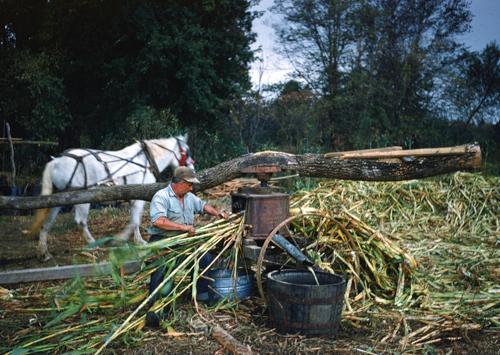
Miles Horton and Elliot Wigginton discuss the Foxfire Project
Jun. 1, 1977 Discussing the Foxfire books and interviewing Miles Horton and Elliot Wigginton. Wigginton is one of the editors/compilers of several of the books in the series about traditional handicrafts and practical methods used in rural life.
-
Reverend William Bell Glenesk discusses his ministry
Becoming a preacher was the last thing Reverend William Bell Glenesk ever had in mind. Glenesk found ministers and their sermons to be long and boring. The church, Glenesk said is very much like theatre and he wanted people to attend church or the gymnasium of God and to be a part of lots of music and dance.
-
Carl Charnett, Director of Gateway House, and residents ; part 2.1
1970 Carl Charnett discusses Gateway House, a community for the cure of drug addiction (part 2 of 2). Includes interviews of Ira Robinson, Bill Jacobson, and other residents. This has additional content not included in part 2.