

-

Interview with Steve Allen
May. 3, 1981 Steve Allen, the versatile entertainer and musician, discusses his travels and his book, "Explaining China."*Please note: some sections have been edited out from the original recording due to copyright considerations
-
Fred and LaDonna Harris discuss their thoughts on the working class in America
Aug. 4, 1975 One of the questions discussed by Fred and LaDonna Harris is whether or not the government is going to protect the interests of the average family or continue to protect the super-rich and the giant corporations. Former senator Fred Harris says people are being over-taxed by the government and that there needs to be a fairer distribution of wealth, income, and power in America.*Please note: some sections have been edited out from the original recording due to copyright considerations
-
Marvin Harris discusses his book "Good to Eat"
Feb. 18, 1986 Why certain people find eating certain products and/or animals taboo is a question Marvin Harris answers in his book, "Good to Eat: Riddles of Food and Culture". Hindus consider the cow the mother of life, and therefore sacred, Harris explains. Pork is a staple to the Chinese people, but to those of the Jewish faith, it's taboo, says Harris. Lastly, the rise of fast food restaurants made beef a favorite of Americans.*Please note: some sections have been edited out from the original recording due to copyright considerations
-
Interview with Gordon Thomas
Jan. 30, 1976 Co-author of Guernica: The Crucible of World War II*Please note: some sections have been edited out from the original recording due to copyright considerations
-
Jean Shepherd discusses his career ; part 1
Aug. 9, 1962 Storyteller, humorist, and radio personality Jean Shepherd joins Studs for a wide-ranging discussion of his career up that point.*Please note: some sections have been edited out from the original recording due to copyright considerations
-
Jean Shepherd discusses his career ; part 2
Aug. 9, 1962 Storyteller, humorist, and radio personality Jean Shepherd joins Studs for a wide-ranging discussion of his career up that point.*Please note: some sections have been edited out from the original recording due to copyright considerations
-
Stan Vanderbeek discusses his career
1961 Studs sits down with American animator and experimental filmmaker Stan Vanderbeek.*Please note: some sections have been edited out from the original recording due to copyright considerations
-
Kermit Eby discusses his book "Protests of an ex-organization man."
Nov. 21, 1961 *Please note: some sections have been edited out from the original recording due to copyright considerations
-
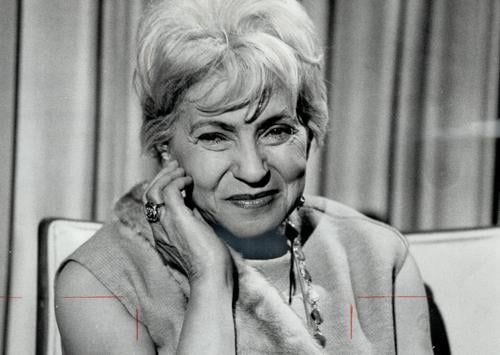
Ida Kaminska discusses her career
Apr. 13, 1966 Through an interpreter, Madame Ida Kaminska discusses her role in the film "The Shop on Main Street." Both her mother and father were actors, too. Madame Kaminska explains she comes from a family of actors from 100 years ago.
-
Director Michael Bogdanov discusses his production of Shakespeare’s “Timon of Athens”
Apr. 18, 1997 Interviewing television and theater director Michael Bogdanov. He discusses major themes from the play “Timon of Athens,” his life, and his work as a director. Includes a 10 second test tone. Content Warning: This conversation has the presence of outdated, biased, offensive language. Rather than remove this content, we present it in the context of twentieth-century social history to acknowledge and learn from its impact and to inspire awareness and discussion.