

-

Alfred McCoy discusses heroin trafficking; part 1
1971 Alfred McCoy discusses the history of heroin trafficking within the context of American foreign policy.
-
Alfred McCoy discusses heroin trafficking; part 2
1971 Alfred McCoy discusses the history of heroin trafficking within the context of American foreign policy.
-
Son House discusses his life and career as a blues musician
Apr. 19, 1965 Son House discusses his life and career as a preacher and blues musician. He talks about his family, his religious background as a preacher, and his recent comeback after disappearing from music scene in 1943. He performs several songs during the interview, which have been removed due to copyright.
-
Allen Ginsberg discusses poetry and meditation
Nov. 29, 1976 Studs Terkel and Allen Ginsberg talk about poetry, meditation, and the shifting of American socio-political consciousness between the 50's and 70's.
-
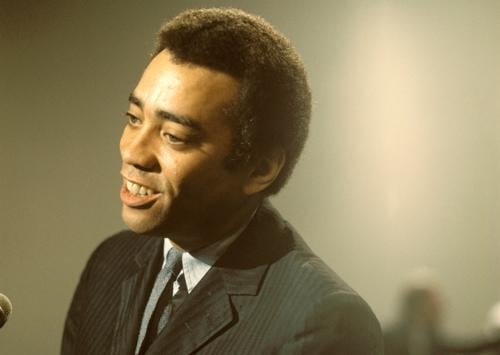
Presenting music with Oscar Brown, Jr
Jun. 6, 1977 Music performance by Oscar Brown, Jr.
-
Ralph Gleason discusses jazz, jazz artists, and jazz festivals ; part 1
Jul. 31, 1971 Studs interviews jazz and pop critic, and founding editor of "Rolling Stone" magazine, Ralph Gleason while in Berkeley, California (3 parts). Topics include the history of jazz, blues, and jazz culture, and how race played in the development and distribution of the music. Songs include Louis Armstrong's "(I'll Be Glad When You're Dead) You Rascal You."
-
Doug Marlette discusses "There's No Business Like Soul Business"
May. 15, 1987 Reverend Will B. Dunn and Mother Teresa are among the many subjects of Doug Marlette's book, "There's No Business Like Soul Business." Marlette explained his cartoons are either political or they deal with the religious right and race relations. The majority of the interview consists of Marlette and Studs Terkel reading lines from the cartoons in the book.
-
Discussing the book "The enchanted loom" with the author Robert Jastrow
Dec. 4, 1981 Discussing the book "The enchanted loom" with the author Robert Jastrow.
-
A conversation with Anne Jackson and Eli Wallach
Feb. 28, 1974 The married acting couple joins Studs for a conversation about their stage production of The Waltz of The Toreadors, at the Blackstone Theatre.*Please note: some sections have been edited out from the original recording due to copyright considerations
-
Interview with Gordon Thomas
Jan. 30, 1976 Co-author of Guernica: The Crucible of World War II*Please note: some sections have been edited out from the original recording due to copyright considerations