Main navigation

  • Home
  • Explore
  • Interact
      • Clips Explore themed playlists of audio clips from the Archive.
      • Reuse Listen to creative reuses of Studs’ interviews.
      • Remix Combine audio from the Archive to create entirely new works.
  • Podcast
  • Classroom
  • Donate

00 / 00

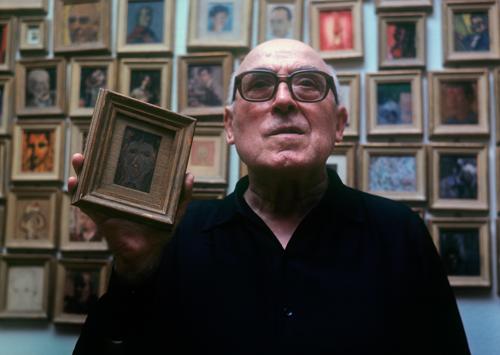
Interviewing Afro while Studs was in Rome, Italy ; part 2

BROADCAST: Dec. 1962 | DURATION: 00:19:56

Details

Broadcast Date
Dec. 1962

Physical Format
2 sound tape reels (ca. 60 min.) : 7 in.

Duration
19 minutes, 56 seconds

Ownership
The Chicago History Museum

Topics

Travel & Culture - Italy

Related Programs

Nelson Algren and Mario De Vecchi discuss "La Dolce Vita," part 1

Jun. 17, 1961

Pier Luigi Nervi and Joseph Nicoletti discuss architecture; part 2. Second interview: Caesar Zavattini discusses screenwriting and cinema

1962

Interviewing Marcello Mastrianni in Rome while Studs was in Italy

Dec. 12, 1962

Dr. Carlo Levi discusses his exile and humanity in southern Italy after WW2; part 1

1962

Interviewing William Arrowsmith and Bob Schenker while Studs was in Rome, Italy ; part 1

Dec. 1, 1962

Discussing his composition "The Consul; Musical Drama in Three Acts," with Italian American composer Gian Carlo Menotti (part 2 of 2).

Mar. 31, 1983

Major Support Provided By
The Becca Kopf Memorial Circle of Friends
WFMT Radio Network & Chicago History Museum

This site is being managed by WFMT in partnership with the Chicago History Museum.

Library of Congress

In-kind digitization services of the Studs Terkel Radio Archive are provided by the Library of Congress.

National Endowment for the Humanities

The Studs Terkel Radio Archive has been made possible in part by a major grant from the National Endowment for the Humanities: Exploring the human endeavor.

Studs Terkel Radio Archive

All Programs About The Archive About Studs Supporters Contact

©2026 WFMT Radio Network | Site by Jell Creative

Any views, findings, conclusions, or recommendations expressed in this web resource do not necessarily represent those of the National Endowment for the Humanities.