

-
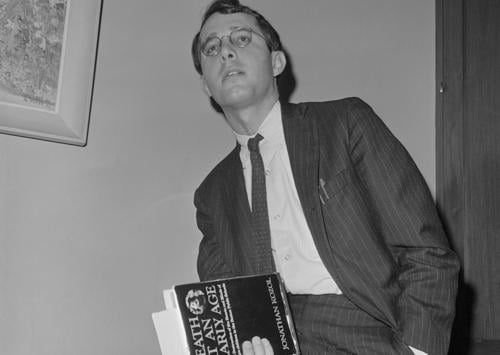
Jonathan Kozol discusses his book "Children of the Revolution: A Yankee Teacher in the Cuban Schools"
Nov. 10, 1978 Studs has a spirited discussion with Jonathan Kozol who shares his adventures and learnings in Cuba that formed the basis of his book "Children of the Revolution: A Yankee Teacher in the Cuban Schools." Kozol explains the ambitious Cuban Literacy Campaign begun in the 1960s that aimed to educate the entire population, tells of children teaching adults in remote villages by lantern light, and the unity and national pride that resulted. He and Studs explore the idea of generative words in literacy education and contemplate Kozol's hope to adapt a similar approach to American education.
-
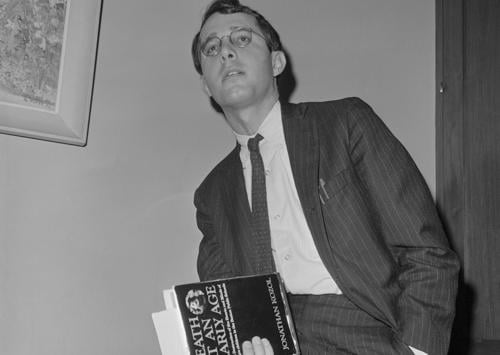
Jonathan Kozol and Patrick Zimmerman discusses about american education focusing in the Southern School at Uptown, Chicago
Nov. 13, 1973 Jonathan Kozol, the author of "Death at an Early Age" talks about issues of educational inequality and racial justice. Paul Zimmerman, former public teacher, talks about his experience creating what becomes to be the Southern School at Uptown, Chicago.
-
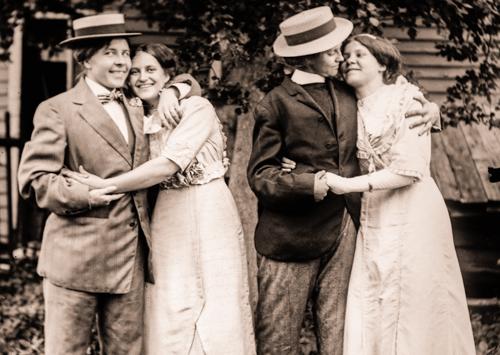
Jonathan Katz discusses his book "Gay American History"
Feb. 4, 1977 Discussing the book, "Gay American History: Lesbians and Gay Men in the U.S.A.: A Documentary," and interviewing its author, Jonathan Katz.
-
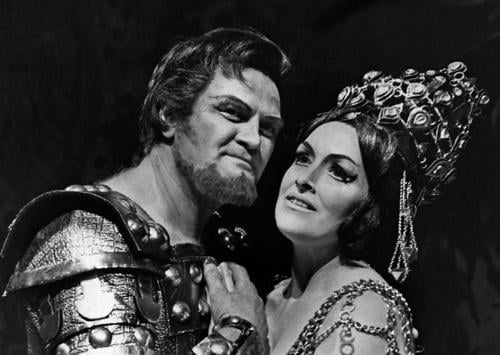
Jon Vickers discusses his career
Oct. 11, 1974 Jon Vickers discusses his career, opera music, and opera singers.
-

Johnny shares his thoughts about the neighborhood ; part 1
1968 Content Warning: This conversation includes racially and/or culturally derogatory language and/or negative depictions of Black and Indigenous people of color, women, and LGBTQI+ individuals. Rather than remove this content, we present it in the context of twentieth-century social history to acknowledge and learn from its impact and to inspire awareness and discussion. Fourteen year-old Johnny attends Harrison High School. When asked if he were God & what changes he would make, Johnny replied he'd see to it that Black people remain on the their side of town.
-
John Zukowsky and Stanley Tigerman discuss the controversy surrounding their exhibit
Jul. 8, 1993 Curator John Zukowsky and architect Stanley Tigerman discuss their architecture exhibit and the controversy surrounding it.*Please note: some sections have been edited out from the original recording due to copyright considerations
-
John Wicklein discusses his book "The Electronic Nightmare"
Jul. 1, 1981 Content Warning: This conversation includes racially and/or culturally derogatory language and/or negative depictions of Black and Indigenous people of color, women, and LGBTQI+ individuals. Rather than remove this content, we present it in the context of twentieth-century social history to acknowledge and learn from its impact and to inspire awareness and discussion.
-
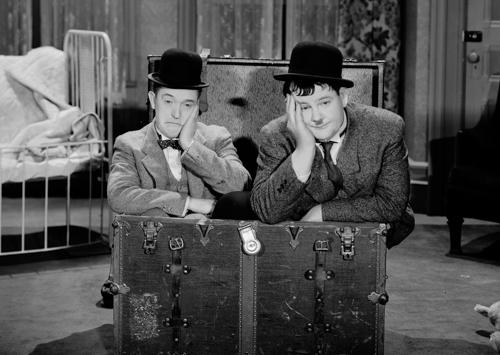
John West discusses Stan Laurel and Oliver Hardy
Nov. 2, 1965 John West discuss early classical Hollywood comedy double act Stan Laurel and Oliver Hardy. Four clips are played during the interview. The first three clips are from Laurel and Hardy's "Their First Mistake" (1932) and the fourth clip is from Laurel and Hardy's "Swiss Miss" (1938).
-
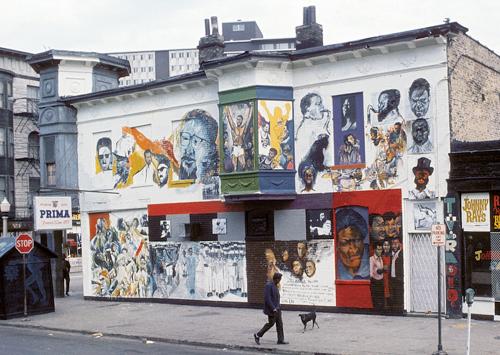
John Weber, Mark Rogovin and Justine DeVan discuss their work on murals and the Wall of Respect in Chicago
1970 John Weber, Mark Rogovin and Justine DeVan discuss their involvement with the mural movement as well as their involvement with the Chicago community and their various art projects. Includes excerpt of an interview with Bill Walker at the Peace and Salvation Wall of Understanding in (near?) Cabrini Green.
-
John Vinci, David Van Zanten, and Wim de Wit discuss the Chicago Historical Society’s exhibition “Louis Sullivan: The Function of Ornament”
Aug. 27, 1986 Architect John Vinci, art and architectural historian David Van Zanten, and curator Wim de Wit discuss Louis Sullivan and the Chicago Historical Society’s exhibition “Louis Sullivan: The Function of Ornament.” The group discusses Sullivan’s use of ornament to add an organic element to his architecture; as well as some of Sullivan’s most prominent work, including the Chicago Stock Exchange Building, the Auditorium Building, and the Sullivan Center. This program includes a clip from 1956 of Frank Lloyd Wright discussing Sullivan and his impact on architectural design.
-
John Tateishi talks about his book "And Justice for All"
Jun. 22, 1984 Tateishi discusses his collection of oral histories by Japanese-Americans who were interned in 1942. Includes excerpts from Minoru Yasui, Yoriko Hohri (featured in "The Good War"), Peter Ota and a friend of Studs' who was ordered to terrorize Japanese-Americans as part of his military duty.
-
John T. Scopes discusses the "Scopes Monkey Trial" of 1925
Oct. 20, 1960 John T. Scopes was a young teacher who taught biology. He was arrested because in Tennessee, no theory of the origin of man could be taught in schools. Clarence Darrow, an attorney from Chicago, defended Scopes in the "Scopes Monkey Trial" of 1925. Scopes was found guilty and was fined $100.
-
John Steinway discusses the family business of making pianos
Nov. 4, 1965 As a result of making cabinets, the family business of making pianos started in 1853. John Steinway is a 4th generation piano-maker. Steinway talks about his own apprenticeship and first learning about wood. He feels the pianos are made better today because long ago, only two men made a piano versus a six or eight man crew to perfect the craftmanship today.*Please note: some sections have been edited out from the original recording due to copyright considerations
-
John Simon discusses film
Feb. 16, 1979 Film critic John Simon and Studs Terkel discuss various movies, filmmaking techniques, and how film is a newer form of art. Terkel plays an audio clip from an interview he did he with Italian actor Marcello Mastroianni.
-
John Ray, Jimmy Ray and Henry discuss life in Chicago; part 2
1968 Jimmy Ray, John Ray, and Henry discuss their personal feelings on a variety of topics including religion, every day life, and what an ideal world looks like.