

-

Dr. Linda Murray and Dr. Quentin Young talks about Cook County Public Hospital and the dynamic of public hospitals around the country
Jan. 10, 1979 Interview with Dr. Linda Murray and Dr. Quentin Young which discusses how closing public hospitals can affect minorities and less privileged communities. Also talks about the expectations of medical students and the dynamics of medical school.
-
Dr. Leo Seren discusses atomic fission and nuclear experiments
Feb. 21, 1978 Nuclear physicist, Dr. Leo Seren, discusses atomic fission and nuclear experiments.
-
Dr. Kosta Tsipis discusses the dangers of nuclear war
Mar. 9, 1982 Discussing the dangers of nuclear war and its effect on people with nuclear physicist and co-director of the program of Science and Technology at MIT, Dr. Kosta Tsipis.*Please note: some sections have been edited out from the original recording due to copyright considerations
-
-
Dr. Joseph Burkhalter and Dr. Charles Price talk with Studs about Pharmaceutical Chemistry ; part 2
1964 Studs has a conversation with Dr. Charles Price, American Chemical Society president and chairman of chemistry department at University of Pennsylvania and Dr. Joseph Burkhalter, Professor of pharmaceutical chemistry at University of Michigan, and chairman of American Chemical Society's division of medicinal chemistry. Dr. Price And Dr. Burkhardter discuss the drug industry and working with the government to develop pharmaceutical medicines. Both doctors voice the debate about creation of nuclear technology and how that impacted science in general.
-
Dr. Joseph Burkhalter and Dr. Charles Price talk with Studs about Pharmaceutical Chemistry ; part 1
1964 Studs has a conversation with Dr. Charles Price, American Chemical Society president and chairman of chemistry department at University of Pennsylvania and Dr. Joseph Burkhalter, Professor of pharmaceutical chemistry at University of Michigan, and chairman of American Chemical Society's division of medicinal chemistry. Dr. Price And Dr. Burkhardter discuss the drug industry and working with the government to develop pharmaceutical medicines. Both doctors voice the debate about creation of nuclear technology and how that impacted science in general. (part 1)
-
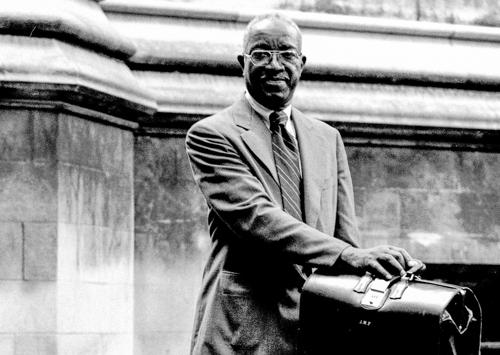
Dr. John Hope Franklin discusses the history of Civil War Reconstruction; part 1
1966 Dr. John Hope Franklin, professor of history at University of Chicago, outlines the history of reconstruction during the American Civil War and briefly his experience at the March to Montgomery; part 1.
-
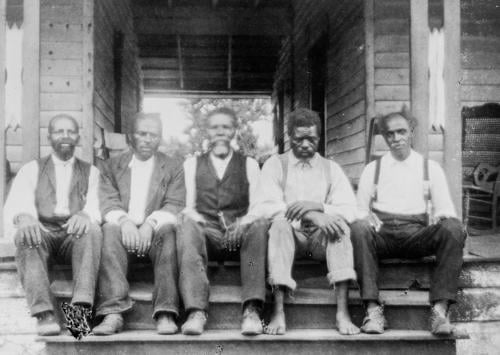
Dr. John Hope Franklin discusses reconstruction after the American Civil War; part 2
1966 Dr. John Hope Franklin, professor of history at University of Chicago, discusses the political history of reconstruction after the Civil War, along with which political decisions led to a power imbalance and the rise of the Ku Klux Klan in the southern states; part 2.
-
Dr. John Gedo discusses psychoanalysis
Sep. 22, 1981 Discussing psychoanalysis with Dr. John Gedo, former president of the Chicago Psychoanalytic Society.*Please note: some sections have been edited out from the original recording due to copyright considerations
-
Dr. John C. Lilly discusses his book "Center of the Cyclone"
Feb. 22, 1972 Discussing the book "Center of the Cyclone: An Autobiography of Inner Space" with the author Dr. John C. Lilly.*Please note: some sections have been edited out from the original recording due to copyright considerations
-
Dr. Jan Fawcett and Marcella McGuire discuss alcoholism and mental health
Nov. 2, 1992 Dr. Jan Fawcett and Marcella McGuire discuss alcoholism, its connection with mental health, and current practices for treatment. Studs plays "Father's a Drunkard and Mother is Dead" - E.A. Parkhurst (1866).
-
-
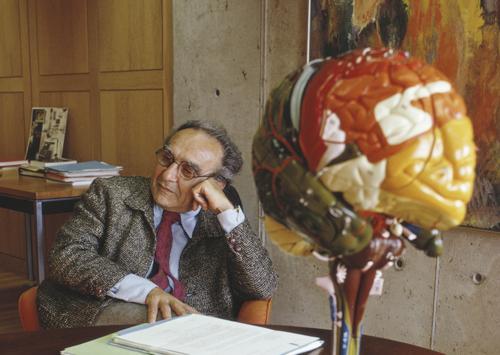
Dr. Jacob Bronowski discusses the philosophy of science in the post World War II world
Jan. 1, 1971 Dr. Jacob Bronowski, a mathematician and philosopher, discusses how the study of science has changed since the onset of government regulation or the military industrial complex. He also talks about humanity and explains how humans are the best species and therefore should come together to continue progress instead of killing each other. Content Warning: This conversation has the presence of outdated, biased, offensive language.
-
Dr. Herbert S. Terrace discusses his work in the field of primate cognition
Feb. 1980 Columbia University professor of psychology, Dr. Herbert Terrace, talks with Studs regarding his 1979 book "Nim: A Chimpanzee Who Learned Sign Language," animal cognition and the evolution of language.
-
Dr. Helen Caldicott discusses the ill-effects of a nuclear bomb going off
Apr. 7, 1981 The world spends 600 billon dollars on the arms race, which is rather puzzling to Dr. Helen Caldicott when 2/3 of the world's children are starving. Caldicott explained if a bomb went off in Chicago, there'd be a crater a half a mile wide and 300 feet deep. In addition, 90% of the people will be dead, some from being vaporized.