

-

Dr. Ronald J. Glasser discusses his book "Another War, Another Peace"
May. 10, 1985 Discussing the book "Another War, Another Peace: A Novel" with the author Dr. Ronald J. Glasser.
-
Dr. Ronald Glasser discusses his the book "The Greatest Battle"
Nov. 29, 1976 Dr. Ronald Glasser talks about his book "The Greatest Battle," which explores cancer and the environmental factors that can cause it. He talks about smoking, food additives and diet, infectious diseases, and germs.
-
Dr. Robert Jay Lifton discusses the psychological impact of the nuclear arms race
1980 Dr. Robert Jay Lifton, psychiatrist and psycho-historian, discusses the acceptance and embrace of nuclear disaster, doctors' opposition to nuclear weapons, difference in Americans' and Europeans' opposition to nuclear weapons, psychological impact of nuclear bombings in Japan, and the mental disconnect experienced by those who build atomic weapons who then see the bombs' effects.
-
Dr. Robert Coles reads from and discusses his book "The Call of Service"
Sep. 8, 1993 Dr. Robert Coles' book, "The Call of Service; A Witness to Idealism" came as a result of watching of his mother work tirelessly in soup kitchens, helping the less fortunate. Through his stories and experiences, Coles lets his audience know that one must put himself in others' shoes to truly help others.
-
Dr. Richard Selzer discusses his book "Mortal Lessons: Notes on the Art of Surgery"
Feb. 17, 1977 Dr. Richard Selzer, a surgeon, reads essays from his book, "Mortal Lesson: Notes on the Art of Surgery." Dr. Selzer recalls moments of his profession that stuck with him including the removal of a diabetic women's leg and the removal of a botfly larvae. He also takes a poetic look at the liver and the skin, including a story about Henry Moss. Dr. Selzer finishes his interview with a story about his first time witnessing an abortion. A comedy skit by Mike Nichols and Elaine May is also played.
-
Dr. Quentin Young discusses his work at Cook County Hospital
Aug. 20, 1974 Dr. Young talks about his policy about addictive medications at Cook County Hospital, and about the financially driven connections between pharmaceutical companies and doctors.
-
Dr. Paul R. Ehrlich discusses his book "The Population Bomb"
1969 At the conclusion of this interview, Dr. Paul Ehrlich predicts that 5 to 6,000 people will have died of starvation. "The Population Bomb," covers why women should stop having children and why the government should pass out $500 every year to women who don't have kids.*Please note: some sections have been edited out from the original recording due to copyright considerations
-
Dr. Paul Lazar discusses the developmentally disabled and their care
Jan. 21, 1975 Interviewing Dr. Paul Lazar, chairman of the Lambs Farm, a home for developmentally handicapped adults that also provides an outdoor family activity and recreation center in Libertyville, Illinois. Dr. Paul Lazar talks about his developmentally disabled son.
-
Dr. Oliver Sacks discusses his book "The Island of the Colorblind"
Jan. 16, 1997 His book, "The Island of the Colorblind," was the result of Dr. Oliver Sacks' travels to Micronesia. Sacks was puzzled by how people that were color blind could tell if a banana was ripe. A man told him that one must rely on the smell of the banana and its texture. The second part of the book is devoted to Sacks' travels to Guam.*Please note: some sections have been edited out from the original recording due to copyright considerations
-
-
Dr. Meir Yoeli discusses medicine
1969 It is not enough to just treat a disease, explained Dr. Meir Yoeli. Dr. Yoeli said there needs to be a bridge for both science and for the truth of the heart. Also a poet, Dr. Yoeli reads a poem in English and then in Hebrew.
-
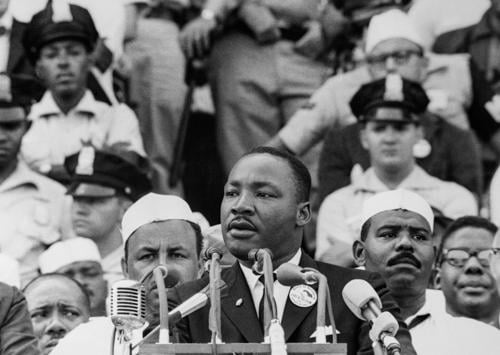
Dr. Martin Luther King Jr. discusses civil rights in regards to his "I Have a Dream" speech
Oct. 22, 1964 Studs Terkel interviews Dr. Martin Luther King Jr. at the home of gospel singer Mahalia Jackson. They discuss King's "I Have a Dream" speech that he made in 1963, at the foot of the Lincoln Memorial. At the end of the program there are various gospel music selections featuring Jackson and others.
-
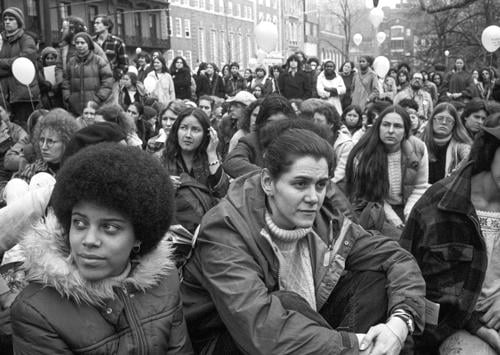
Dr. Marlene Dixon, Nancy Stokely, and Janet Tenney discuss women's rights; part 2
Mar. 11, 1969 Discussing the topic of women and freedom with Marlene Dixon, Nancy Stokely, and Janet Tenney. They discuss feminism, women's rights, and the women's liberation movement. Includes a Elizabeth Knight/Julia Ward Howe song called "Hallelujah".
-
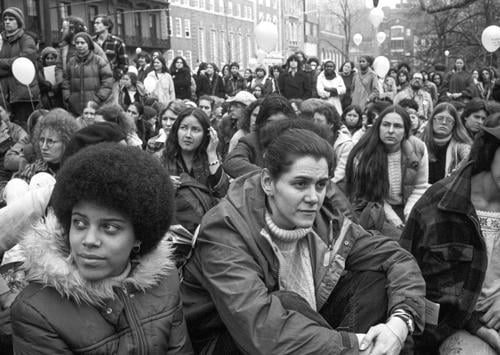
Dr. Marlene Dixon, Nancy Stokely and Janet Tenney discuss women's rights; part 1
Mar. 11, 1969 Discussing women and women's rights with Dr. Marlene, Nancy Stokely, and Janet Tenney. They discuss the women's suffrage movement, gender equality, and women's roles. Includes the women's suffrage song "The New America" by Elizabeth Knight.
-
Dr. M. Merchant discusses Shakespeare and the arts
Aug. 18, 1965 Welsh scholar Dr. M. Merchant speaks about Shakespeare and his impact on other arts and artists. Toward the end, there is an excerpt of Sir John Gielgud in Shakespeare's "Measure for Measure."*Please note: some sections have been edited out from the original recording due to copyright considerations