

-

Ed & Marlene Sadlowski discuss his campaign and victory to become Director of District 31
Nov. 18, 1974 Marlene and Ed Sadlowski talk about their blue collar Chicago backgrounds, hopes for improving labor workers conditions, and Ed's underdog 2 to 1 victory to become the Director of the largest steel union's district.
-

Economist Robert Theobald discusses his ideas for a better world
Jan. 8, 1968 Poor people, politicians, guaranteed basic income and power are all among the topics that Robert Theobald covers to achieve a better world for mankind. Using the media better to sway the public's opinion, so that the politicians will vote in the masses' interests are all apart of Theobald's plan, too.
-
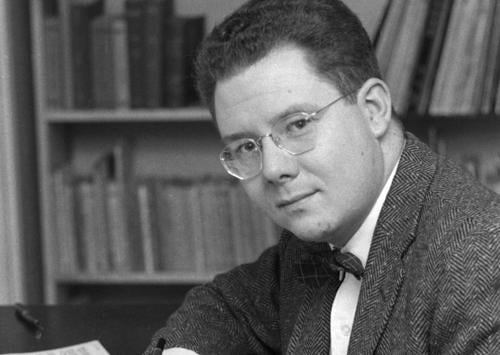
Easley Blackwood, Midwestern composer, pianist and educator at University of Chicago, discusses his music
Mar. 1, 1961 Studs and Mr. Blackwood discuss his musical theory of tonal composition, and Mr. Blackwood plays several excerpts of his piece "Chamber Work for Fourteen Winds" on the piano.
-
Easley Blackwood, Leonard Meyer and Ralph Shapey talk about standards of composition in contemporary music, part 1
1965 The program begins with an excerpt from BBC Radio about a hoax piece of music by Pietorzac (Hans Keller). Hans Keller and a friend went into studio and made noise and presented it as music. In this round table discussion the three gentlemen - all composers, musicians, and educators, discuss with Studs, contemporary music and the standards for defining a composition as music. In the second hour, they discuss what level of knowledge of music a critic should have in order to form a proper opinion of music. All animatedly offer their opinion to both the pro's and the cons.
-
Easley Blackwood, Leonard Meyer and Ralph Shapey discuss the standards of composition in contemporary music, part 2
1965 In this round table discussion the three gentlemen - all composers, musicians, and educators - discuss with Studs contemporary music and the standards for defining a composition in music. In the second hour they discuss what level of knowledge of music a critic should have in order to form a proper opinion of music. All animatedly offer their opinion to both the pro and the con. A movement of both Blackwood and Shapey compositions is played.
-
Easley Blackwood, David Schrader and Ramon Salvatore in discussion with Studs Terkel about music
Apr. 14, 1993 Presenting music published by Chicago record label Cedille Records including the music of composer and pianist Easley Blackwood along with David Schrader and Ramon Salvatore.
-
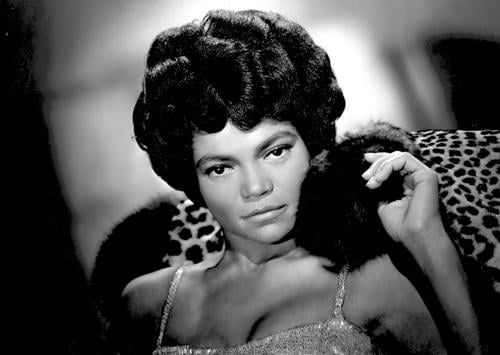
Eartha Kitt discusses her music career ; part 3
Jul. 10, 1962 Studs Terkel continues to interview actress and singer Eartha Kitt. Part 3 of the interview begins with Kitt discussing the following; her career; her international travels; and linguistic abilities.
-
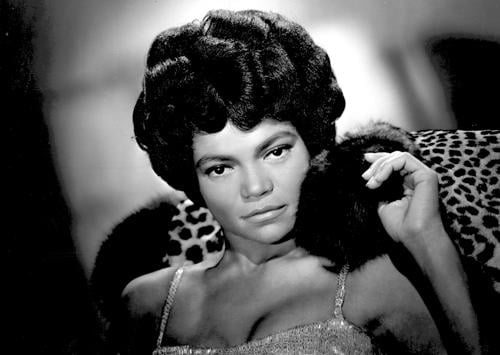
Eartha Kitt discusses her music career ; part 2
Jul. 10, 1962 Studs Terkel continues to interview actress and singer Eartha Kitt. Part 2 of the interview begins with the song "Üsküdara", and ends with "Mountain High, Valley Low", both sung by Kitt. Kitt discusses the following; her career; her desire to entertain; her autobiography, "Thursday's Child"; her mothers death; the art of interacting with the audience; the femme fatale; her time with the Katherine Dunham Dancers; and her portrayl of Helen of Troy.
-
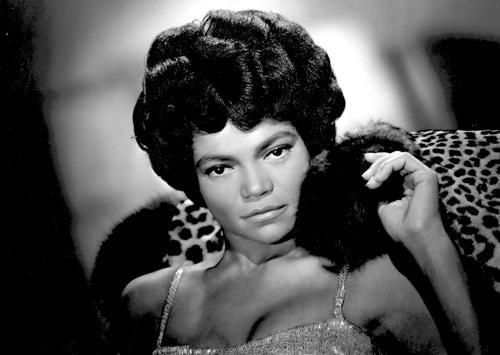
Eartha Kitt discusses her music career ; part 1
Jul. 10, 1962 Studs Terkel interviews actress and singer Eartha Kitt. The program begins with a musical selections sung by Kitt, "C'est Si Bon". Kitt discusses the following; her career; how the songs she sings are interpreted and preferred by people of different nationalities; what led her to be an international star; her childhood; her meeting with Albert Einstein;
-
Earl Robinson, Lewis Allan, and Bob Schneiderman discuss the upcoming production of "One Foot in America"
Oct. 27, 1960 *Please note: some sections have been edited out from the original recording due to copyright considerations
-
-
Earl "Fatha" Hines and John McDonough discuss jazz music
Sep. 8, 1976 Earl "Fatha" Hines discusses various musicians he's worked with including Louis Armstrong, Charlie Parker, and Dizzy Gillespie. He remembers that bands became bigger after needing to add members to play bigger venues because people liked to dance. He also talks about how he liked to work to create shows and his approach to jazz composition. Music is played throughout: "Weather Bird" with Louis Armstrong, "My Monday Date", "Cavernism", "Boogie Woogie On St. Louis Blues", "Rosetta", and "Second Balcony Jump". Music has been removed from this file for copyright reasons.
-
E.Y. (Yip) Harburg discusses songwriting and "Rhymes for the Irreverent"; part 2
Jan. 1966 E.Y. (Yip) Harburg explains how songwriting needs to use and elevate street language to be successful, why he likes rainbows, and what creators of art and music owe the world. He also reads from his book "Rhymes for the Irreverent". Music is played from Finian's Rainbow: "When the Idle Poor Become the Idle Rich" and "How Are Things in Glocca Morra?", original Broadway cast recording. Part 2. Music has been removed from this recording for copyright reasons.
-
E.Y. (Yip) Harburg discusses songwriting and "Rhymes for the Irreverent"; part 1
Jan. 1966 E.Y. (Yip) Harburg talks about the challenges in writing songs for characters, specifically Og in "Finian's Rainbow". He also discusses the craftsmanship of lyric writing and reads from his book "Rhymes for the Irreverent". Music is heard throughout: "When I'm Not Near the Girl I Love" performed by David Wayne and "The Eagle and Me", performed by Dooley Wilson. Part 1 Music has been removed from this recording for copyright reasons.
-
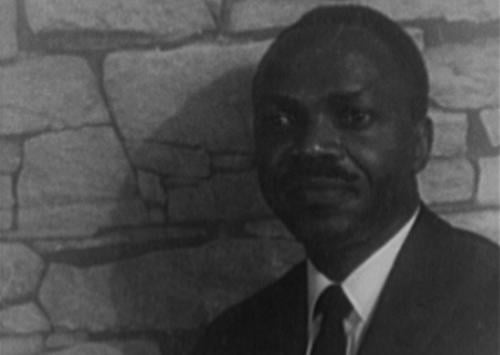
E.R. Braithwaite discusses his career and the book "Reluctant Neighbors"
1972 E.R. Braithwaite, Guyanese-born British-American novelist, writer, teacher and diplomat discusses his writing and career. The interview opens with Mr. Braithwaite, reading from his book "Reluctant neighbors".