

-
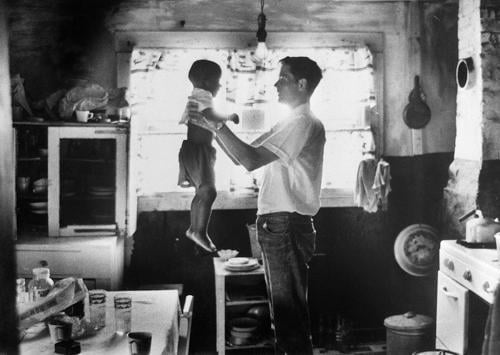
Paul Cowan discusses his book "The Making of an UnAmerican", part 2
May. 4, 1970 Writer and activist Paul Cowan discusses the Peace Corps and his book "The Making of an UnAmerican", part 2
-

Paul Cowan discusses his book "The Making of an UnAmerican," part 1
May. 4, 1970 Writer and activist Paul Cowan discusses the events and experiences that inspired his book "The Making of an UnAmerican," part 1.
-

Pat Duncan discusses Apartheid and South Africa ; part 1
1963 South African anti-apartheid activist Pat Duncan discusses Apartheid and South Africa, part 1.
-
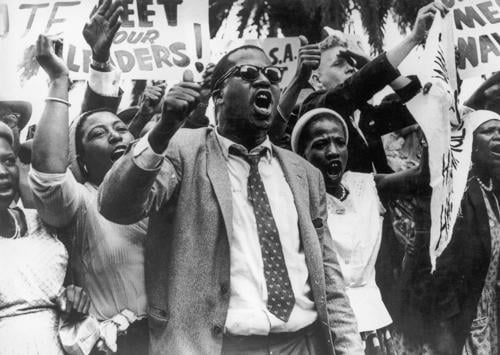
Pat Duncan and Deborah Cowan discusses Apartheid and South Africa ; part 2
1963 Pat Duncan and Deborah Cowan discusses Apartheid and South Africa, part 2. Duncan's portion of the program concludes at 00:14:20, and the rest of the program features Cowan.
-
Norman Thomas discusses the book "Great Dissenters" ; part 1
Nov. 11, 1961 According to Norman Thomas, things in life are not as great as they used to be and there's nothing wrong with dissenting. Thomas chose 5 dissenters to write about, Socrates, Galileo, Thomas Paine, Wendell Phillips and Gandhi. Of of all of them, Gandhi was the biggest dissenter of our time, said Thomas.
-
Norman Thomas and Lillian Smith discuss dissenting ; part 2
Nov. 11, 1961 Content Warning: This conversation includes racially and/or culturally derogatory language and/or negative depictions of Black and Indigenous people of color, women, and LGBTQI+ individuals. Rather than remove this content, we present it in the context of twentieth-century social history to acknowledge and learn from its impact and to inspire awareness and discussion. Lillian Smith's father taught her that we're all human beings and that no one was better than another person.
-
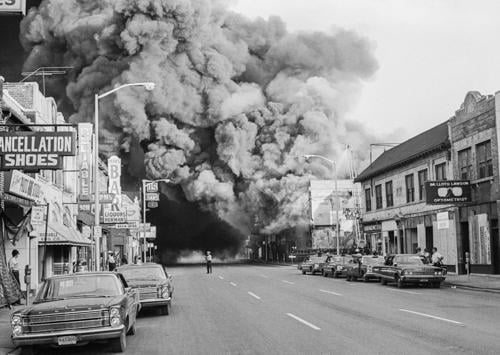
Nancy Milio reads from and discusses her book "9226 Kercheval"
Jun. 13, 1970 Nancy Milio's book, "9226 Kercheval: The Storefront That Did Not Burn," is about community health services offered in a ghetto on the south side of Detroit, Michigan. As a nurse, Milio knew how important it was to offer quality health services to poor and uneducated individuals. With their real names changed, Milio talks about her experiences with Mrs. Watkins, Johhnie West and others at the center.
-
Myra Alexander discusses what's wrong with Chicago
1980 Content Warning: This conversation includes racially and/or culturally derogatory language and/or negative depictions of Black and Indigenous people of color, women, and LGBTQI+ individuals. Rather than remove this content, we present it in the context of twentieth-century social history to acknowledge and learn from its impact and to inspire awareness and discussion. A citizen of Chicago, Myra Alexander, believes Chicago is lost and hopeless. Chicago, she explains, will always have its problems with its one party system. Alexander said prejudice is wide-spread in Chicago.
-
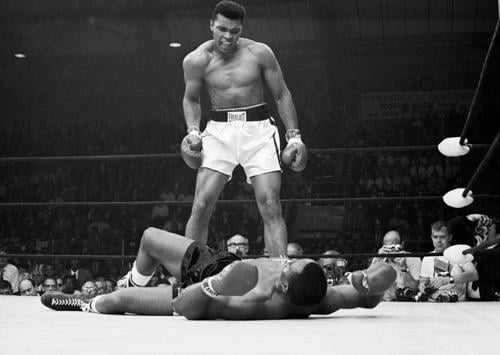
Muhammad Ali discusses his book "The Greatest: My Own Story"
Nov. 26, 1975 Content Warning: This conversation includes racially and/or culturally derogatory language and/or negative depictions of Black and Indigenous people of color, women, and LGBTQI+ individuals. Rather than remove this content, we present it in the context of twentieth-century social history to acknowledge and learn from its impact and to inspire awareness and discussion. Muhammad Ali discusses his book "The Greatest: My Own Story," touching on topics including his childhood and family, conversion to Islam, stance on the Vietnam War, and experiences in jail.
-
Morris Dees discusses his latest book "A Season for Justice: the Life and Times of Civil Rights Lawyer Morris Dees"
May. 31, 1991 Southern Poverty Law Center founder and attorney Morris Dees discusses his career and pursuit of ending racism. Some cases associated with Morris Dees include NAACP v. Dothard and Person v. Carolina Knights of the Ku Klux Klan.
-
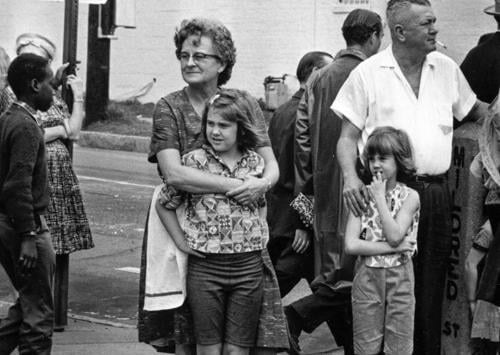
Molly a poor white woman talks with Studs Terkel
Apr. 9, 1965 Interviewing in Montgomery, Alabama, with Molly a poor white [part 7, tape 2 of 2]. She speaks of the culture and heritage of poor white families. She advocates for unity and leadership and sense of worth for poor whites. Some of the recording fades out and has some static that makes it hard to understand.
-
Molapantene Collins Ramusi discusses his book "Soweto, My Love"
Apr. 10, 1989 In his book, "Soweto, My Love: A Testimony to Black Life in South Africa" Molapantene Collins Ramusi talks about the love for his homeland and one day hoping to see it free. Ramusi also talks about going to the 1st grade when he was 17. Ramusi became a lawyer to defend the defenseless. He was a warrior in the courts, defending widows who were told they were breaking the law by living in an apartment that belonged to their dead husbands.
-
Mike Royko discusses some of his journalist stories ; part 1
Jul. 29, 1966 Mike Royko, a long-time journalist in Chicago, discusses some of his most popular columns. Topics include Cook County Hospital's lack of air conditioning in surgery rooms, the future of workers, and the Civil Right's Movement. The responsiblities of journalists and the effect of newspapers are also discussed.
-
Maya Angelou discusses her book "I Know Why the Caged Bird Sings"
Mar. 13, 1970 Angelou discusses her book "I Know Why the Caged Bird Sings" and recites "When I Think About Myself." She talks about growing up in Stamps, Arkansas, and her family. Copyrighted material has been removed.
-
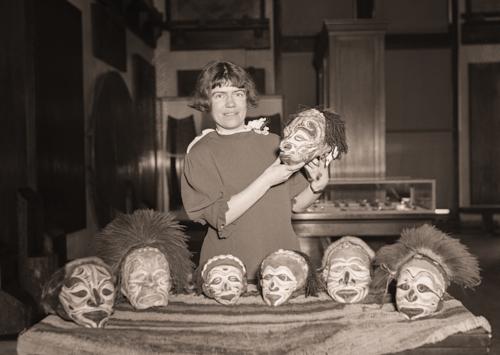
Margaret Mead discusses different cultures, anthropology, and society
1965 Margaret Mead discusses different cultures, anthropology, and society. Margaret Mead discusses topics such as immigrants, American society, poverty, and population explosion.