

-
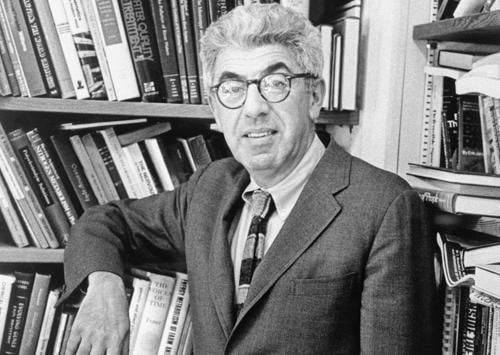
Barry Commoner discusses his book "Making Peace with the Planet"
Apr. 12, 1990 According to Barry Commoner's book, "Making Peace with the Planet," we, as the human species, are in and are witnessing a war between the ecosphere and the technosphere. Commoner explains that today's cars emit a lot of smog into the big cities. Trucks move consumer goods from place to place, using four times more fuel than trains. Everyone should ask themselves what is their interest in the quality of the environment and that of nature.
-

Anthony Sampson discusses his book "The Seven Sisters"
Oct. 31, 1975 Discussing the book, The Seven Sisters: the Great Oil Companies and the World they Made, and interviewing author Anthony Sampson.*Please note: some sections have been edited out from the original recording due to copyright considerations
-
Angela Pieroni and Dr. Bertram Carnow discuss air pollution
1970 A homemaker, Angela Pieroni, has spent eight years fighting for the rights of everyone to breath clean air. Pieroni explains she's done with just complaining and being brushed aside. She wants to see national legislation against air pollution. Dr. Bertram Carnow said he's not sure how long we'll be around as a species. Carnow explained that perhaps two or three million people will have to die before authorities take air pollution seriously.
-
An Earth Day conversation with Will Steger and Jon Bowermaster
Apr. 26, 1990 A conversation about ecology, with the authors of Saving the Earth: A Citizen's Guide to Environmental Action.*Please note: some sections have been edited out from the original recording due to copyright considerations
-
Amory Lovins discusses his books “Soft Energy Paths: Toward a Durable Peace” and “Energy Unbound: A Fable for America’s Future”
Jun. 9, 1987 Physicist and renewable energy activist Amory Lovins discusses areas of focus for renewable energy, including at-home utility usage and agriculture. Lovins also discusses his two books “Soft Energy Paths: Toward a Durable Peace” and “Energy Unbound: A Fable for America’s Future.” Studs plays "Whose Garden Was This" - Tom Paxton (1970).
-
Alexander Cockburn discusses his book “The Fate of the Forest: Developers, Destroyers, and Defenders of the Amazon”
Nov. 20, 1989 Author and journalist Alexander Cockburn discusses his book “The Fate of the Forest: Developers, Destroyers, and Defenders of the Amazon.” Cockburn discusses the detrimental effects of deforestation not only on the environment, but for the indigenous groups, such as the Kayapo people, as well. Studs plays "Cancão Da Terra (Song of the Earth)" - Zelia Barbosa (1968).
-
Abram Chayes discusses the mining of the Nicaraguan Harbor by U.S. Naval forces
May. 16, 1985 Abram Chayes, Professor of International Law at Harvard University, discusses the United States’ foreign relations with Nicaragua and the International Court of Justice, also known as the World Court.