

-
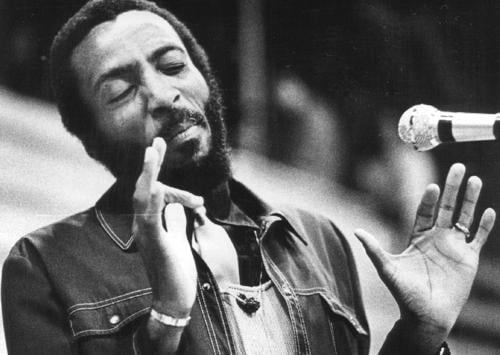
Dick Gregory discusses his career
May. 14, 1970 Lillian Smith excerpt opens the program.
-
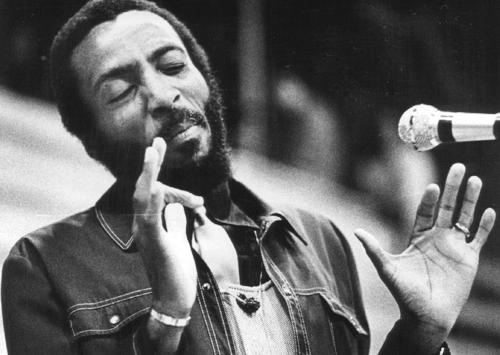
Dick Gregory discusses his book "Dick Gregory's Natural Diet for Folks Who Eat: Cookin' With Mother Nature"
May. 30, 1973 Comedian and activist Dick Gregory joins Studs Terkel to discuss his new book “Dick Gregory's Natural Diet for Folks Who Eat: Cookin' With Mother Nature.” Gregory talks about his experiences fasting for both political and health reasons, and he comments on hunger in America, the power of the navy bean, and changing trends in eating. The two discuss the peace movement and Watergate, and Gregory shares his experience as a black man in the military. Gregory believes that how you treat yourself and your body reflects how you treat others.
-

Dick Gregory discusses American politics
Dec. 17, 1964 This interview begins with a clip of one of Dick Gregory’s performances, where he talks about nonviolence and Native Americans. Studs Terkel introduces his guest as an observer, explaining that comedians are the best observers in society. Gregory offers extended analogies to communicate his views on a variety of topics, including the Vietnam War, race relations, segregation, human rights, and urban renewal. [The date is unclear, but it has to be after 1970, since the Kent State Shootings were mentioned]
-
Derrick Bell discusses his book "Confronting Authority"
Dec. 2, 1994 Civil rights activist, lawyer, and professor Derrick Bell discusses his latest work and protest against Harvard University due to their lack of diverse hiring in academics. Bell is known for his work on the concept of critical race theory and his relentless pursuit of fair treatment for his colleagues.
-
Derrick A. Bell in conversation with Studs Terkel
Oct. 8, 1992 Interviewing lawyer, activist and author Derrick Bell.
-
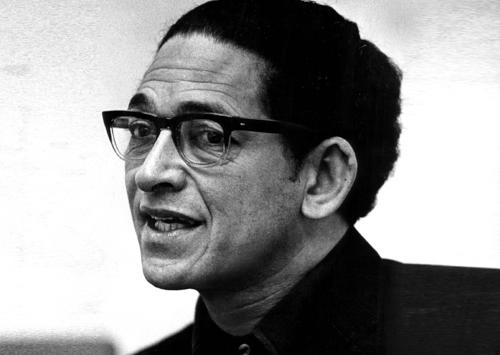
Dennis Brutus, John Fry, and Judith Todd discusses race, South Africa, and Rhodesia
Apr. 28, 1973 Judith Todd, daughter of prime minister of Rhodesia, discusses the book "Right to say no"; Dennis Brutus, poet and involved in protest of Rhodesia taking part in 1972 Olympics, and John Fry pastor First Presbyterian Church and social writer, race, South Africa, and Rhodesia. Excerpt from interview of people in South Africa - a guide, an Afrikaner, and a Chicago policeman regarding race (1895817-6-1 South African Tapes). The three were brought together to have a round table discussion about race relations in South Africa.
-
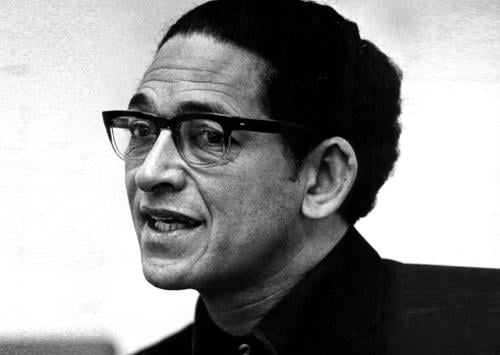
Dennis Brutus talks with Studs Terkel
Jun. 14, 1973 Dennis Brutus discusses and reads his poetry. He discusses life in South Africa. Dennis Brutus reads poems from his books of poetry "Sirens, Knuckles and Boots", "A Simple Lust", and "Letters to Martha and Other Poems from a South African Prison". Includes music in the beginning. Includes a clip of Albert Lutuli speaking.
-
David Hamlin discusses his book, "The Nazi/Skokie Conflict: A Civil Liberties Battle"
Mar. 5, 1981 David Hamlin, author and former Executive Director of ACLU, discusses his book "The Nazi/Skokie Conflict: A Civil Liberties Battle." Hamlin talks about Frank Collin, a jewish man turned leader of American Nazi Party leader and the court battle over the right to demonstrate in Skokie, Illinois. He also talks about the retaliation against the ALCU for defending Collin's case in court. At the end of the interview, Hamlin gives some advice on how to deal with people like Frank Collin.
-
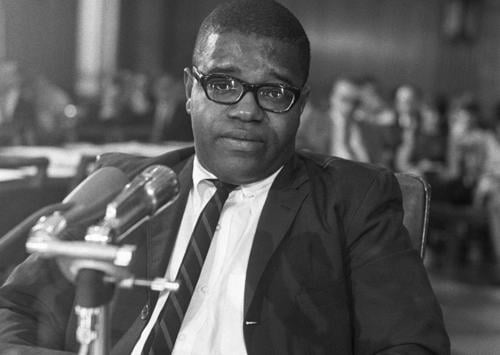
Claude Brown talks with Studs Terkel
Sep. 13, 1965 Discussing the book "Manchild in the Promised Land" with Claude Brown. Brown also discusses growing up in Harlem, New York as an African American man. Includes a clip of a man speaking from the county jail. Includes a song sung by Mahalia Jackson. Includes a clip of children singing.
-
Chicago residents Alice and Bob Taylor talk with Studs Terkel
1970 Recorded in the Taylor's home against a backdrop of sounds created by a nine-children family, Studs, Alice and Bob discuss aspects of a white family living in a predominately African-American amidst an exodus of the white, Christian community. Includes a performance of "Onward, Christian Soldiers" by the family around their piano, and "Jesus Loves Me" by two of the children.
-

Charles Eames discusses his life of travel and his study of design and architecture, part 1
Oct. 1, 1965 Charles Eames, an architect, designer, artist, filmmaker and student of human nature, talks with Studs about his years of travel in India and Europe. He discusses studying architecture and working as an architect and the nature of his film making. (Part 1 of 2)
-
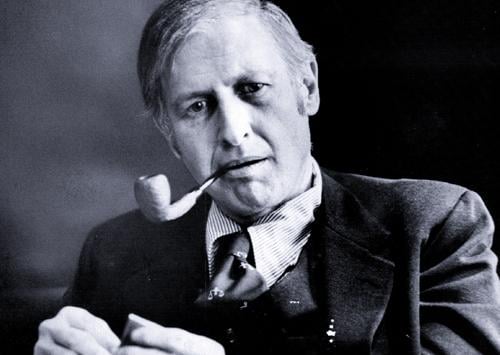
Charles E. Silberman and his wife Arlene Silberman discuss education
Sep. 15, 1970 Charles E. Silberman and his wife Arlene Silberman discuss education and Charles Silberman's book "Crisis in the Classroom". Includes a clip of Studs Terkel interviewing a student.
-
Charlayne Hunter-Gault discusses her book "In My Place"
Jun. 3, 1995 Charlayne Hunter-Gault's book, "In My Place," offers Hunter-Gault's experiences with history, namely her being one of only 2 Black students that were allowed to go to the University of Georgia. She talks about liberation and freedom and she recalls what it would have been like for her ancestors to struggle .
-
Brick Top discusses her career, her colleagues, and the jazz scene
May. 6, 1975 Brick Top discusses her career, her colleagues, and the jazz scene.
-
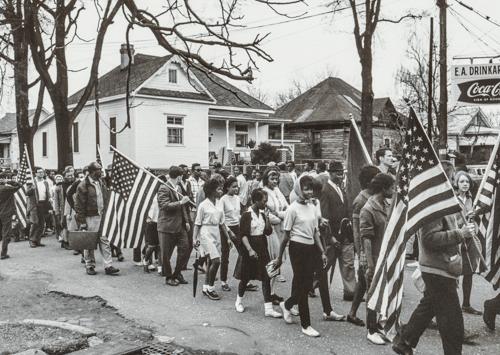
Both Kathy [no last name] and John Beecher discuss their feelings about the South ; part 4
Apr. 1, 1965 Content Warning: This conversation includes racially and/or culturally derogatory language and/or negative depictions of Black and Indigenous people of color, women, and LGBTQI+ individuals. Rather than remove this content, we present it in the context of twentieth-century social history to acknowledge and learn from its impact and to inspire awareness and discussion. After hearing Martin Luther King, Jr.