

-

Charles Delaunay and André Réwéliotty discuss jazz
May. 1, 1960 Charles Delaunay, jazz expert, and André Réwéliotty, jazz musician, talk about Jazz. Sidney Bechet, mentor of André Réwéliotty, is discussed at length. The two also debate the popularity of classic jazz compared to modern jazz as the genre develops.
-
Chanticleer discusses the group's history and music
Feb. 24, 1994 Terkel comments and presents the music of Chanticleer, an acapella ensemble, comprised of 12 all male voices. Chanticleer discusses the following: the group vocal composition; the groups history; various recordings; and their influences. Chanticleer performs the following songs live on air: "Benedicamus Domino", "If Ye Love Me", "O Sacrum Convivium", "Nude Descending a Staircase", "When I Fall in Love", "Jesus Met the Woman at the Well", and "Magnificat a 12".
-
Celebrating the 100th anniversary of Austrian American composer Ernst Toch's birth with journalist Lawrence Weschler
Dec. 1, 1987 Celebration in honor of the 100th anniversary of Ernst Toch's birth
-
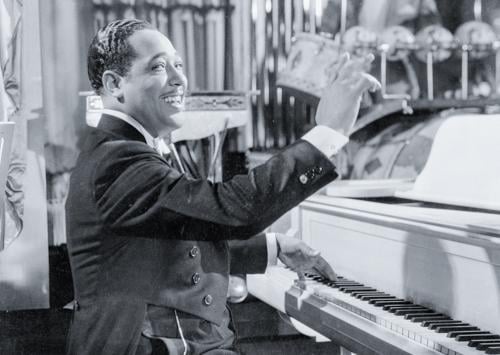
Celebrating jazz composer and musician Duke Ellington's birthday with jazz scholar and historian Richard Wang
Apr. 9, 1991 Celebration for Duke Ellington's birthday
-
Cathy Berberian discusses her singing style
1967 Cathy Berberian reflects on the evolution of her avant-garde singing style and her work with various contemporary music composers. Includes an interview with John Cage. Content Warning: This conversation has the presence of outdated, biased, offensive language. Rather than remove this content, we present it in the context of twentieth-century social history to acknowledge and learn from its impact and to inspire awareness and discussion.
-
Carol Neblett and Richard Stillwell discuss their careers and their roles in the opera "Don Giovanni"
Nov. 18, 1980 Studs Terkel interviews opera singers, Carol Neblett and Richard Stillwell, as members appearing in the Lyric Opera production of "Don Giovanni". They discuss their characters, Elvira and Don. Carol Neblett and Richard Stillwell discuss their careers.
-
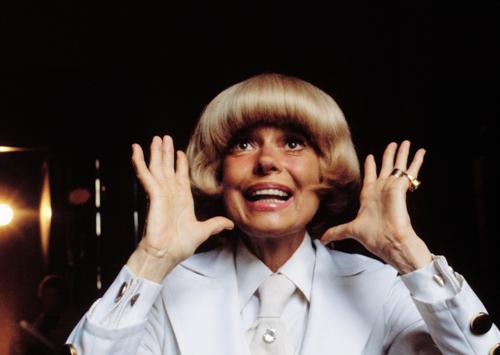
Carol Channing discusses her film and stage career
Jan. 28, 1972 This interview features singer and actress Carol Channing which discusses: the film "Shinbone Alley"; production of "Lorelei"; her grandmother; and her career. It begins with a musical excerpt from the animated movie "Shinbone Alley" featuring Channing singing as the alley cat Mehitabel. It also includes excerpts from the Broadway production called "Lorelei", examples of her character acting/comedy (as Cecilia Sisson), her reading of "Madeline and other Bemelmans", and a portion of the song "So Long Dearie" from the play "Hello, Dolly!".
-
Carlo Curly discusses the history and future of the organ as an instrument and his career as a classical organist
Dec. 15, 1983 Studs interviews Carlo Curly, a RCA recording classical organist. Includes an interview from two years earlier with Curly giving a commentary about Virgil Fox, his greatest influence. Curly describes his family background in music. He explains in great detail the history of the organ, how it is made, and the music written for it. He explains the difference in music between pipe organs and electronic organs. Curly talks about his experience playing in Japan. He speaks of Bach and Mendelson and their influence on the organ as a classical instrument.
-
-
Carl Vigeland discusses his book about the Boston Symphony Orchestra
Feb. 8, 1990 Author Carl Vigeland discusses his latest book, a portrait of the 1986-1987 concert season of the Boston Symphony Orchestra (BSO). Vigeland focuses on the nexus between art, business, and music, seen through the tense relationship between Kennedy Center Honoree conductor Seiji Ozawa and principal trumpeter Charles Schlueter.
-
-
Burl Ives discusses his life and music
Burl Ives, actor and singer, discusses his life including childhood, schooling, early career, married life and some of his most popular songs. Ives also talks about his books and writing.
-
Burl Ives discusses his background
Burl Ives was born in Jasper County, IL and he attended Eastern Illinois State Teachers College. While in college, he played some football and then he wanted to become a football coach. Ives spent time in Terre Haute, IN, where he played records and sang songs on the radio. To be a great singer, Ives said he knew he had to add dramatization to certain songs.
-
Buffy Sainte-Marie talks with Studs Terkel ; part 2
1968 Studs Terkel interviews Buffy Sainte-Marie in a two part interview.
-
Buffy Sainte-Marie talks with Studs Terkel ; part 1
1968 Studs Terkel interviews Buffy Sainte-Marie in a two part interview.