

-
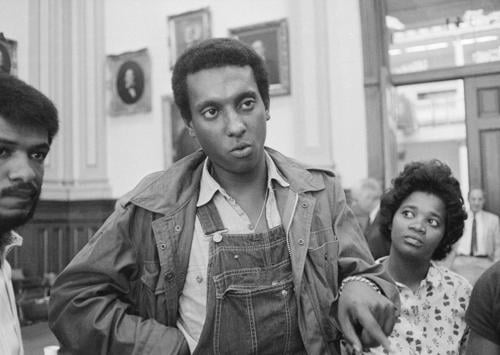
Stokely Carmichael, Charlie Cobb, and Courtland Cox discuss the philosophy of the SNCC ; part 2
1968 Stokely Carmichael, Charlie Cobb, and Courtland Cox discuss civil rights and African Americans in politics. Discussing the philosophy of SNCC. Includes Charlie Cobb reading his poem. Duplicate of 1916310-3-2.
-

Seymour Melman discusses his book "Pentagon Capitalism: The Political Economy of War"
Jun. 8, 1970 Seymour Melman discusses his book "Pentagon Capitalism: The Political Economy of War." Topics of discussion include the military-industrial complex and the state management of industry, particularly in regards to defense.
-

Seymour M. Hersh reads from and discusses his book "My Lai 4"
May. 22, 1970 Innocent, unarmed villagers were murdered in the horrific massacre in March of 1968. In Seymour M. Hersh's book, "My Lai 4: A Report on the Massacre and Its Aftermath," Seymour further explains that to the soldiers, the killing was simply a game to them, of who could kill the most bodies.
-
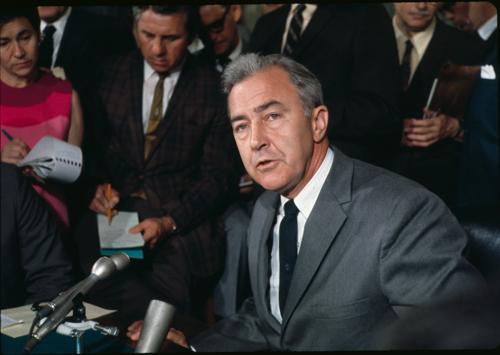
Senator Eugene McCarthy talks about his presidential campaign
Mar. 3, 1975 Former Minnesota Senator Eugene McCarthy talks about his presidential campaign. Includes an excerpt of a 1968 program in which Studs and James Cameron visit Lincoln Park after the Chicago Democratic Convention riots.
-
Ron Kovic discusses his autobiography "Born on the Fourth of July"
Jul. 29, 1977 Studs interviews Vietnam veteran and anti-war activist Ron Kovic upon the paperback release of his autobiography "Born on the Fourth of July." Kovic recounts his All-American upbringing and unblinking faith in the country and its ideals before volunteering for the Marines and Vietnam.
-
Robert Scheer talks with Studs Terkel
Jun. 25, 1965 Discussing Vietnam and interviewing Robert Scheer.
-
-
Robert Jay Lifton discusses his book "Home from the War"
Jun. 21, 1973 In his book, "Home From the War: Learning from Vietnam Veterans", Robert Jay Lifton reflects on what he's learned from talking with soldiers who came home from the Vietnam War. For some men, guilt and betrayal were common issues -- guilt in what they had done while in Vietnam and betrayal of what their superiors and the government had told them about the war itself.
-
Robert Del Tredici discusses his book "At Work in the Fields of the Bomb"
Jun. 6, 1988 Robert del Tredici photographer, artist, and author discusses the history of nuclear weapon production plants around the United States and the effects of nuclear radiation.
-
Richard Dudman discusses Cambodia and his book “Forty Days with the Enemy”
May. 21, 1971 Reporter and author Richard Dudman discusses and reads from his book “Forty Days with the Enemy”, a book recounting his experience being held captive by the Viet Cong during the Vietnam War. Dudman also discusses Michael Morrow and Elizabeth Pond who were held captive with him.*Please note: some sections have been edited out from the original recording due to copyright considerations
-
Professor Adolph Baker, Jurgen Hinze, Professor Richard Lewenton and Father William Wallace discuss science and politics; part 1
Jan. 12, 1971 Professors Adolph Baker, Jurgen Hinze, Richard Lewenton, and Father William Wallace discuss science and politics. The four professors explore question such as whether scientists be involved in political decisions. World War II and Vietnam War are used as examples by the scientists. An earlier interview with scientists Edward Teller and Albert Szent-Gyorgy is played.
-
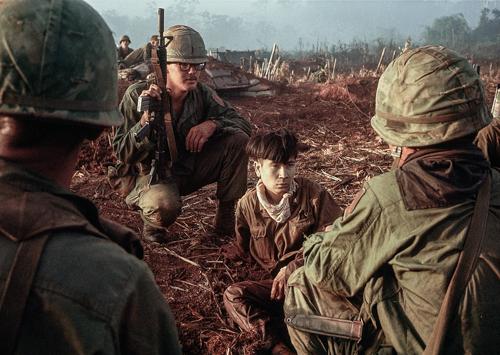
Peter Martinsen and David Tuck discuss Vietnam War
1970 Peter Martinsen and David Tuck continue their conversation with Studs about the Vietnam War and the atrocities committed.
-
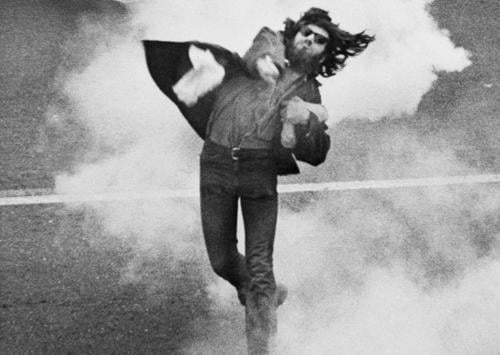
Peter Davies and Barry Levine discuss the Kent State shootings by the National Guard May 04, 1970.
Sep. 24, 1973 Studs interviews Peter Davies author of "The Truth About Kent State: A Challenge to the American Conscience" and Barry Levine, a student at Kent State at the time of the massacre. They discuss the Kent State shootings by the National Guard May 04, 1970.
-
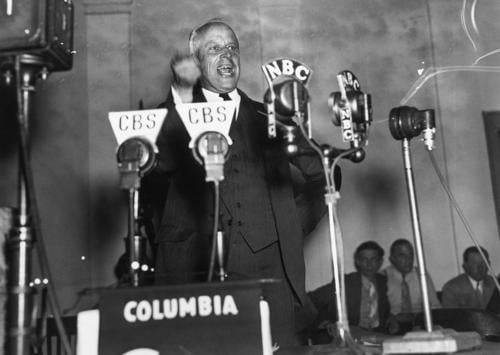
Norman Thomas discusses social progress ; part 2
Dec. 30, 1964 Socialist Party leader and Presbyterian minister Norman Thomas discusses social progress, his political views, and where society is headed with Studs Terkel. This is the final part of his interview.
-
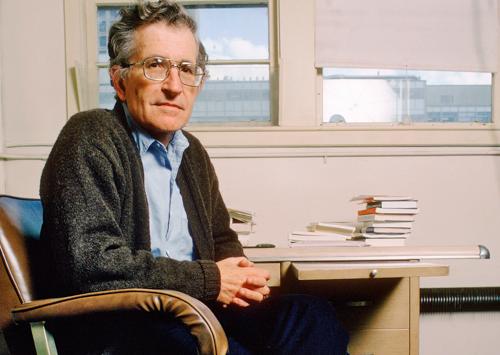
Noam Chomsky discusses his book "American Power and the New Mandarins"
Jan. 19, 1970 Noam Chomsky discusses his book "American Power and the New Mandarins," the Vietnam war, and the role of intellectuals, including interview with A.J. Muste; audio is slowed down from 47:30 - 52:52.