

-

Dr. Carlo Levi discusses his exile and humanity in southern Italy after WW2; part 1
1962 Dr. Carlo Levi talks about his book "Christ Stopped at Eboli", the human condition, and compassion for those suffering during and after World War 2.
-
Dr. Alan Solem and Dr. John Engel discuss their upcoming research trip to Australia
Jun. 9, 1976 Dr. Alan Solem, a malacologist, and Dr. John Engle, a bryologist, from the Field Museum discuss a research trip they plan to take to Australia. The two doctors also discuss climate and ecology in the Americas and in Australia. Dr. Solem will be researching land snails and Dr. Engel moss and liverworts.
-
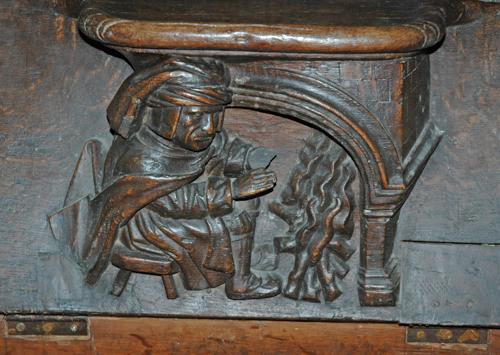
Dorothy and Henry Kraus discuss the book "The Hidden World of Misericords."
Feb. 10, 1976 Dorothy and Henry Kraus describe how they discovered an entire European collection of church-located woodcarvings depicting a wide variety of scenes crafted by local artisans. Hundreds of years of political, religious, and social events shaped the portrayals, and they explore many of the illustrations in their book, focusing on the themes of labor, animals, and religion. They marvel at the skill and craftsmanship and observe that the works can be a rich source of primary research material for modern scholars.
-
Doris Lessing and Arnold Wesker discuss this primitive society ; part 2
Dorris Lessing says in this society, we are all savages. According to Lessing, in 10 years, millions will die of starvation. Arnold Wesker says we live in a society of chaos and as a society, our end goal is produce something to deal with and eliminate the chaos.
-
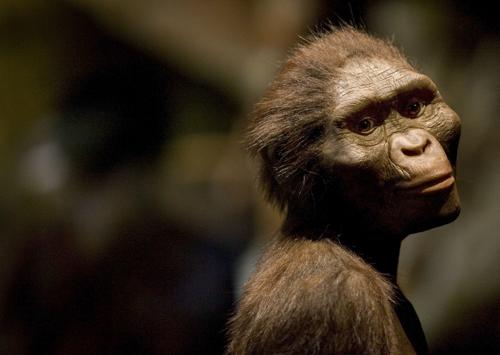
Donald Johanson discusses his book "Lucy: The Beginnings of Humankind"
Mar. 16, 1981 Studs talks with Donald Johanson about his book "Lucy: The Beginnings of Humankind," in which the famed paleoanthropologist describes his discovery of the female hominin fossil in Ethiopia. The conversation includes talk of Charles Darwin, Eugène Dubois' Java Man discovery, what makes a hominid, holes in the fossil record, fossil dating, his disagreements with Louis and Richard Leakey, site discovery, and his belief that the Hadar Formation in the Afar Triangle of Ethiopia holds the keys to the evolutionary puzzle. Includes snippets of the Beatles' "Lucy in the Sky with Diamonds."
-
-
-
-
Discussing the homeless and homelessness with a panel of guests
Jul. 24, 1990 Discussion about the homeless with a panel of guests
-
-
-
-
-
-
Discussing the book "The Mountain People"with the author, anthropologist Colin Turnbull ; part 1
Mar. 15, 1973 A generation ago, the Iks displayed the human values of devotion to family, caring of the elderly, young, sick, and compassion for human suffering. With the loss of territory and increasing population coupled with limited mobility, the Iks suffered a reversal of compassion and in order to survive became mean, despicable, and inhumane. Examples are drawn from Turnbull's book, "Mountain People" as discussed with the author. Comparisons of the Iks to United States society are drawn.