

-

Fred Gardaphe and Nat Scammacca discuss reverse migration
Apr. 3, 1989 Discussing reverse migration when native sons return to Italy with authors Fred Gardaphe and Nat Scammacca.
-
Former halfway house residents discuss halfway houses
Oct. 16, 1973 Discussion about halfway houses with a panel of former halfway house residents.
-
Father John McKenzie and Dr. Howard Schomer discuss personal responsibility, morality and hate, as it pertains to the Vietnam War ; part 2
1965 The interview continues with Father John McKenzie and Dr. Howard Schomer talking about fear and dissent. Schomer says Christians have the duty to dissent when they believe their beliefs are being contradicted by policy. He also talks about not understanding a dampening down of the human mind when it comes to human issues. Father McKenzie adds that society is made up of the best educated ignoramuses that ever existed.
-
Father John McKenzie and Dr. Howard Schomer discuss personal responsibility, morality and hate, as it pertains to the Vietnam War ; part 1
1965 Whether in the United States or Vietnam, Dr. Schomer asks what are our personal responsibilities for the atrocities? Father John McKenzie talks about a lowering of people's moral tone. People have put their morality in their pockets, so as to get cleared of something and not get involved, added Father McKenzie.
-
Eulogy for three non-adjusted men: Big Bill Broonzy, John Ciardi's father and Robert Redfield
Feb. 6, 1959 Terkel comments and presents a eulogy for three non-adjusted men. Broonzy, Big Bill ; Ciardi, John ; Redfield, Robert
-
Erik Hesselberg discusses his navigation on the Kon-Tiki expedition
Oct. 9, 1962 In a their man-made raft, Hesselberg and his crew travelled 4300 sea miles out in the open water. Erik Hesselberg talks about navigating the three-month long expedition on the Kon-Tiki from South America to French Polynesia. Hesselberg said everyone should have such an experience as he did, to be unencumbered while out at sea.
-
Elizabeth Janeway discusses her book "Man's World, Woman's Place"
1970 Elizabeth Janeway discusses her book "Man's World, Woman's Place" and the gender role women are taught since birth; reads passage from book; includes interview at 16:01 with a woman speaking against the Women's Movement during an outdoor protest.
-
Edward T. Hall discusses his book "Beyond Culture"
Apr. 28, 1976 Edward T. Hall talks about his beliefs on culture. The discussion includes how cultures differ between countries with a focus on Vietnam. They also discuss the cultural differences in America. Hall also explores how technologies, such as computers and vehicles change culture and cause people to become more like the machine itself. The end of the interview includes a short reading of "Beyond Culture".
-
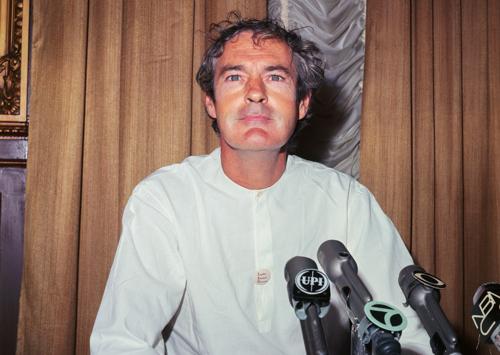
Dr. Timothy Leary discusses the stages of the psychadelic experience of turning on and his role as a Shaman ; part 2
Dec. 1, 1966 Studs interviews Dr. Timothy Leary about the three stages of the psychadelic experience: turning on, tuning in, and dropout. Leary discusses how his life changed from being a successful psychologist and professor at Harvard to renewing his life as a religious teacher. He shares how the drug LSD is used in the tribal communities who turn on and also explains the values of those who practice turning on. Leary also describes other methods used to turn on, which he considers a religious experience. Studs reads what Richard Goldstein said about Dr. Leary.
-
Dr. Theodore Binder discusses his time in Peru and Mexico
Nov. 3, 1975 Interviewing Dr. Theodore Binder and discussing Peru and Mexico.
-
Dr. Sam Borushek discusses health conditions of Guatemalan indigenous groups
Aug. 25, 1971 Dr. Sam Borushek discusses his time as a doctor serving the indigenous groups in Guatemala, especially regarding the preventable health issues of the indigenous people.
-
-
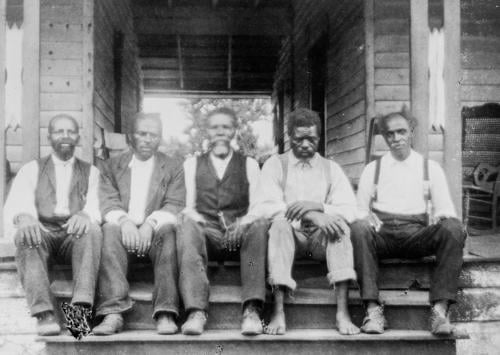
Dr. John Hope Franklin discusses reconstruction after the American Civil War; part 2
1966 Dr. John Hope Franklin, professor of history at University of Chicago, discusses the political history of reconstruction after the Civil War, along with which political decisions led to a power imbalance and the rise of the Ku Klux Klan in the southern states; part 2.
-
Dr. Edward Twitchell Hall discusses urban life
Jan. 23, 1970 High rise buildings being built because of growing populations are detrimental to our environment, explains Dr. Edward Twitchell Hall. Problems include the lack of oxygen and the lack of greenery said Hall. The number of automobiles on the road and the large size of the cars is also problematic,
-
Dr. Carlo Levi discusses Italian literature; Julio & Phillipo sing nursery rhymes, Maria Caniglia discusses opera; part 2
1962 Dr. Carlo Levi talks about the differences in Italian and American literature in the first part. In the second part, children Julio and Phillipo sing Italian nursery rhymes. In the last part, Maria Caniglia and husband Pino Donati discuss opera; part 2.