

-

Maya Angelou discusses her book "I Know Why the Caged Bird Sings"
Mar. 13, 1970 Angelou discusses her book "I Know Why the Caged Bird Sings" and recites "When I Think About Myself." She talks about growing up in Stamps, Arkansas, and her family. Copyrighted material has been removed.
-
-
Maurice Sendak discusses his ideas for books
1970 After having received the Caldecott Medal for "Where the Wild Things Are," Maurice Sendak knew he had to do a different kind of book. Sendak recalled his trips to Brooklyn as a child and how going out to eat was a huge treat. From there, Sendak's book, "Night Kitchen," was born.
-
Maurice Sendak discusses his book "Where the Wild Things Are"
Dec. 19, 1990 Monsters, imagination and violence in children's literature are all topics of Maurice Sendak's book, "Where the Wild Things Are." When writing the book, Sendak used his own experiences as a little boy, remembering that the monsters in the family were relatives on his mother's side. There are two excerpts of composer Oliver Knussen.
-
Mary Norris Lloyd discusses her book " A Dream of Mansions"
Mar. 8, 1962 Social activist and author Mary Norris Lloyd discusses her work and its reflection on Christian morality and views on the South. Topics covered include segregation, racism, and religion and how it has coincides with the issues of race.
-
Marjorie Kellogg writer and social worker discusses her second novel "Like The Lions Tooth"
1975 Marjorie Kellogg writer and social worker discusses her second novel "Like The Lions Tooth". The discussion begins with a reading of the first stanza of a poem by W.B. Yeats "Crazy Jane Grown Old Looks at the Dancers". Studs and Marjorie Kellogg both read excerpts from her novel "Like the Lions Tooth", as they discuss the book.
-
Marie Cardinal discusses her book "The Words To Say It: An Autobiographical Novel" with translator Pat Goodheart
Oct. 21, 1983 Marie Cardinal discusses her book "The Words To Say It: An Autobiographical Novel" with the publisher and translator of the book, Pat Goodheart. This novel explores childhood trauma, mental health, menstrual problems, and a complex mother-daughter relationship. The primary focus of this novel is to recount how psychoanalysis served as a healing experience for Cardinal later in life.
-
Maria Kuncewicz, Polish writer and novelist, discusses her book, "Don Quixote and the Nannies"
May. 25, 1965 An interview with Maria Kuncewicz about her book of fiction, "Don Quixote and the Nannies" and how this book reflects her travels to Spain and her personal observations, memories, and experiences. The story reflects the freedom and beauty that people want today post WWII. Kuncewicz tells her experience as a child with nannies and a particular event that helped inspire her writing. She speaks about authority and author, Miquel de Cervantes. Kuncewicz also talks about the people of Spain and how they reflect different Don Quixote characters.
-
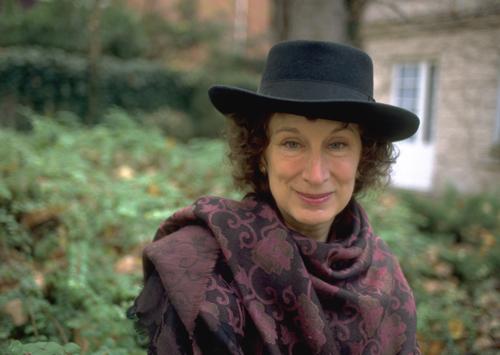
Margaret Atwood discussing "The Handmaid's Tale"
Mar. 13, 1986 Margaret Atwood discusses her book "The Handmaid's Tale" and the real life and biblical events that inspired it. The show also includes two interludes with Erich Fromme discussing "Escape from Freedom".
-
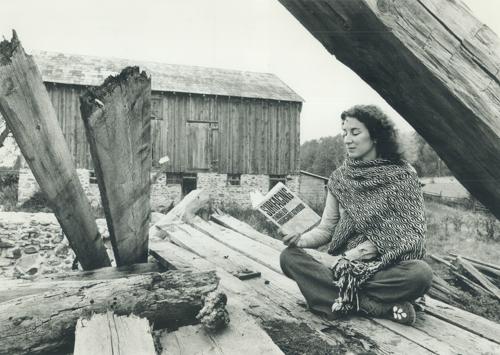
Margaret Atwood discusses her poetry and her novel, "Surfacing"
Jan. 28, 1976 Canadian poet and novelist Margaret Atwood discusses her poetry and her first novel, “Surfacing,” focusing on the novel’s symbolism and the themes of nature, religion and memory. She compares life, attitudes, and politics in Canada with those of the United States.
-
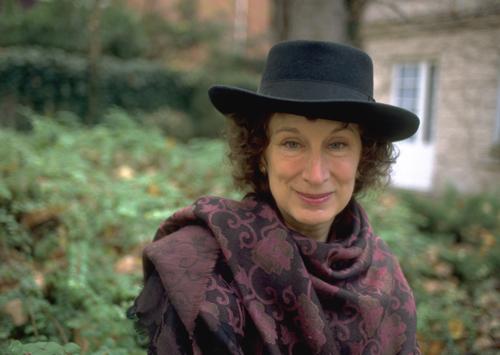
Margaret Atwood discusses her novel "Life Before Man"
Mar. 3, 1980 Author Margaret Atwood discusses her novel "Life Before Man;" interview begins at :45.
-
-
Maggie Renzi and John Sayles discuss the movie "Return of the Seacaucus Seven"
Feb. 1, 1981 Discussing the movie "Return of the Secaucus seven" with Maggie Renzi and John Sayles.
-
Madeleine L'Engle discusses her novel "A Severed Wasp"
Jan. 30, 1983 Author Madeleine L'Engle discusses her novel "A Severed Wasp," about a retired concert pianist (Katherine Forrester, who appeared in L'Engle's first novel, "The Small Rain") who puts on a benefit concert at the Cathedral of St. John the Divine at the request of her old friend, Felix Bodeway. Like Katherine, L'Engle is a pianist and the interview is interspersed with Bach fugues throughout. In addition to discussing the plot, Terkel and L'Engle discuss several of the book's characters and their histories and motivations.
-
Madeleine L'Engle discusses her book "A Wrinkle in Time"
Jun. 8, 1990 Author Madeleine L’Engle discusses her book “A Wrinkle in Time”, a young adult novel that wrestles with spirituality, science fiction, and fantasy. L’Engle discusses how difficult it was for publishers to see her writing as young-adult, as she was often told adolescence would not be able to handle these challenging topics. This program includes an excerpt of a 1961 interview with Madeleine L’Engle in which she discusses the difference between fact and fiction, or lack thereof, in children’s literature.