

-

Mel Lambert and five Puerto Rican boys discuss life in Chicago and the Latin King gang ; part 2
1968 Studs interview with five Puerto Rican boys: Hector, Jose, Victor, Harry and Carlos. Two other young men enter the conversation at the end: Raphael and Benjamin. Each boy describes a memory and some express a desire to return to Puerto Rico, while others wish to stay in America. The boys describe some about gang life with the Latin Kings and the violent relationship between gangs in Chicago. Studs suggests a peace conference with all gang leaders, and the boys describe their opinion of the outcome of such a meeting.
-
Maria Cerda and Dick Simpson discuss Chicago: An Agenda for Change, with a focus on education ; part 3
Oct. 8, 1974 Chicago: An Agenda for Change. Part 3 of 5. Maria Cerda is a former Chicago Board of Education member.
-
-
Lily (Rose Rigsby) Lowell and two men from St. Timothy's talk with Studs Terkel
1966 Discussion of Division Street: America [Continuation of interview at the end of 1925659-3-1]
-
Lew Kreinberg, German (Herman) Leyte, and Nate Duncan discuss Maxwell Street, Chicago
Dec. 8, 1993 Discussing Maxwell Street with Lew Kreinberg and vendors German (Herman) Leyte, and Nate Duncan.
-
Leon Depres discusses discrimination, corruption, and segregation in Chicago
Feb. 3, 1975 Interviewing lawyer and alderman, Leon Despres. Depres discusses Richard Daley’s time as mayor of Chicago and political events during his terms. Content Warning: This conversation includes racially and/or culturally derogatory language and/or negative depictions of Black and Indigenous people of color, women, and LGBTQI+ individuals. Rather than remove this content, we present it in the context of twentieth-century social history to acknowledge and learn from its impact and to inspire awareness and discussion.
-
-

Laurie Abraham reads from and discusses her book "Mama Might Be Better Off Dead"
Oct. 1, 1993 What started out as a 5-piece article on health care became Laurie Abraham's book, "Mama Might Be Better Off Dead: The Failure of Health Care in Urban America". Through her stories, Abraham points out the many hardships and catch-22 scenarios of some poor families. One woman, after caring for her mother all day, Julie, wanted to work part time in the evenings. However, she soon learned that she'd be making too much money and she'd no longer be eligible for Medicaid for herself and her children.
-
-
Konstantinos Doxiades discusses architecture and the modernization and industrialization of cities.
Aug. 8, 1965 Discussing architecture and modernization of cities with Greek city planner/architect Konstantinos Doxiades [also Constantinos Doxiadis, Doxiados]. They discuss the dangers of the city, modernizing nature, and losing natural beauty.
-
Konstantinos Doxiades discusses architecture and city planning.
Mar. 18, 1968 Konstantinos Doxiades discusses architecture, the population of cities, the modernization of cities, city planning, machines, and the city of the future.
-
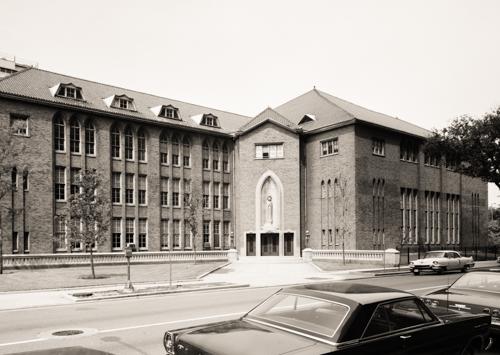
King Solomon discusses his life and Barry Byrne discusses Frank Lloyd Wright
1968 Both interviews incomplete. King Solomon as Kid Pharaoh, hot dog shop owner in Chicago, and former prize fighter. Mr. Solomon talks about his business and how he has earned his place. He talks about being a gambler, and speaks of being "rough" and receiving his money in an unorthodox manner, "protection" so to speak. The Interview ends abruptly at 13:42. At 13:43 interview begins with Barry Byrne architect and student of the "Prairie Style" talks about his education with Frank Lloyd Wright. He speaks fondly of "father"(Frank Lloyd Wright) and his time studying under him.
-
Kenneth and Sarah Vaux discuss landscape architect Calvert Vaux
Mar. 19, 1982 Kenneth and Sarah Vaux discuss the father of landscape architecture Calvert Vaux and his influence on other landscape architects including Frederick Law Olmsted. Kenneth and Sarah focus their discussion on public parks and how these parks were a response against industrialization and served to provide a space for the working class to gather in nature. This program includes an excerpt of an interview with labor activist Edward Sadlowski discussing the working class’ interest in nature, books, theater, and music.
-
Kenan Heise in conversation with Studs Terkel
Jan. 18, 1990 Discussing the book "The Chicagoization of America, 1893-1917" (published by Chicago Historical Bookworks) with Chicago author Kenan Heise.
-
Julia Koscis discusses her family's daily work and life ; part 4
Julia Koscis discusses being an immigrant, racism and daily life. She talks with Studs about her fears of African Americans upon arriving at Ellis Island, New York from Hungary, and living closely with them before moving on to Dayton, Ohio. She discusses some of her life before moving to Chicago from Dayton, Ohio.