

-

Richard Cahan and John Vinci discuss architectural preservation
Oct. 10, 1994 Authors Richard Cahan and John Vinci discuss architecture and photography in Chicago, focusing on the works of Richard Nickel and Louis Sullivan. Includes an interview with Richard Nickel.
-
Rev. George Morey and Jim Lee Osborne discuss life in the Appalachas compared to life in Chicago; part 1
Jul. 29, 1966 Interview with Rev. George Morey and Jim Lee Osborne. They discuss southern country living and compare it to urban life and stereotypes. Studs reads a short excerpt from an article written by Mike Royko, columnist from the Chicago Tribune, who also interviewed Jim Lee Osborne. Also includes a short excerpt from an interview with Billy Jo Gatewood, another Appalachian transplant to Chicago.
-
Renault Robinson discusses public housing, crime, and Chicago police
Jun. 20, 1979 Renault Robinson, founder of the Afro-American Police League in Chicago and Chicago Housing Authority board member, discusses police programs in public housing projects. He discusses how public housing breeds crime because families are struggling and the building conditions are terrible, and how a new police program can help fix problems.
-
Renault Robinson and Robert McClory, author of "The Man Who Beat Clout City" discuss the the Chicago Police Department and race relations
Jul. 24, 1978 Renault Robinson, founder of the African American Patrolman's League in Chicago, and Robert McClory, journalist and author of a biography of Robinson, "The Man Who Beat Clout City," discuss Robinson's life and court case, Robinson v. Chicago Police Department. Robinson recalls how he was seen as a model policeman until he created the Afro-American Police League, when the Police Department started treating him differently.
-
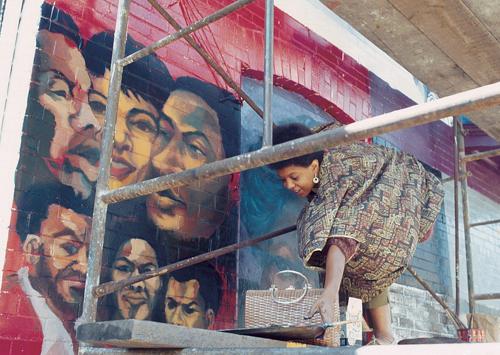
Ray Patlan and Mark Rogovin discuss mural art
Apr. 14, 1975 Ray Patlan and Mark Rogovin discuss mural art and the community engagement surrounding this artform. This program includes an audio clip of passers by commenting on the 1967 unveiling of Pablo Picasso’s Chicago sculpture and what they think it represents and the conversations it is meant to evoke. Studs reads Pete Seeger's introduction from Mark Rogovin, Marie Burton, and Holly Highfill’s book “Mural manual: How to paint murals for the classroom, community center, and street corner.”
-
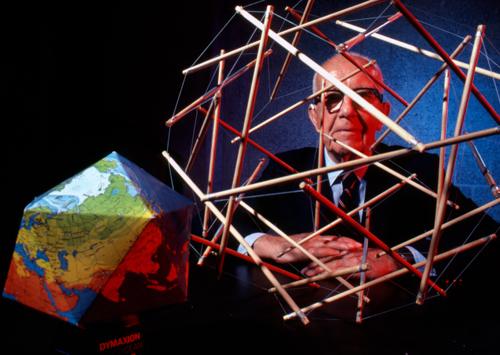
R. Buckminster (Richard ) Fuller talks with Studs Terkel
Jan. 20, 1965 A sprawling conversation with R. Buckminster Fuller including his great aunt Margaret Fuller, future communication, the nature of work, human nature, and physics.
-
Psychiatrists discuss families and mental health
May. 20, 1968 Three psychiatrists discuss mental health in urban and rural areas and a documentary that points out emerging issues.
-
Presenting the Old Town school of folk music
Oct. 8, 1963 Terkel comments and presents the Old Town school of folk music
-
Presenting music with the Chicago ensemble the Loop Group
Feb. 16, 1987 Terkel comments and presents a musical performance by the Loop Group
-
Presenting music with jazz pianist and radio host of "Piano Jazz," Marian McPartland
Jun. 8, 1992 Terkel comments and presents a musical performance by Marian McPartland
-
Presenting music with jazz cornetist Jimmy McPartland and jazz pianist and radio host of "Piano Jazz," Marian McPartland
Oct. 26, 1990 Terkel comments and presents a musical performance by Marian and Jimmy McPartland
-
Presenting music by jazz musicians Jimmy McPartland and Bud Freeman
Aug. 31, 1982 Terkel comments and presents a musical performance by Jimmy McPartland and Bud Freeman
-
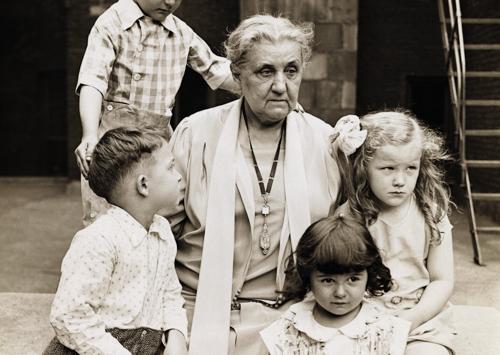
Presenting a program celebrating Hull House's 100th anniversary
Sep. 13, 1989 Terkel presents a program celebrating Hull House's centennial
-
Patrick Zimmerman discusses his teaching methods for childhood education in low-income neighborhoods ; part 2
Sep. 1, 1970 Former public school teacher Patrick Zimmerman continues discussing his alternative teaching methods for childhood education in low-income and underrepresented communities in Chicago. Zimmerman discusses how the scientific emphasis of schooling today is stifling a child’s success in the classroom and calls instead for a balance between a scientific approach and a free-school approach.
-
Patrick Zimmerman discusses his teaching methods for childhood education in low-income neighborhoods ; part 1
Sep. 1, 1970 Former public school teacher Patrick Zimmerman discusses education and the free school movement for low-income and underrepresented communities in Chicago. Zimmerman discusses his time spent as a public school teacher and how this inspired his transition to teaching using alternative schooling methods in childhood education.