

-

Judy Hough, Lily (Rose Rigsby) Lowell and Jimmy White talk with Studs Terkel Part 2
1968 Discussion of Division Street: America
-
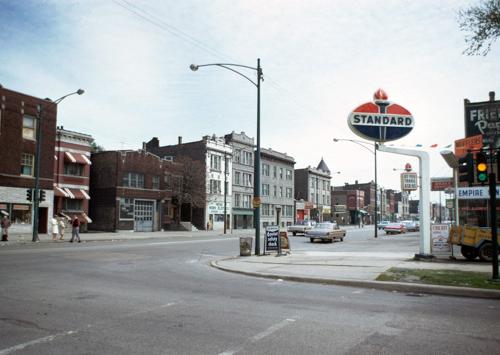
Judy Hough, Lily (Rose Rigsby) Lowell and Jimmy White talk with Studs Terkel Part 1
1968 Discussion of Division Street: America
-

Jonathan Kozol and Patrick Zimmerman discusses about american education focusing in the Southern School at Uptown, Chicago
Nov. 13, 1973 Jonathan Kozol, the author of "Death at an Early Age" talks about issues of educational inequality and racial justice. Paul Zimmerman, former public teacher, talks about his experience creating what becomes to be the Southern School at Uptown, Chicago.
-
Johnny shares his thoughts about the neighborhood ; part 1
1968 Content Warning: This conversation includes racially and/or culturally derogatory language and/or negative depictions of Black and Indigenous people of color, women, and LGBTQI+ individuals. Rather than remove this content, we present it in the context of twentieth-century social history to acknowledge and learn from its impact and to inspire awareness and discussion. Fourteen year-old Johnny attends Harrison High School. When asked if he were God & what changes he would make, Johnny replied he'd see to it that Black people remain on the their side of town.
-
John Zukowsky and Stanley Tigerman discuss the controversy surrounding their exhibit
Jul. 8, 1993 Curator John Zukowsky and architect Stanley Tigerman discuss their architecture exhibit and the controversy surrounding it.*Please note: some sections have been edited out from the original recording due to copyright considerations
-
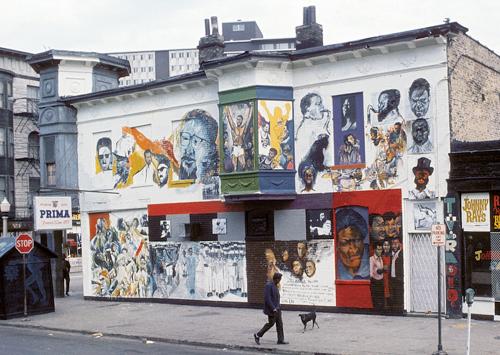
John Weber, Mark Rogovin and Justine DeVan discuss their work on murals and the Wall of Respect in Chicago
1970 John Weber, Mark Rogovin and Justine DeVan discuss their involvement with the mural movement as well as their involvement with the Chicago community and their various art projects. Includes excerpt of an interview with Bill Walker at the Peace and Salvation Wall of Understanding in (near?) Cabrini Green.
-
John Vinci, David Van Zanten, and Wim de Wit discuss the Chicago Historical Society’s exhibition “Louis Sullivan: The Function of Ornament”
Aug. 27, 1986 Architect John Vinci, art and architectural historian David Van Zanten, and curator Wim de Wit discuss Louis Sullivan and the Chicago Historical Society’s exhibition “Louis Sullivan: The Function of Ornament.” The group discusses Sullivan’s use of ornament to add an organic element to his architecture; as well as some of Sullivan’s most prominent work, including the Chicago Stock Exchange Building, the Auditorium Building, and the Sullivan Center. This program includes a clip from 1956 of Frank Lloyd Wright discussing Sullivan and his impact on architectural design.
-
John Ray, Jimmy Ray and Henry discuss life in Chicago; part 2
1968 Jimmy Ray, John Ray, and Henry discuss their personal feelings on a variety of topics including religion, every day life, and what an ideal world looks like.
-
-
John Keyes in conversation with Studs Terkel
Jan. 23, 1990 Discussing the Regal Theater with actor and theater historian John Keyes.
-
John Donahue, Calvin Hill in conversation with Studs Terkel
May. 17, 1995 Interviewing members of the Chicago Coalition for the Homeless, John Donahue and Calvin Hill.
-
John Bailey, Robert Tucker, and Dick W. Simpson discuss housing and transportation ; part 4
Oct. 9, 1974 Dick Simpson's book, "Chicago's Future: An Agenda for Change," is discussed with the author, John Bailey and Robert Tucker, all employees of Chicago universities. The group discusses housing and transportation issues that many working class citizens face. The group discusses possible ways to fix the issues including government help and re-zoning.
-
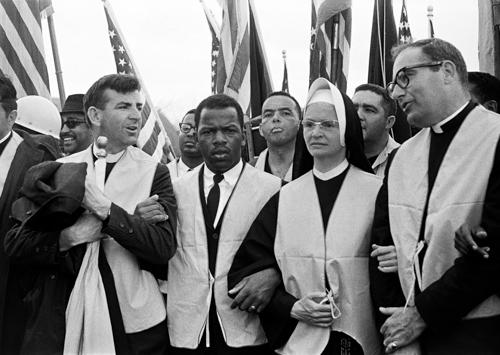
John A. McDermott and Sister Mary Peter discuss Catholic Church's Participation in Civil Rights Movement
Sep. 15, 1965 John A. McDermott and Sister Mary Peters discuss Catholic Church's Participation in Civil Rights Movement. Includes interview with unknown Catholic man opposed to nuns' and priests' involvement. Includes song "It Isn't Nice" by Judy Collins.
-
Joel Hall, Lynn Colburn, Larry Schoeneman discuss the Chicago Metropolitan Dance Festival
Jun. 10, 1980 Studs Terkel disccuses the Chicago Dance Festival with Joel Hall, Lynn Colburn, and Larry Schoeneman.
-
Joe Rosen, Betsy Clayton, and Jim First discuss child parent centers, DISTAR, and learning to read
Jun. 10, 1976 Discussing the concept of DISTAR (Direct Instructional System for Teaching and Remediation) program, the use of phonics to teach children to read, and interviewing Joe Rosen, Betsy Clayton, and Jim First.