

-

Ross Miller discusses his book "American Apocalypse: The Great Fire and the Myth of Chicago"
Jun. 7, 1990 Author Ross Miller discusses his latest work, which centers around Chicago and the aftermath of the Great Chicago Fire and its effects on rebuilding the metropolis and the advantages of gaining a new take on architecture and society.
-
Rose Rigsby and Betty Shifflett discuss writing and being a writer
Jun. 7, 1971 Rose Rigsby a writer and poet is interviewed along with Betty Shifflett, who teaches fiction at Columbia College. Ms Rigsby and Ms. Shifflett talk about writing with Studs. Ms. Rigsby reads from her stories and about her time in the Sanitarium and receiving shock therapy. Several excerpts are presented from an interview with Rose Rigsby speaking about children and of taking care of them. (1925145-3-1)
-
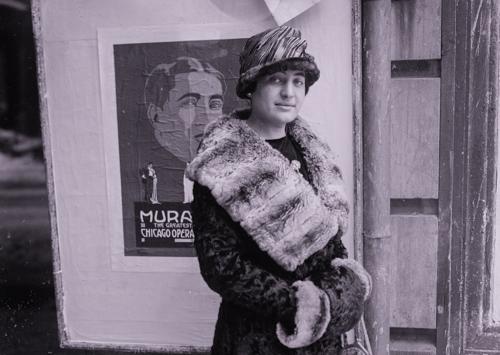
Rosa Raisa reflects on her career and her time in Chicago
Nov. 6, 1959 Renowned soprano, Madame Rosa Raisa discusses her career, early training, Chicago debuts, travels, teaching, and hobbies post opera.
-
Robert Twombly discusses the biography “Louis Sullivan: His Life and Work”
Mar. 24, 1986 Architectural historian Robert Twombly discusses the biography “Louis Sullivan: His Life and Work.” Referred to by Studs as the architect that most symbolizes Chicago architecture, Louis Sullivan, this program outlines Sullivan’s life as a prominent architect who was one of the first to incorporate nature, or "the organic", into architecture, and who ended his life in poverty. This program includes a clip from 1956 of Frank Lloyd Wright speaking to his contemporaries, indignant, asking what took them so long to recognize Louis Sullivan and his genius in the architectural field?
-
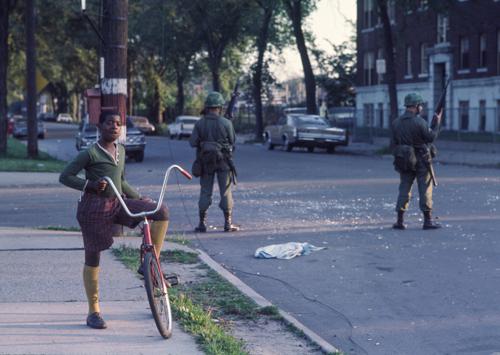
Rita Buscari interviews inner-city youth in Chicago
1968 Rita Buscari interviews inner-city youth in Chicago in the aftermath of the 1968 riots. Several pre-teen and teenaged African American youth are featured, discussing their experiences during the Chicago riots of April 1968. Topics include: Relationships between children and adults, relationships between police and civilians, relationships between blacks and whites, and the impact that Martin Luther King Jr.
-
Richard Vikstrom discusses his farewell performance
Mar. 26, 1980 Richard Vikstrom discusses his farewell performance. Richard Vikstrom also discusses classical music, religious music, and his early life. Includes an earlier interview with Richard Vikstrom.
-
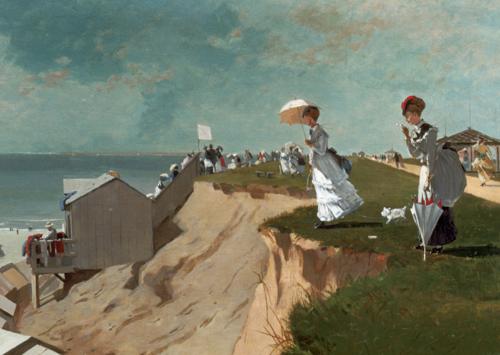
Richard McLanathan discusses his book "The American Tradition in the Arts"
1969 Richard McLanathan discusses his book "The American Tradition in the Arts" and takes Studs on a sprawling journey through artistic breakthroughs in architecture, painting, literature, and more while touching on dozens of artists and their works.
-
Richard Cahan and John Vinci discuss architectural preservation
Oct. 10, 1994 Authors Richard Cahan and John Vinci discuss architecture and photography in Chicago, focusing on the works of Richard Nickel and Louis Sullivan. Includes an interview with Richard Nickel.
-
Rev. George Morey and Jim Osborne continue their discussion with Studs Terkel about the War on Poverty; part 2
Jul. 29, 1966 Interview with Rev. Georg Morey and Jim Lee Osborne. They discuss Jim's work and involvement with the War on Poverty and the reason the Chicago Commission fired him after the War on Poverty conference in Washington, DC.
-
Renault Robinson discusses public housing, crime, and Chicago police
Jun. 20, 1979 Renault Robinson, founder of the Afro-American Police League in Chicago and Chicago Housing Authority board member, discusses police programs in public housing projects. He discusses how public housing breeds crime because families are struggling and the building conditions are terrible, and how a new police program can help fix problems.
-
Renault Robinson and Robert McClory, author of "The Man Who Beat Clout City" discuss the the Chicago Police Department and race relations
Jul. 24, 1978 Renault Robinson, founder of the African American Patrolman's League in Chicago, and Robert McClory, journalist and author of a biography of Robinson, "The Man Who Beat Clout City," discuss Robinson's life and court case, Robinson v. Chicago Police Department. Robinson recalls how he was seen as a model policeman until he created the Afro-American Police League, when the Police Department started treating him differently.
-
-
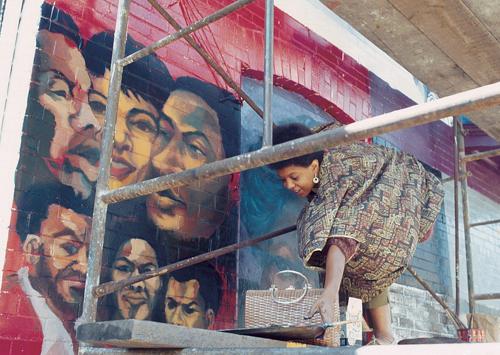
Ray Patlan and Mark Rogovin discuss mural art
Apr. 14, 1975 Ray Patlan and Mark Rogovin discuss mural art and the community engagement surrounding this artform. This program includes an audio clip of passers by commenting on the 1967 unveiling of Pablo Picasso’s Chicago sculpture and what they think it represents and the conversations it is meant to evoke. Studs reads Pete Seeger's introduction from Mark Rogovin, Marie Burton, and Holly Highfill’s book “Mural manual: How to paint murals for the classroom, community center, and street corner.”
-
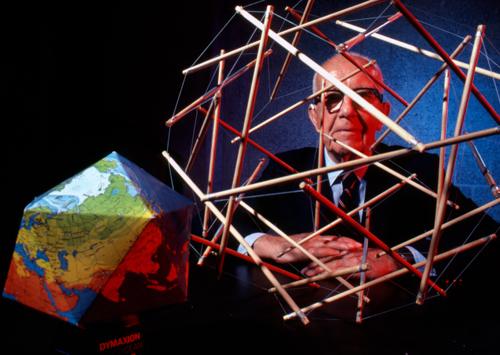
R. Buckminster (Richard ) Fuller talks with Studs Terkel
Jan. 20, 1965 A sprawling conversation with R. Buckminster Fuller including his great aunt Margaret Fuller, future communication, the nature of work, human nature, and physics.
-
Presenting the Old Town school of folk music
Oct. 8, 1963 Terkel comments and presents the Old Town school of folk music