

-
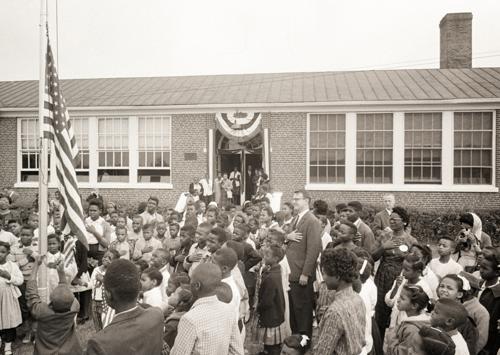
Gregory Coffin and Neil Sullivan discuss civil rights and school integration; part 1
1967 Interviewing school superintendents Gregory Coffin (Evanston) and Neil Sullivan (Berkeley) who discuss school integration and civil rights.
-

-
-
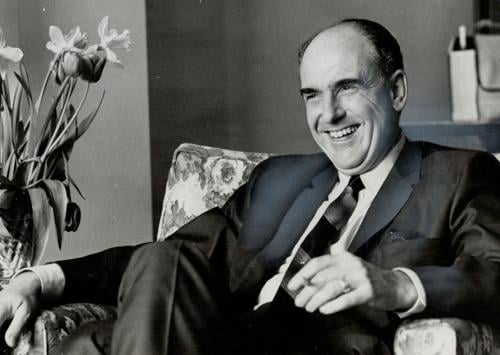
George Blanksten, Irma Edelman, Robert Eisner and Dr. Nicolas Pedritis discuss economist Andreas Papandreou's imprisonment
Apr. 1, 1967 Mr. Blanksten, Ms. Edelmen, Mr. Eisner and Dr. Pedritis, all educators, talk about economist and Prime Minister of Greece Andreas Papandreou's imprisonment.
-
George Anastaplo discusses his background and career
Mar. 24, 1976 The American Bar Association asked George Anastaplo if he was a Communist. Anastaplo refused to answer the question because he believed the Bar shouldn't have asked the question and knowing the answer was none of their business.
-
Fred Wiseman discusses his film “Juvenile Court”
Nov. 9, 1973 Discussing the making of film documentaries with Fred Wiseman, especially his film, "Juvenile Court." Includes excerpts of the sound track from a juvenile detention center in Memphis, Tennessee.
-
Fred Christy and Frank Carney discuss life in Chicago ; part 1
1968 Fred Christy and Frank Carney discuss life, family, youth, and demographics in Chicago. Includes Studs Terkel interviewing a group of teenagers who call themselves the D.J.'s. about their life and ambitions.
-
Frank Mankiewicz discusses his book "Perfectly Clear"
Dec. 7, 1973 Watergate, wire tapping, and civil disobedience are among the topics covered in Frank Mankiewicz's book, "Perfectly Clear: From Nixon to Whittier to Watergate." According to Mankiewicz, Richard Nixon was involved in additional scandals, for example, how one year he only paid $700 in taxes when employees at the White House paid more than that.
-
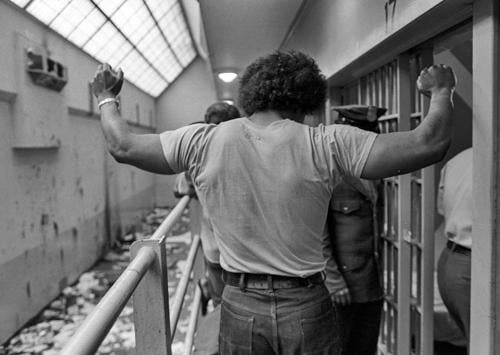
Frank Elli discusses his time as a prisoner and his novel "The Riot"
1968 Begins with a reading by Frank Eli from the opening of the book "The Riot." Mr. Elli discusses his early life, his time in three different prisons, and the writing of his book "The Riot," a personal account of a riot in Walla Walla Prison. (Note: last 5 minutes missing)
-
Frank Donner discusses the article he wrote "Theory and Practice of American Political Intelligence" ; part 2
In his article, "Theory and Practice of American Political Intelligence," Frank Donner brings up the poisonous effect of surveillance on people's invasion of privacy. Donner explained people adjust their lives to it. Donner's last reflection is for people to not just be frightened by surveillance but rather to do something about it like study how much money is spent on surveillance and who is accountable.
-
Frank Donner discusses the article he wrote "Theory and Practice of American Political Intelligence" ; part 1
Surveillance, informants, and provocateurs are some of topics covered by Frank Donner with his article, "Theory and Practice of American Political Intelligence". Donner explained that intelligence practices exist so that everyone has something to fear.
-
Frank Carney, Susie Gelaga, Linda Gelaga, Molly Gelaga and Fred Christy discuss the youth of Chicago ; part 2
1968 Interviewing Frank Carney, Susie Gelaga, Linda (daughter-in-law), Molly (daughter), and Fred Christy. They discuss the youth in Chicago, their own life experiences, and wants.
-
Former prisoners, Bill "Popeye" Stuart and Lowell Fentress discuss their time in prison
Apr. 19, 1979 After having spent 40 years and 27 years, respectively, both Bill “Popeye” Stuart and Lowell Fentress first talk about getting drunk on seeing a living tree in person, upon their release from prison. Both Stuart and Fentress agree there can be no rehabilitation of an inmate in prison while the prison culture is nothing but repression. They also talk about crooked guards that traffic drugs and about the gangs taking over the prisons.
-
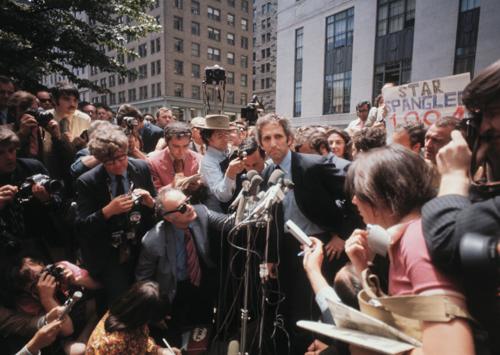
Eqbal Ahmad, Daniel Ellsberg, Anthony Lukas and Anthony Russo talk with Studs Terkel ; part 3
Jun. 9, 1972 Eqbal Ahmad, Daniel Ellsberg, Anthony Lukas and Anthony Russo discuss Anthony Russo's trial and treatment he endured during his time from conviction to release in federal prison compared to the treatment of prisoners tortured in Vietnam.
-
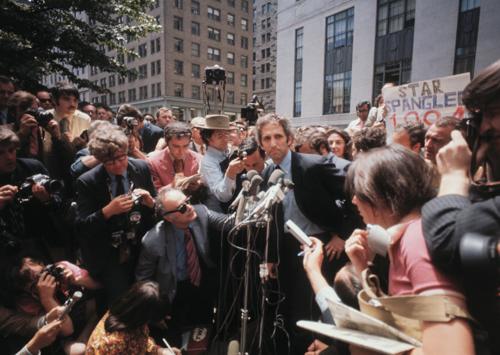
Eqbal Ahmad, Daniel Ellsberg, Anthony Lukas and Anthony Russo talk with Studs Terkel ; part 2
Jun. 9, 1972 Daniel Ellsburg, Eqbal Ahmad, Anthony Lukas, and Anthony Russo discuss Anthony Russo's time in jail, the leak of the Pentagon Papers, Vietnam War, torture of Vietnam prisoners being ignored, corruption in politics, and working for Rand.