

-

Debra Evenson and Gisela Lopez discuss the U.S. embargo on Cuba
Sep. 1, 1994 Attorney Debra Evenson and Gisela Lopez discuss the U.S. embargo on Cuba, the 1994 Cuban craft crisis, and food shortages and life in Cuba.
-
Debbie Sweet discusses what happened when she met President Nixon
Dec. 22, 1970 On December 3, 1970, Debbie Sweet won the Young Americans Service Award. She talks about what happened when she met President Nixon to receive her award. Upon shaking his hand, Sweet told President Nixon that she didn't believe in his sincerity in giving out the awards until he got us (America) out of Vietnam. Her encounter with President Nixon made headlines around the world.
-
David Hamlin discusses his book, "The Nazi/Skokie Conflict: A Civil Liberties Battle"
Mar. 5, 1981 David Hamlin, author and former Executive Director of ACLU, discusses his book "The Nazi/Skokie Conflict: A Civil Liberties Battle." Hamlin talks about Frank Collin, a jewish man turned leader of American Nazi Party leader and the court battle over the right to demonstrate in Skokie, Illinois. He also talks about the retaliation against the ALCU for defending Collin's case in court. At the end of the interview, Hamlin gives some advice on how to deal with people like Frank Collin.
-
David Farber discusses his book "Chicago '68"
May. 16, 1988 David Farber discusses his book “Chicago ‘68” and reflects on the 1968 Democratic Convention in Chicago. Studs plays “I Ain’t Marching Anymore” - Phil Ochs (1965) and “Days of Decision” - Phil Ochs (1965). This interview features a clip of a previous interview Studs had with an unnamed Chicago police officer who describes his opinion on police brutality.
-
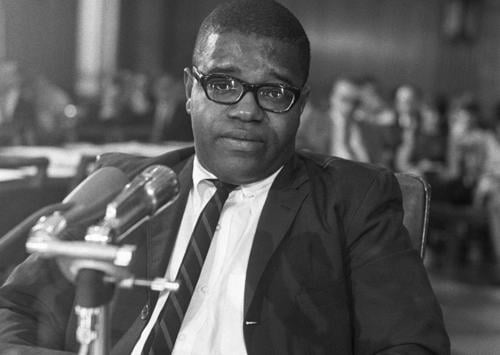
Claude Brown talks with Studs Terkel
Sep. 13, 1965 Discussing the book "Manchild in the Promised Land" with Claude Brown. Brown also discusses growing up in Harlem, New York as an African American man. Includes a clip of a man speaking from the county jail. Includes a song sung by Mahalia Jackson. Includes a clip of children singing.
-
Charles Hardin discusses his book, "Presidential Power and Accountability: Toward a New Constitution"
Jun. 26, 1974 Charles M. Hardin, political science professor, discusses his book, "Presidential Power and Accountability: Toward a New Constitution." Hardin discusses presidents from Roosevelt to Nixon and explores political parties and the Constitution and the role both play in the American Government. He explains his studies in political science and how he has come to believe that the Constitution should be re-written and creating more political parties could limit presidential powers, which he believes could cause problems in the future.
-
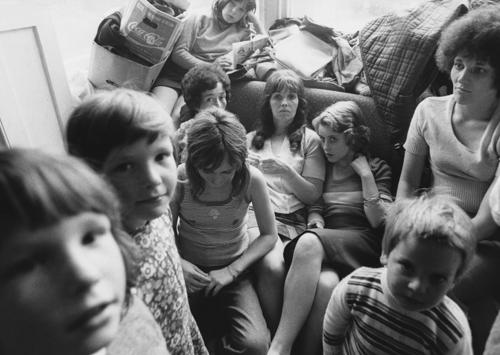
Candace Wayne talks about domestic violence
Jan. 12, 1979 Candace Wayne talks about domestic violence and the legal process in the field and her role as an attorney-at-law at the Battered Women's Center in Chicago.
-
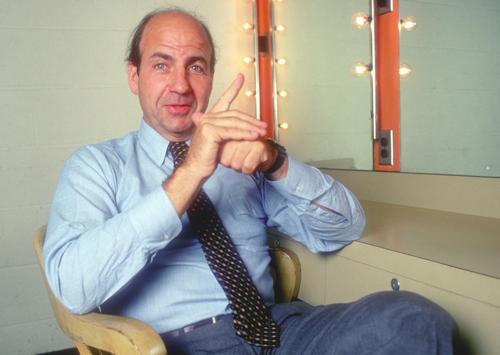
Calvin Trillin discusses his book “Killings”
Feb. 13, 1984 Writer Calvin Trillin discusses his book “Killings” and the murder cases included in the book. Trillin also reads a poem written by one of the victims.
-
Buzz Hirsch discusses the film "Silkwood"
Jan. 6, 1983 Discussing the film "Silkwood" a movie about Karen Silkwood and the circumstances surrounding her death with movie producer Buzz Hirsch.
-
Bill Cunningham discusses court cases he has participated in
Jan. 5, 1979 Bill Cunningham, Jesuit priest and lawyer, discusses some court cases he has participated in. He talks about the Berrigan Brothers who protested against the Vietnam War. Cunnginham also talks about the Rice-Poindexter case, where two Black Panther Party members were charged for murder. He also discussed the Freedom of Information Act and the COINTELPRO the FBI's Counter Intelligence Program. Studs reads poetry from David Rice and plays a song by Hank Ferguson.
-
Bill Ayers reads from and discusses his book "A Kind and Just Parent"
Jun. 25, 1997 Bill Ayers' book, "A Kind and Just Parent: The Children of Juvenile Court" takes a look at kids getting caught up and lost in the system. While observing in the courts, Ayers said all kids just became a thing.
-
Bill Ayers discusses his book "To Teach"
Jun. 23, 1993 According to Bill Ayers, in order to be a good teacher, one must 1st become a student of his/her students' lives. New ideas on how to become a better teacher are offered in Ayers' book, "To Teach: The Journey of a Teacher.'
-
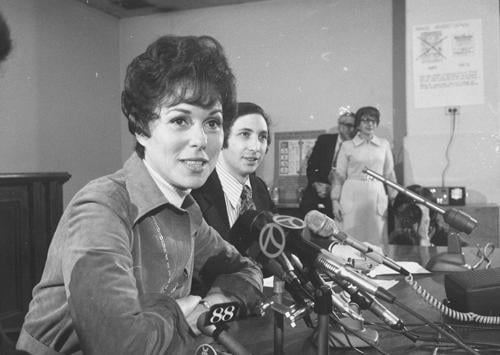
Bess Myerson discusses her career
Jun. 12, 1974 Bess Myerson discusses her career including her experiences as Miss America and as Commissioner of Consumer Affairs for New York City.
-
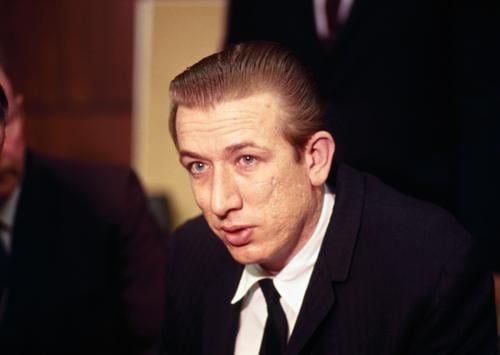
Authors Jack Altman and Dr. Marvin Ziporyn discusses their book "Born to Raise Hell"
1967 Richard Speck, the man who murdered eight student nurses in 1966, is the topic of Jack Altman's and Dr. Marvin Ziporyn's book, "Born to Raise Hell: The Untold Story of Richard Speck -- The Man, The Crime, The Trial". Altman saw Speck's public and private image as being quite different. When asked to smile for the cameras, Speck obeyed authority and was labeled a monster by the press when in reality, he blocked out the murders and was disgusted by his actions. Dr. Ziporyn sees this murderous violence as a disease and not as a monster as the press portrayed it.
-
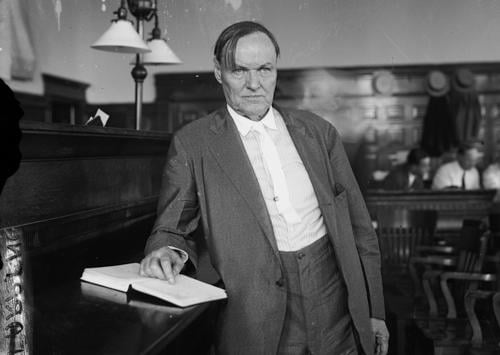
Arthur Weinberg discuess his biography of Clarence Darrow
Dec. 8, 1980 Terkel interviews author Arthur Weinberg. His latest book is called: "Clarence Darrow: A Sentimental Rebel".