

-

Gordon Adams discusses his book, "The Iron Triangle: The Politics of Defense Contracting"
Nov. 1, 1981 Gordon Adams, political scientist, discusses his book, "The Iron Triangle: The Politics of Defense Contracting." He explores the military budget how it is a drain on the taxpayer's money. Adams explains how private contractors, such as Rockwell Corporation, enter into defense contracts and make money off the government's dependence on the military weapons.
-
Geoffrey Bridson BBC broadcaster and Joyce Bridson public relations at BBC talk about their work in radio through the years
Oct. 30, 1970 Geoffrey Bridson and his wife Joyce, discuss his book "Prospero and Ariel: The rise and fall of radio a personal recollection.", as well as his life and career as a producer/broadcaster for BBC radio. The interview is interspersed with several excerpts from recordings: Excerpt of conversation at the home of Bridsons in England 1962. He talks about the play "Aarons field" and the sequel "Aarons Fallout shelter". Excerpt from Joyce Bridson backstage after the play "Oh what a lovely war" in New York.
-
Dr. Robert Jay Lifton discusses the psychological impact of the nuclear arms race
1980 Dr. Robert Jay Lifton, psychiatrist and psycho-historian, discusses the acceptance and embrace of nuclear disaster, doctors' opposition to nuclear weapons, difference in Americans' and Europeans' opposition to nuclear weapons, psychological impact of nuclear bombings in Japan, and the mental disconnect experienced by those who build atomic weapons who then see the bombs' effects.
-
Dr. Helen Caldicott discusses the ill-effects of a nuclear bomb going off
Apr. 7, 1981 The world spends 600 billon dollars on the arms race, which is rather puzzling to Dr. Helen Caldicott when 2/3 of the world's children are starving. Caldicott explained if a bomb went off in Chicago, there'd be a crater a half a mile wide and 300 feet deep. In addition, 90% of the people will be dead, some from being vaporized.
-
Dr. Erich Fromm discusses humanistic philosophy during the Cold War
1963 Dr. Erich Fromm explains how he believes the Cold War was a moment of change for humanity where it would either bring about a "renaissance of humanism or immense bloodshed and barbarism for decades to come." Using his study into humanism, Dr. Fromm warns about how the love of death can overtake the love of life as nationalism and group narcissism takes hold in different countries. He goes on to explain that humanity has to decide that they have a right to demand independence and freedom.
-
Discussing the Soviet military, with Andrew Cockburn
Jun. 30, 1983 The British journalist assesses the real military power behind the Iron Curtain in his book, The Threat: Inside the Soviet Military Machine. He and Studs attempt to separate the myth from the reality of the late Cold War USSR.*Please note: some sections have been edited out from the original recording due to copyright considerations
-
-
Discussing the book "The American inquisition: justice and injustice in the cold war" with the author Stanley Kutler
Dec. 16, 1982 Discussing the book "The American inquisition: justice and injustice in the cold war" with the author Stanley Kutler.
-
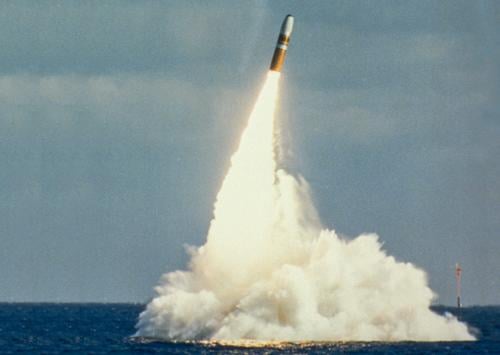
Discussing a rebuttal to editorials opposing the nuclear arms freeze
Oct. 27, 1982 Presenting a rebuttal to editorials opposing the nuclear arms freeze with Dr. Jack Geiger, Dr. George Kistiakowsky, Dr. Herbert (Peter) Schoville and Dr. Kosta Tsipis of MIT.
-
David Halberstam discusses his book, "The Fifties"
Jun. 11, 1993 David Halberstam, writer and historian, talks about his book, "The Fifties." The conversation includes Brown v. Board of Education, atomic weapons, the Cold War, the Korean and Vietnam Wars, consumerism, birth control, suburbs, television and the start of the counterculture. Halberstam reads several passages from his book.
-
Daniel Yergin discusses his book, "Shattered Peace: The Origins of the Cold War and the National Security State"
1970 Daniel Yergin, author and economic historian, discusses his book, "Shattered Peace: The Origins of the Cold War and the National Security State." He explains the key players in the Cold War and his thoughts on the Yalta and Riga Axioms. Yergin also explores the end of World War II and other events that led to the tensions between US and the Soviet Union.
-
Daniel Ellsberg Discusses the publication of "The Pentagon Papers" ; part 1
1980 Daniel Ellsberg, political activist and former military analyst, discuses his release of the Pentagon Papers and his thoughts on how the Vietnam War played out. He also discusses what he believes the next war could look like and how America, and the world, would be affected by nuclear war.
-
-
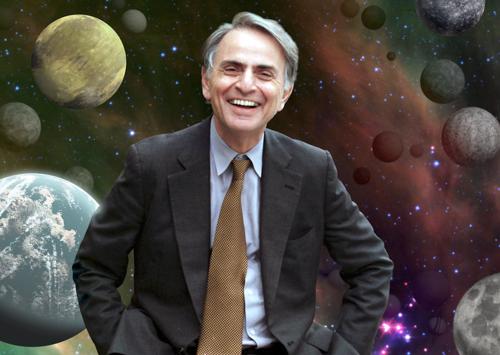
Carl Sagan and Ann Druyan discuss their book "Shadows of Forgotten Ancestors"
Oct. 5, 1992 Evolution and the future of the human race are among topics in Carl Sagan's and Ann Druyan's book, "Shadows of Forgotten Ancestors: A Search for Who We Are." Included is an excerpt of the astronomer Harlow Shapley speaking at the beginning. Carl Sagan also reads an excerpt from the book at the end.
-
Blanche Wiesen Cook discusses her book, "The Declassified Eisenhower: A Divided Legacy of Peace and Political Warfare"
Aug. 6, 1981 Blanche Wiesen Cook, historian, professor, and author discusses her book, "The Declassified Eisenhower," and explains Eisenhower's peace and war beliefs. She describes his beliefs at the end of World War II and his relationships with fellow generals and leaders.