

-
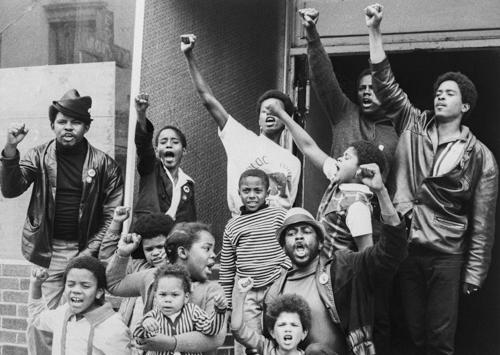
Nathan Wright discusses Black power ; part 1
1967 Author and scholar Nathan Wright discusses black power and identity and his book, “Black Power and Urban Unrest.” Wright talks about the importance of identity in the Black community; leadership; violence and poverty in urban Black communities; the importance of higher education for Blacks; and the nature of power and how its creative use can bring about social change.
-
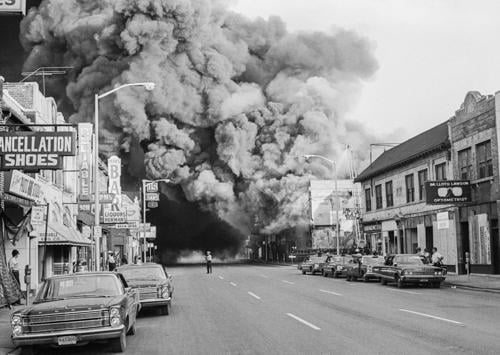
Nancy Milio reads from and discusses her book "9226 Kercheval"
Jun. 13, 1970 Nancy Milio's book, "9226 Kercheval: The Storefront That Did Not Burn," is about community health services offered in a ghetto on the south side of Detroit, Michigan. As a nurse, Milio knew how important it was to offer quality health services to poor and uneducated individuals. With their real names changed, Milio talks about her experiences with Mrs. Watkins, Johhnie West and others at the center.
-

Myra Alexander discusses what's wrong with Chicago
1980 Content Warning: This conversation includes racially and/or culturally derogatory language and/or negative depictions of Black and Indigenous people of color, women, and LGBTQI+ individuals. Rather than remove this content, we present it in the context of twentieth-century social history to acknowledge and learn from its impact and to inspire awareness and discussion. A citizen of Chicago, Myra Alexander, believes Chicago is lost and hopeless. Chicago, she explains, will always have its problems with its one party system. Alexander said prejudice is wide-spread in Chicago.
-
Murray Kempton talks with Studs Terkel
Sep. 13, 1973 Murray Kempton discusses race relation in the United State of America and the Black Panther Trial in New York. Murray also discusses his book, originally published as, "The Briar Patch: The People of New York versus Lumumba Shakur, et al." This book was reprinted as "The Briar Patch: The Trial of the Panther 21" in 1997.
-
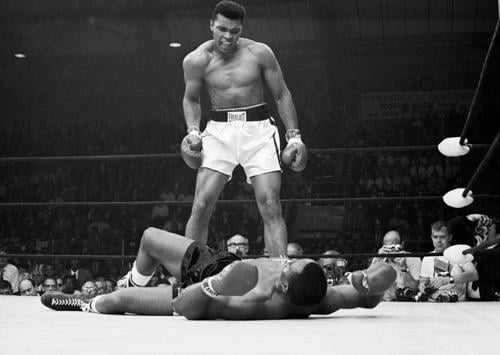
Muhammad Ali discusses his book "The Greatest: My Own Story"
Nov. 26, 1975 Content Warning: This conversation includes racially and/or culturally derogatory language and/or negative depictions of Black and Indigenous people of color, women, and LGBTQI+ individuals. Rather than remove this content, we present it in the context of twentieth-century social history to acknowledge and learn from its impact and to inspire awareness and discussion. Muhammad Ali discusses his book "The Greatest: My Own Story," touching on topics including his childhood and family, conversion to Islam, stance on the Vietnam War, and experiences in jail.
-

Mothers discuss the hardships of living on welfare
1968 Five mothers from Chicago discuss the hardships of living in poverty and how little welfare actually helps with Studs Terkel.
-
Members of the Shanghai Quartet discuss their backgrounds
May. 17, 1989 The day before their concert performance at North Park College, the Shanghai Quartet was at the WFMT studios. Betty Bucchari explained her job was to search for great musicians that were not well-known. The Li brothers were destined to play the violins, as their parents were music teachers for 15 years.
-
Maya Angelou discusses her early life and African American culture and people
Apr. 1, 1960 Angelou discusses: her early life; her international travels; dancing; blues and jazz music; and the book "Youngblood" by John Oliver Killens. In this program "In the Evening (When the Sun Goes Down)" and "Joe Turner No. 2 (Blues of 1892)" by Big Bill Broonzy, "I Ain't Gonna Pick No More Cotton" by Sam Lightnin' Hopkins is played, as well as other musical selections.
-
Maya Angelou discusses her early life and African American culture and people
Apr. 1, 1960 Angelou discusses: her early life; her international travels; dancing; blues and jazz music; and the book "Youngblood" by John Oliver Killens. Musical selections have been removed due to copyright.
-
Maya Angelou discusses her book “Gather Together in My Name”
May. 13, 1974 Writer and poet Maya Angelou talks about her life, Creole influences, and her book “Gather Together in My Name” with Studs Terkel. Angelou reads an excerpt from the book and the recording opens with Angelou reading one of her poems.
-
Maya Angelou discusses her book "I Know Why the Caged Bird Sings"
Mar. 13, 1970 Angelou discusses her book "I Know Why the Caged Bird Sings" and recites "When I Think About Myself." She talks about growing up in Stamps, Arkansas, and her family. Copyrighted material has been removed.
-
Maya Angelou and Tom Wicker discuss life and culture in the U.S. South
Jul. 1, 1979 Poet Maya Angelou and journalist Tom Wicker discuss life in the U.S. South and how the region’s history has shaped its culture. Topics of discussion include social dynamics and race in the South, the concept of “home” and what it means to return to one’s roots, and religion in the South. Angelou reads excerpts of her poetry, including “Still I Rise” and “Phenomenal Woman,” and shares spiritual songs from her childhood.
-
Max Morath discusses his career and jazz music
Jun. 18, 1970 Max Morath discusses his career, jazz music, and history.
-
Maurice Weddington talks his music career as a renowned composer in Europe
Mar. 24, 1983 Self-taught composer Maurice Weddington talks about his music career from his early years when he was raised on the West Side of Chicago to his performances around Western Europe.
-
Martina Arroyo discusses her opera career ; part 2
Aug. 1969 When the announcement was made, to let the audience know the opera singer they came to see would not be performing but that Martina Arroyo would be singing the part of Aida, Arroyo recalls that you could hear the crowd groan all the way in Chicago. Arroyo talks about singing in the operas. She also talks about even though she may have a starring role in the opera, the show is not hers, but rather everyone in the company works hard to put out a good production.