

-
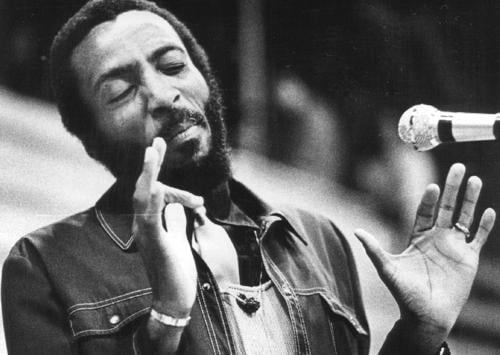
Dick Gregory discusses his career
May. 14, 1970 Lillian Smith excerpt opens the program.
-
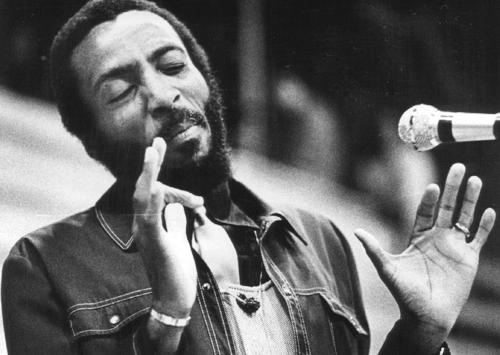
Dick Gregory discusses his book "Dick Gregory's Natural Diet for Folks Who Eat: Cookin' With Mother Nature"
May. 30, 1973 Comedian and activist Dick Gregory joins Studs Terkel to discuss his new book “Dick Gregory's Natural Diet for Folks Who Eat: Cookin' With Mother Nature.” Gregory talks about his experiences fasting for both political and health reasons, and he comments on hunger in America, the power of the navy bean, and changing trends in eating. The two discuss the peace movement and Watergate, and Gregory shares his experience as a black man in the military. Gregory believes that how you treat yourself and your body reflects how you treat others.
-

Dick Gregory discusses American politics
Dec. 17, 1964 This interview begins with a clip of one of Dick Gregory’s performances, where he talks about nonviolence and Native Americans. Studs Terkel introduces his guest as an observer, explaining that comedians are the best observers in society. Gregory offers extended analogies to communicate his views on a variety of topics, including the Vietnam War, race relations, segregation, human rights, and urban renewal. [The date is unclear, but it has to be after 1970, since the Kent State Shootings were mentioned]
-
Derrick Bell discusses his book "Confronting Authority"
Dec. 2, 1994 Civil rights activist, lawyer, and professor Derrick Bell discusses his latest work and protest against Harvard University due to their lack of diverse hiring in academics. Bell is known for his work on the concept of critical race theory and his relentless pursuit of fair treatment for his colleagues.
-
Derrick A. Bell in conversation with Studs Terkel
Oct. 8, 1992 Interviewing lawyer, activist and author Derrick Bell.
-
Dempsey Travis discusses jazz artists and recalls his early memories of Chicago jazz
Feb. 1, 1989 Dempsey Travis presents a jazz program and discusses the life, the music, and the community of Chicago jazz from before The Great Depression until World War II. Travis discusses 1920s-1930s Chicago for Black families including rent parties, breakfast dances, employment opportunities, union strikes, and jazz.
-
Dempsey Travis discusses big band jazz players
Nov. 21, 1994 Dempsey Travis, real estate entrepreneur and civil rights activist turned historian and author, recalls his earlier days meeting and listening to many of the African American jazz artists. Some of the musicans mentioned are Louis Armstrong, Jimmie Lunceford, Fletcher Henderson, Duke Ellington, Earl Hines, Art Tatum, Cab Calloway, Nat King Cole, and Benny Goodman.
-
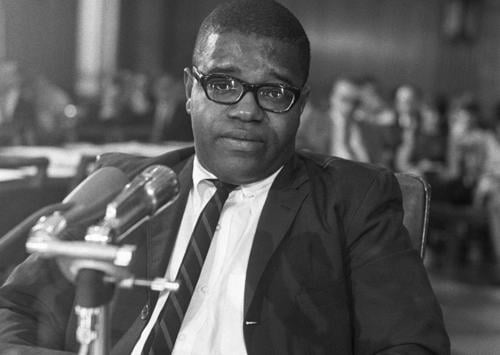
Claude Brown talks with Studs Terkel
Sep. 13, 1965 Discussing the book "Manchild in the Promised Land" with Claude Brown. Brown also discusses growing up in Harlem, New York as an African American man. Includes a clip of a man speaking from the county jail. Includes a song sung by Mahalia Jackson. Includes a clip of children singing.
-
Charles Richard Johnson reads from and discusses his book "Middle Passage"
Jan. 30, 1991 Rutherford Calhoun is the main character of Charles Richard Johnson's novel, "Middle Passage." In his quest to get away from his marriage and a bill collector, a freed slave himself, Rutherford stows away onto a ship not realizing that the cargo being carried are slaves from Africa.
-
Charlemae Hill Rollins discusses and reads from her book "The Christmas gif'"
1970 Charlemae Hill Rollins and Studs Terkel read from "The Christmas Gif" and discuss it's importance in African American literature. The book is an anthology of Christmas poems, songs, and stories, written by and about Negroes, and compiled by librarian Charlemae Hill Rollins. The book was first published in 1963.
-
Charlayne Hunter-Gault discusses her book "In My Place"
Jun. 3, 1995 Charlayne Hunter-Gault's book, "In My Place," offers Hunter-Gault's experiences with history, namely her being one of only 2 Black students that were allowed to go to the University of Georgia. She talks about liberation and freedom and she recalls what it would have been like for her ancestors to struggle .
-
Big Bill Broonzy discusses the blues
Sep. 13, 1955 Big Bill Broonzy discusses the blues with Studs. Big Bill talks about getting ready for a European tour, his young life, and his life as a musician. The following performances have been removed for copyright reasons: "Ride Alberta, ride," "Going Down the road feeling bad," "House rent stomp," "The glory of love," "Plow hand," "I feel so good," and "Make my getaway."
-
Ben Burns discusses and reads from his book “Nitty Gritty: A White Editor in Black Journalism”
Apr. 12, 1996 Editor Ben Burns discusses and reads from his book “Nitty Gritty: A White Editor in Black Journalism.” Burns discusses his experience as an editor of black publications including the "Chicago Daily Defender," "Ebony," and "Jet." Studs plays "Billie's Blues" - Billie Holiday (1936); "Goin' to Chicago Blues" - Count Basie and His Orchestra (1941); and "Rosetta" - Earl Hines (1934).
-
Basil Davidson discusses Africa and his book "Lost Cities of Africa," part 2
British historian and writer Basil Davidson discusses Africa and his book "Lost Cities of Africa," part 2. This recording also includes a discussion with Anne Graham Bell and Tony Mott about London's youth (recorded while Studs was in England) beginning at 00:20:14. Mott and Bell portion of the interview cuts off abruptly at the end.
-
Basil Davidson discusses Africa and his book "Lost Cities of Africa," part 1
British historian and writer Basil Davidson discusses Africa and his book "Lost Cities of Africa." Part 1. Part two of this recording also features Anne Graham Bell and Tony Mott discussing London's youth while Studs was in England. They are not included here, in part 1.