

-

Mirella Freni, Nicolai Ghiaurov in conversation with Studs Terkel
Nov. 3, 1994 Interviewing basso Nicolai Ghiaurov and soprano Mirella Freni.
-

Mirella Freni discusses her career
Oct. 10, 1979 Mirella Freni discusses her career, her colleagues, and opera.
-
Michel Block discusses his career
Jul. 20, 1978 Belgian-French pianist Michel Block discusses his career and accomplishments.
-
Michael Feinstein discusses George and Ira Gershwin
Feb. 26, 1990 Interviewing Michael Feinstein, American singer, pianist, and music revivalist, about his music and his work cataloging Ira Gershwin’s collection of phonograph records.
-
Members of the Shanghai Quartet discuss their backgrounds
May. 17, 1989 The day before their concert performance at North Park College, the Shanghai Quartet was at the WFMT studios. Betty Bucchari explained her job was to search for great musicians that were not well-known. The Li brothers were destined to play the violins, as their parents were music teachers for 15 years.
-
Members of the Fine Arts Quartet discuss chamber music
Oct. 1, 1964 Studs Terkel interviews the members of the Fine Arts Quartet, 1st violin Leonard Sorkin, 2nd violin Abram Loft, viola Gerald Stanick, and cello George Sopkin. The members of Fine Arts Quartet discuss the following: Elizabeth Sprague Coolidge's contributions to chamber music in America, the centennial anniversary of Coolidge's birth, the history of chamber music in America, the nature of their rehearsals, and their performances.
-
Members of the Earth Club radio show discuss their musical repertoires
Feb. 14, 1994 Howard Levy, Stuart Rosenberg, and Johnny Frigo reminisce about their discovery of musical genres that inspired them and discuss the early roots of folk music.
-
Maurice Weddington talks his music career as a renowned composer in Europe
Mar. 24, 1983 Self-taught composer Maurice Weddington talks about his music career from his early years when he was raised on the West Side of Chicago to his performances around Western Europe.
-
Maurice Sendak discusses his book "Where the Wild Things Are"
Dec. 19, 1990 Monsters, imagination and violence in children's literature are all topics of Maurice Sendak's book, "Where the Wild Things Are." When writing the book, Sendak used his own experiences as a little boy, remembering that the monsters in the family were relatives on his mother's side. There are two excerpts of composer Oliver Knussen.
-
Mattiwilda Dobbs discusses her career as coloratura soprano opera singer
Mar. 14, 1975 Studs interview with Mattiwilda Dobbs, first female and black to perform at La Scala. Dobbs describes her musical beginning as a child within a musical family in Atlanta, Georgia. She explains her training and professional background with various opera houses and theaters. The musical pieces are removed from this edited version of the original recording.
-
Martina Arroyo discusses her opera career ; part 2
Aug. 1969 When the announcement was made, to let the audience know the opera singer they came to see would not be performing but that Martina Arroyo would be singing the part of Aida, Arroyo recalls that you could hear the crowd groan all the way in Chicago. Arroyo talks about singing in the operas. She also talks about even though she may have a starring role in the opera, the show is not hers, but rather everyone in the company works hard to put out a good production.
-
Martina Arroyo discusses her opera career ; part 1
Aug. 1969 When the announcement was made, to let the audience know the opera singer they came to see would not be performing but that Martina Arroyo would be singing the part of Aida, Arroyo recalls that you could hear the crowd groan all the way in Chicago. Arroyo talks about singing in the operas. She also talks about even though she may have a starring role in the opera, the show is not hers, but rather everyone in the company works hard to put out a good production.
-
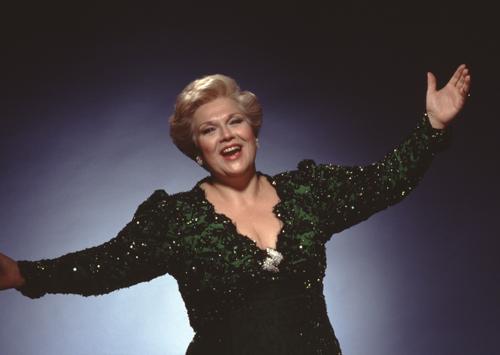
Marilyn Horne talks about her music career and her upcoming performance in "Rinaldo" at the Chicago Opera Theater
May. 2, 1984 Marilyn Horne talks about her music career and her upcoming perfomance in "Rinaldo" at the Chicago Opera Theater
-
Marilyn Horne and Henry Lewis discuss their careers and opera music, part 1
Jun. 1, 1966 Marilyn Horne and Henry Lewis discuss their careers, opera music, and their operatic roles. They also discuss cross-gender roles in opera and Marilyn Horne's role as Romeo in the opera "Capuleti e i Montecchi" by Vincenzo Bellini. Includes clips of Marilyn Horne singing an opera song at the beginning, an opera song by Gioachino Rossini, and a song from Charles Gounod's opera "Sapho."*Please note: some sections have been edited out from the original recording due to copyright considerations
-
Marilyn Horne and Henry Lewis discuss their careers and opera music ; part 2
Jun. 1, 1966 Marilyn Horne and Henry Lewis discuss their careers, roles, and opera. Includes Marilyn Horne singing a song from Ludwig von Beethoven's "Fidelio".