

-

Listening to and discussing the "Living Music Collection '86," with saxophonist, bandleader, and composer Paul Winter
Oct. 20, 1986 Listening to the Living Music Collection
-
Licia Albanese discusses her opera performances
Feb. 27, 1960 Licia Albanese discusses her performance preparations, advice to young new opera singers, the conductor techniques from Fausto Cleva, and the late Arturo Toscanini.
-
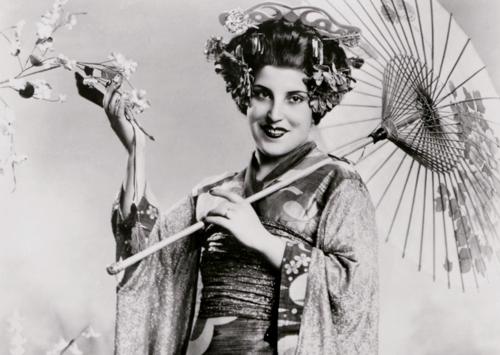
Licia Albanese discusses her opera performances
Feb. 27, 1960 Licia Albanese discusses her performance preparations, advice to young new opera singers, the conductor techniques from Fausto Cleva, and the late Arturo Toscanini.
-
Leonard Sorkin discusses his career as a violinist with the Chicago Symphony Orchestra, the Fine Arts Quartet and as Director of Chamber Music Studies at the University of Wisconsin
Apr. 9, 1982 Studs interviews Leonard Sorkin about his career as a violinist. They discuss his training, which began in early childhood and who he studied under. Sorkin plays a few short tunes to demonstrate his art, and one was his childhood favorite of "Allegro" by Joseph Fiocco. Sorkin names Jascha Heifetz as one who he admired all his life and shares the sounds and names of others who have influenced him. He explains to Studs how the Fine Arts Quartet members change to adapt to new players but the quartet sound remains the same.
-
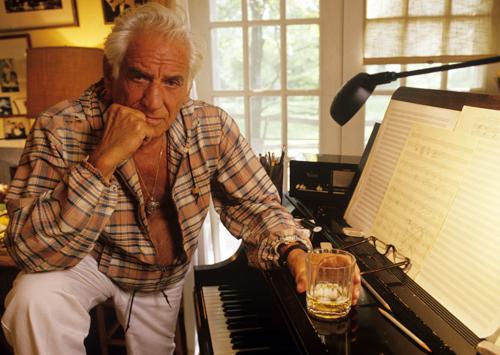
Leonard Bernstein discusses his career, music, and education
Feb. 1, 1985 Leonard Bernstein discusses his career as a composer along with his thoughts on American culture, musical theater, Black music, classical music, and education; music is played throughout the program including songs from Marc Blitzstein's play "The Cradle Will Rock."
-
Josef Krips discusses his art and music
Nov. 1, 1964 Maestro Josef Krips is mostly associated with conducting Mozart operas. He discovered early in his career that conducting Mozart is very difficult, but he believed that Mozart should be enjoyed by everyone, not just the well-to-do in society. He also believed art is an essential part of life that should be experienced by everyone.*Please note: some sections have been edited out from the original recording due to copyright considerations
-
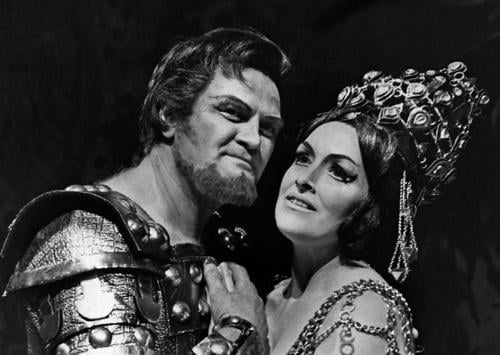
Jon Vickers discusses his career
Oct. 11, 1974 Jon Vickers discusses his career, opera music, and opera singers.
-
John Steinway discusses the family business of making pianos
Nov. 4, 1965 As a result of making cabinets, the family business of making pianos started in 1853. John Steinway is a 4th generation piano-maker. Steinway talks about his own apprenticeship and first learning about wood. He feels the pianos are made better today because long ago, only two men made a piano versus a six or eight man crew to perfect the craftmanship today.*Please note: some sections have been edited out from the original recording due to copyright considerations
-
John Eliot Gardiner discusses his career in Baroque music as conductor of the Monteverdi Choir and the English Baroque Soloist
Feb. 20, 1989 Studs interviews John Eliot Gardiner about his career in baroque music and his background and interests. Studs announces that Gardiner is performing at Orchestra Hall in Chicago. Gardiner explains the instruments that his group uses and how they are different and capture the original sounds of pieces. He also describes the history and time period of baroque music. Gardiner explains various pieces that the choir performs such as Handel's "Israel in Egypt" and Henry Purcell's "King Arthur." The musical numbers are removed from this edited version of the original recording.
-
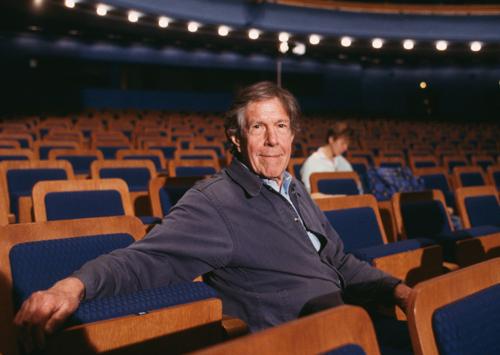
John Cage discusses his music, life, influences, and career
Aug. 13, 1992 John Cage discusses his music, life, influences, and career. Rebroadcast of an interview with John Cage to celebrate his life and what would have been soon his 80th birthday. Includes a clip of John Cage reading/ telling a story in 1969 to Studs Terkel.
-
Jill Godmilow discusses her film "Antonia"
1970 Filmmaker Jill Godmillow and folksinger Judy Collins co-produced the documentary film "Antonia: A Portrait of the Woman." Godmillow's film covers how Antonia Brico wanted to conduct professional symphony orchestras. There are also excerpts from the film within this interview.
-
Jill Godmilow discusses her documentary “Antonia”
1970 Discussing Antonia and interviewing Jill Godmilow.
-
-
Jerry Hadley discusses his latest CD release- Golden Days - Tenor hits from the Golden Age of Operetta
Oct. 21, 1994 Interview with Jerry Hadley on his upcoming performance in Rake's Progress as well as his recently released CD Golden Days - Tenor hits from the Golden Age of Operetta
-
Jerry Fuller, Jeff Bradetich and Judi Bradetich discuss double bass music
Jul. 11, 1989 Musicians Jerry Fuller, Jeff Bradetich, and Judi Bradetich discuss their careers and recently released works such as Fuller's Songs, Dances and Fantasy, and Bradetich's latest work, Broadway for All the Hear. Pieces from both of these works are performed during the interview, including Broadway pieces from Cabaret, West Side Story, and music highlighting the double bass's sounds.