

-

Daniel Ellsberg discusses nuclear warfare and its worldwide impact
Feb. 14, 1994 Interviewing former government official, Vietnam War opponent, and political activist Daniel Ellsberg. Program includes an excerpt of a 1980 interview with Ellsberg. Includes a test tone lasting about 20 seconds. Content Warning: This conversation has the presence of outdated, biased, offensive language. Rather than remove this content, we present it in the context of twentieth-century social history to acknowledge and learn from its impact and to inspire awareness and discussion.
-
Daniel Ellsberg discusses his family and his beliefs about the hydrogen bomb ; part 2
Dec. 31, 1979 Daniel Ellsberg, political activist, discusses the creation and use of the atomic and hydrogen bombs. He discusses his family including how his son helped him leak the Pentagon Papers and has since protested with him, including being jailed. He also talks about his father who quit his job over the creation of the hydrogen bomb and how his father's choice helped him to decide to release the Pentagon Papers.
-
Carole Gallagher in conversation with Studs Terkel
Apr. 5, 1993 Discussing the book "American Ground Zero: The Secret Nuclear War" (published by MIT Press) with author and photographer Carole Gallagher.
-
Cao Ngoc Phuong discusses being a Buddhist in Southern Vietnam and starting the Buddhist School of Youth for Social Service
Feb. 25, 1970 Discussion with Cao Ngoc Phuong a Buddhist educator from Southern Vietnam and, one of the founding members of the Buddhist Student Movement, and the Buddhist School of Youth for Social Service. Includes poetry reading by Thich Nhat Hanh from his book "Vietnam: Lotus in a sea of fire-a Buddhist proposal for peace" Includes songs sung by Cao Ngoc Phuong: "The old man and the child" by Trinh Cong Son, "The Cio Linh mother" by Pham Duy, and "Lullaby" by Chinh Ba and Nhat Hanh.
-
Bruce Kent discusses the peace movement
Mar. 14, 1996 A retired admiral told Bruce Kent, without even making a single request, they receive lots of money for weapons. Kent explained that currently, he believes both the right and left sides are willing to see reform in the United Nations. Kent was surprised at Americans' silent opinions when it came to nuclear arms, noting that they could blow up the world 50 times over. There is an excerpt of James Cameron talking about nuclear disarmament.
-
Bertrand Russell discusses science and world peace. Phyllis Evans discusses the National Health Plan ; part 1
1962 Sir Bertrand Russell says scientists have a fundamental obligation to let the authorities know if and when what they're working on could lead to or cause a war. Russell claims, no matter the side, there are no winners as a result of war. The world could be a far better place, Russell explained, if it weren't for the fact of man's hatred toward other men. If one lives in the United States and has a grave illness or needs a major surgery, Phyllis Evans says one should not have to go into bankruptcy because of all the costs.
-
Barbara Blaine, Ruth Graff, and Nina Polcyn-Moore discuss the Catholic Worker Movement
1986 Interviewing Catholic workers Barbara Blaine, Ruth Graff, and Nina Polcyn-Moore. They discuss their lives, Catholic worker houses, and poverty. Includes an interview with Dorothy Day. Content Warning: This conversation has the presence of outdated, biased, offensive language. Rather than remove this content, we present it in the context of twentieth-century social history to acknowledge and learn from its impact and to inspire awareness and discussion.
-
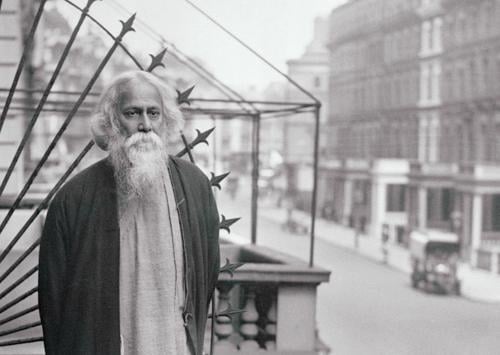
Amiya Chakravarty discusses Rabindranath Tagore
Jun. 11, 1965 Amiya Chakravarty discusses Rabindranath Tagore. Includes song and poem by Rabindranath Tagore.
-
Allen Ginsberg discusses poetry and meditation
Nov. 29, 1976 Studs Terkel and Allen Ginsberg talk about poetry, meditation, and the shifting of American socio-political consciousness between the 50's and 70's.
-

Allen Ginsberg and Philip Glass talk about their collaborations
Apr. 16, 1990 Discussing the opera "Hydrogen Jukebox," with poet Allen Ginsberg and composer Philip Glass.
-
Albert John Luthuli discusses the struggle for democratic rule in South Africa
Mar. 1963 Albert John Luthuli, President of the African National Congress, Nobel Peace Prize winner, and Zulu Chief, discusses politics of South Africa. The interview includes discussions about his early life and education, and his teaching career, becoming chief of the Zulus, and working as the President of the African National Congress. He also explains his thoughts on peaceful methods of fighting against discrimination and apartheid in South Africa.
-
Abe Peck discusses his book “Uncovering the Sixties: The Life and Times of the Underground Press”
Jun. 10, 1985 Editor and writer Abe Peck discusses and reads from his book “Uncovering the Sixties: The Life and Times of the Underground Press.” Peck discusses the social and political forces, such as the lack of questioning authority forces seen during this time, that drove the alternative press to formation. This program includes audio clips of Studs interviewing attendees of a Vietnam War protest in Chicago. Studs also includes a clip of British journalist James Cameron discussing the 1968 Chicago Democratic Convention. Studs plays "The Times They Are A-Changin'" - Bob Dylan (1964).
-
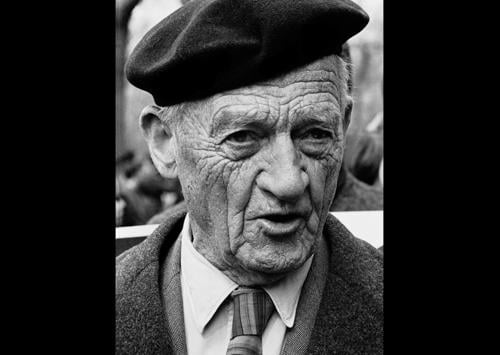
A. J. Muste talks with Studs Terkel
Feb. 15, 1965 Peace advocate and labor activist, A. J. Muste, discusses war and how human conflict can be overcome; recorded at the home of Sidney Lens shortly after Muste's 80th birthday.
-
A program discussing the antinuclear movement with Sylvia Johnson and others
May. 23, 1983 Discussing the antinuclear movement with Sylvia Johnson, American Friends Service Committee, and two members of Greenham Commons.
-
A conversation with Sharon Tennison
Apr. 9, 1984 The peace activist, nurse, and housewife Sharon Tennison joins Studs to discuss her experiences in trying to ease nuclear tensions between the Soviet Union and the United States. This program also includes a clip from an interview with teen activist Debbie Cooney.*Please note: some sections have been edited out from the original recording due to copyright considerations