

-

John Hammond and John McDonough discuss music and their careers
Sep. 11, 1975 Presenting music with music producer (impresario) John Hammond. The following topics were discussed: various recordings; his encounters with famous jazz musicians; the first time he met Billie Holiday; the song "Strange Fruit"; improvisation; racial reform; Bessie Smith's death; and uniting rural and urban artists. The following musical excerpts were played and have been removed for copyright reasons: "7 Come 11"; "This Years Kisses"; "Lady Be Good"; "Young Woman's Blues"; "What More Can Jesus Do"; and "Piney Brown Blues".
-
John Hammond and John McDonough discuss music
1970 Music producer John Hammond and jazz critic for Down Beat magazine John McDonough discuss: Hammond's career; the artists he worked with; the artists he was the first to sign; social reform; and more. The following musical excerpts are played: "7 Come 11"; "Sauce"; "Talking Union"; "Blowing In the Wind"; "Today I Sing The Blues"; and "Live Embers".
-
John Griffin discusses his book "The Devil Rides Outside"
Jan. 1, 1960 While inside a monastery, John Griffin wrote his book, "The Devil Rides Outside". Griffin talks about the first half of his book - life inside of a monastery. He also talks about how hearing music influences his writing.*Please note: some sections have been edited out from the original recording due to copyright considerations
-
John Frigo in conversation with Studs Terkel
Oct. 1, 1987 Interviewing jazz violinist and composer Johnny Frigo.
-
John Frigo in conversation with Studs Terkel
Sep. 21, 1994 Interviewing jazz violinist and composer Johnny Frigo.
-
John Eliot Gardiner discusses his career in Baroque music as conductor of the Monteverdi Choir and the English Baroque Soloist
Feb. 20, 1989 Studs interviews John Eliot Gardiner about his career in baroque music and his background and interests. Studs announces that Gardiner is performing at Orchestra Hall in Chicago. Gardiner explains the instruments that his group uses and how they are different and capture the original sounds of pieces. He also describes the history and time period of baroque music. Gardiner explains various pieces that the choir performs such as Handel's "Israel in Egypt" and Henry Purcell's "King Arthur." The musical numbers are removed from this edited version of the original recording.
-
John Egerton discusses his book "Generations: An American Family"
Nov. 3, 1983 Kentucky writer John Egerton discusses his book "Generations: An American Family." The song "Will the Circle Be Unbroken" by Nitty Gritty Dirt Band is played at the opening and closing of the interview. The timestamps are as follows: 00:01:29-00:02:36 (opening) 00:55:33-00:58:40 (closing)
-
John Donahue, Calvin Hill in conversation with Studs Terkel
May. 17, 1995 Interviewing members of the Chicago Coalition for the Homeless, John Donahue and Calvin Hill.
-
John Dominic Crossan in conversation with Studs Terkel
Apr. 10, 1995 Discussing the book "Who Killed Jesus?: Exposing the Roots of Anti-Semitism in the Gospel Story of the Death of Jesus," (published by Harper San Francisco) with the author, teacher John Crossan.
-
John Dinges discusses his book "Assassination on Embassy Row"
Sep. 6, 1980 Because there' s murder, torture, prison terms and terrorism involved, Studs Terkel, mentions that this book reads like a crime novel. "Assassination on Embassy Row," is John Dinges' account of what happened to Orlando Letelier in Washington, D.C. in 1976.
-
John D. Weaver discusses his book "The Brownsville Raid"
Apr. 6, 1971 Events not recorded in history books is what prompted John D. Weaver to write "The Brownsville Raid: The Story of America's Black Dreyfus Affair". Weaver had heard the story of Black Army soldiers causing a raucous, when they were actually set up. Without even being granted a trial, President Theodore Roosevelt, dismissed those soldiers from the United States Army, Weaver explained.
-
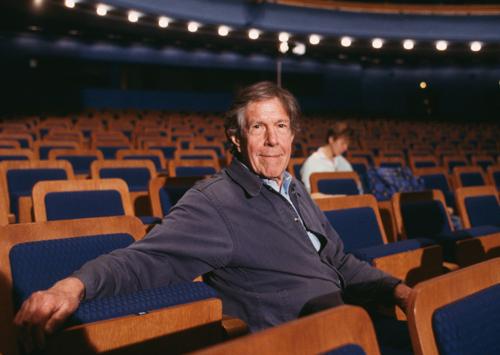
John Cage discusses his music, life, influences, and career
Aug. 13, 1992 John Cage discusses his music, life, influences, and career. Rebroadcast of an interview with John Cage to celebrate his life and what would have been soon his 80th birthday. Includes a clip of John Cage reading/ telling a story in 1969 to Studs Terkel.
-
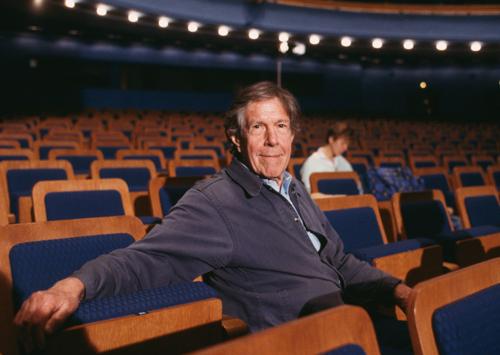
John Cage and Peter Gena discuss their music
1980 Considered one of the most influential 20th-century composers, John Cage and musician/composer Peter Gena discuss their upcoming performance at the Rubloff Auditorium. Cage's pieces will be featured at this performance, including Hymnkus.
-
John Cage and Merce Cunningham discuss their collaborations, careers, choreography, and music
Mar. 10, 1975 John Cage and Merce Cunningham discuss their collaborations of choreography and music. They discuss their influences and careers. Includes a clip of an earlier interview with John Cage.
-
John Bremer discusses educational innovation, "The School Without Walls: Philadelphia's Parkway Program"
Jan. 25, 1971 John Bremer discusses theories of educational innovation. Specifically his innovation of "The School Without Walls: Philadelphia's Parkway Program". Discusses life as education, and the societal element in open plan education.