

-

Pat Duncan discusses Apartheid and South Africa ; part 1
1963 South African anti-apartheid activist Pat Duncan discusses Apartheid and South Africa, part 1.
-
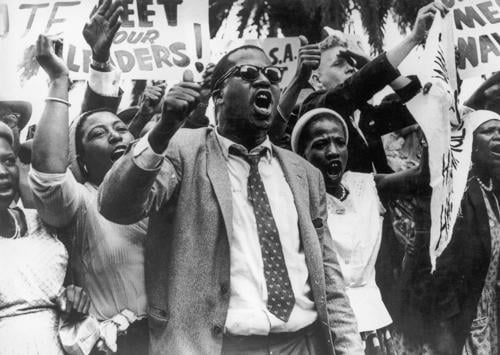
Pat Duncan and Deborah Cowan discusses Apartheid and South Africa ; part 2
1963 Pat Duncan and Deborah Cowan discusses Apartheid and South Africa, part 2. Duncan's portion of the program concludes at 00:14:20, and the rest of the program features Cowan.
-
Pat Anstett, Kathy Loftus and Wanda Morris discuss Federal budget cuts
Mar. 20, 1973 Pat Anstett, Kathy Loftus and Wanda Morris discuss federal budget cuts to health, education and welfare. Studs and the three ladies talk about how many people are effected by these budget cuts and the programs that will be cut.
-
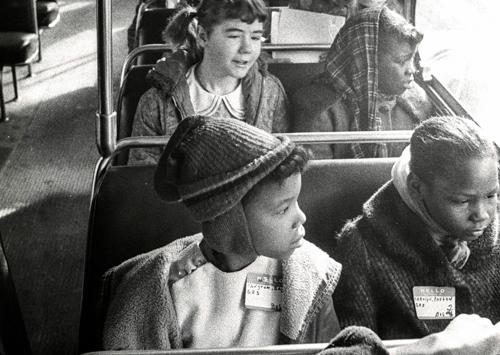
Parents of school children talk about integration and busing
Aug. 26, 1981 Interviewing Karen Grzybek, Barbara Tekiela and Mark Smith, parents of Chicago schoolchildren.
-
Panel of women recipients discuss being welfare recipients in Chicago
Jan. 1, 1969 A panel of women discuss raising their families while getting welfare assistance and living in poverty in Chicago.
-
Panel discusses nuclear warfare and its consequences
Jun. 19, 1981 Discussing nuclear armageddon and the medical consequences of nuclear war with panel Herbert Scoville, George Kistiakowsky, Dr. Jack Geiger and Dr. Quentin Young.
-
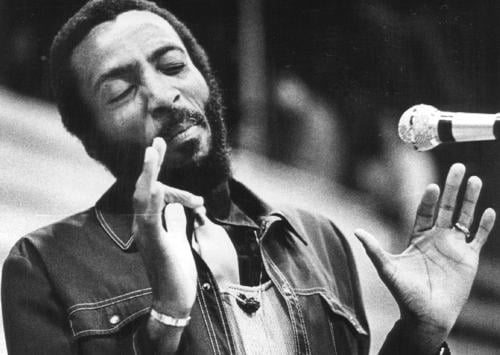
Panel at University of Chicago Law School discuss ending capital punishment, part 3
Feb. 19, 1965 Dick Gregory satirizes capital punishment in the United States, calls for the churches to take action, and talks about potential actions from "demonstrators." Other panel members answer audience questions (Father James Jones, Norval Morris, Hans W. Mattick, and Arthur Wineberg). Hosted by the University of Chicago. (Part 3 of 3)
-
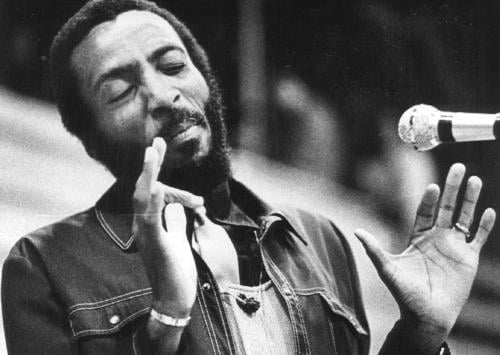
Panel at University of Chicago Law School discuss ending capital punishment, part 2
Feb. 19, 1965 A panel at University of Chicago Law School discuss ending capital punishment (tapes A and B) and with Dick Gregory (tape C). Includes presentations by Father James G. Jones and Norval Morris. (Part 2 of 3)
-
-
P. David Finks discusses his book "The Radical Vision of Saul Alinsky"
Sep. 7, 1984 Before he became an author, P. David Finks was a priest and he met Saul Alinsky in Rochester in 1964. Finks' book, "The Radical Vision of Saul Alinsky," covers Alinsky's plans of reorganizing community groups and being an outsider agitator. Alinsky, explained Finks, knew the importance of getting people involved. Two excerpts of interviews with Saul Alinsky are included.
-
-
Ousmane Sembene discusses his films “Xala” and “Ceddo”
Feb. 1, 1978 Interviewing African film maker Ousmane Sembene. Interpreted and translated by Jim Spiegler.
-
Ouida and Paul Lindsey discuss their book "Breaking the Bonds of Racism"
Sep. 30, 1974 Public housing is a major topic covered in Ouida and Paula Lindsey's book, "Breaking the Bonds of Racism." Ouida Lindsey tearfully explains that white people can't always understand Black people's troubles.Content Warning: This conversation includes racially and/or culturally derogatory language and/or negative depictions of Black and Indigenous people of color, women, and LGBTQI+ individuals. Rather than remove this content, we present it in the context of twentieth-century social history to acknowledge and learn from its impact and to inspire awareness and discussion.
-
-
Oswald Grube, Harry Weese and Don Klimovich discuss architecture
May. 10, 1976 Discussing architecture with Chicago architects Oswald Grube, Harry Weese and Don Klimovich.