

-

Carol Channing discusses her perspective about being a musical and comedic performer
Sep. 19, 1961 In this interview Carol Channing discusses her work as artist: comedic timing; live/club performing; her connection with the audience as a performer; theater as a "spiritual world"; the concept of "opening nights"; creation of Mehitabel's (alley cat) voice; "Lorelei", and her ability deliver comedic characterizations and impersonations (such as Marlene Dietrich, Sophie Tucker, and Cecilia Sisson). Included in this interview are excerpts from the "Little Girl from Little Rock", "Madeline and Other Bemelmans", "Shinbone Alley".
-
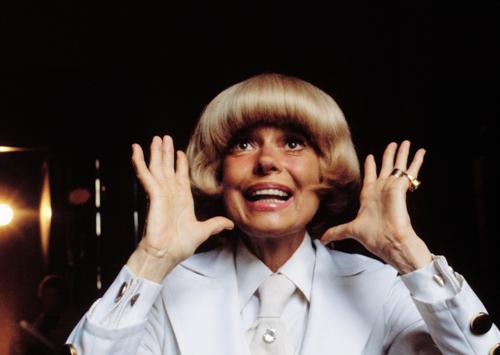
Carol Channing discusses her film and stage career
Jan. 28, 1972 This interview features singer and actress Carol Channing which discusses: the film "Shinbone Alley"; production of "Lorelei"; her grandmother; and her career. It begins with a musical excerpt from the animated movie "Shinbone Alley" featuring Channing singing as the alley cat Mehitabel. It also includes excerpts from the Broadway production called "Lorelei", examples of her character acting/comedy (as Cecilia Sisson), her reading of "Madeline and other Bemelmans", and a portion of the song "So Long Dearie" from the play "Hello, Dolly!".
-
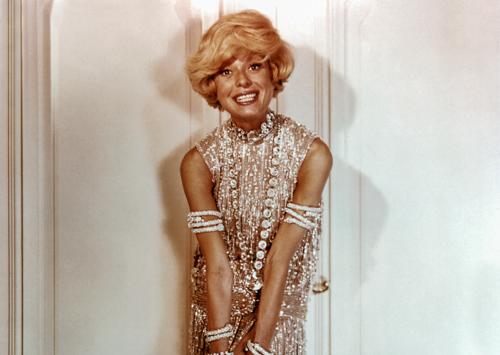
Carol Channing discusses her career
May. 11, 1959 Carol Channing discusses the following with Studs Terkel: her early career; her growth as actor/comedian; her approach to her work; her performance in "Lorelei" as Lorelei; her performance in "Wonderful Town" as Ruth; the job of the understudy; and breaking performance barriers and type casting.
-
Carol Beckwith and Angela Fisher discuss their book “African Ark: People and Ancient Cultures of Ethiopia and the Horn of Africa”
Nov. 9, 1990 Photographers Carol Beckwith and Angela Fisher discuss their book “African Ark: People and Ancient Cultures of Ethiopia and the Horn of Africa.” The two discuss the cultural traditions of the indigenous groups from this region in Africa and the relationships they formed with these communities during this photography project. Studs plays an unnamed traditional Surma warrior song.
-
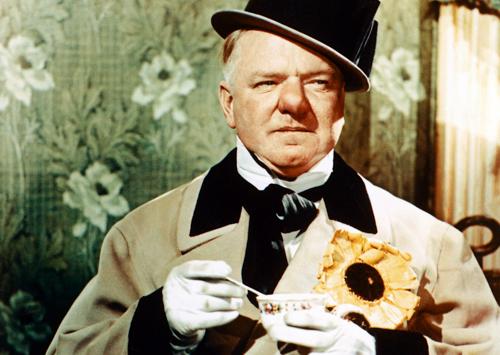
Carlotta Monti discusses W.C. Fields and her book "W.C. Fields & Me"
Jun. 7, 1971 Carlotta Monti discusses W.C. Fields and her book "W.C. Fields & Me".
-
Carlos Fuentes discusses his books "Burnt Water" and "Distant Relations"
Jun. 6, 1982 Discussing the books "Burnt water" and "Distant relations" with the author Carlos Fuentes.
-
Carlos Fuentes discusses his book "The Old Gringo"
Aug. 27, 1986 Discussing the novel "The Old Gringo" (published by Harper & Row) with the author, novelist and essayist Carlos Fuentes.
-
Carlos Fuentes discusses his book "The Buried Mirror"
Apr. 24, 1992 Discussing the book "The Buried Mirror: Reflections on Spain and the New World" (published by Houghton Mifflin) with the author, novelist and essayist Carlos Fuentes.
-
Carlo Curly discusses the history and future of the organ as an instrument and his career as a classical organist
Dec. 15, 1983 Studs interviews Carlo Curly, a RCA recording classical organist. Includes an interview from two years earlier with Curly giving a commentary about Virgil Fox, his greatest influence. Curly describes his family background in music. He explains in great detail the history of the organ, how it is made, and the music written for it. He explains the difference in music between pipe organs and electronic organs. Curly talks about his experience playing in Japan. He speaks of Bach and Mendelson and their influence on the organ as a classical instrument.
-
-
Carl Vigeland discusses his book about the Boston Symphony Orchestra
Feb. 8, 1990 Author Carl Vigeland discusses his latest book, a portrait of the 1986-1987 concert season of the Boston Symphony Orchestra (BSO). Vigeland focuses on the nexus between art, business, and music, seen through the tense relationship between Kennedy Center Honoree conductor Seiji Ozawa and principal trumpeter Charles Schlueter.
-
Carl Smith discusses his book "Urban Disorder and the Shape of Belief: the Great Chicago Fire, the Haymarket Bomb, and the Model Town of Pullman"
Feb. 27, 1995 Non-fiction author Carl Smith discusses his latest work which focuses on the history of Chicago. Topics covered include labor movements, specifically the Pullman strike and the 1970's case trial with the Chicago Seven.
-

Carl Sagan and Ann Druyan discuss their book "Shadows of Forgotten Ancestors"
Oct. 5, 1992 Evolution and the future of the human race are among topics in Carl Sagan's and Ann Druyan's book, "Shadows of Forgotten Ancestors: A Search for Who We Are." Included is an excerpt of the astronomer Harlow Shapley speaking at the beginning. Carl Sagan also reads an excerpt from the book at the end.
-
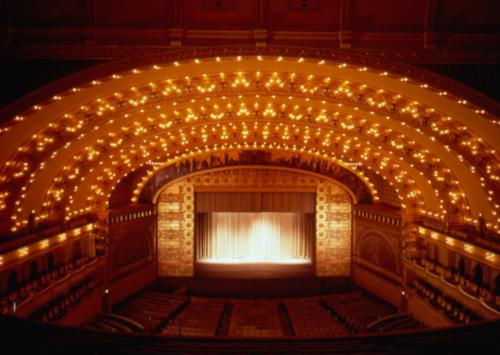
Carl Condit, Richard Nickel and Ben Weese discuss architecture ; part 2
Discussing Chicago architecture and interviewing Carl Condit, Richard Nickel and Ben Weese.
-
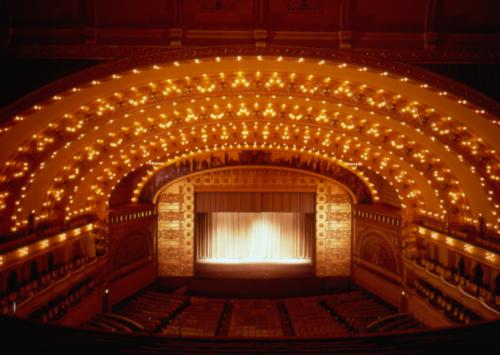
Carl Condit, Richard Nickel and Ben Weese discuss architecture ; part 1
Discussing Chicago architecture and interviewing Carl Condit, Richard Nickel and Ben Weese.