

-

Clifford Burke, Marilyn Nelson and Earl Doty discuss young people ; part 1
1968 Talking to Earl Doty, Clifford Burke, Marilyn Nelson, and West Side kids after the 1968 Chicago Riots. Clifford Burke had already retired from the CTA. As president of the Mile Square Federation, he talks about the youth community of the West side of Chicago, and the need for recreation opportunities for them. Marilyn Nelson is a student from California working in west-side Chicago as an advocate for the community. Studs also talks to Earl Doty, while riding in a car, about the neighborhood youth. There are sounds of hydrants being opened and the children playing.
-

Cliff Norton discusses his career
1960 When Cliff Norton performed his first live gig, he tried out his comedy on the band. Norton credits having good performances because of being given good material, funny material. Norton further explained that being an entertainer, one always has to be writing in order to maintain their creative edge.
-

Cleve Jones talks about the NAMES Project Foundation and AIDS quilt
Sep. 7, 1988 Cleve Jones talks about the AIDS quilt (NAMES project) that he started, the politics surrounding treating AIDS, and the compassionate feelings that the quilt engenders (compared to American barn raisings). There is a postscript with Mike Savage from Dignity Chicago, a lesbian and gay Catholic organization.
-
Cleopatre Bourdelle, the wife of artist and sculptor Antoine Bourdelle, speaks of her husbands life and art. ; part 2
Oct. 28, 1962 On location at Musee Bourdelle in Paris, France, Ms Bourdelle discusses the life and art of her late husband Antoine Bourdelle.
-
Cleopatre Bourdelle, the wife of artist and sculptor Antoine Bourdelle, speaks of her husbands life and art. ; part 1
Oct. 28, 1962 On location at Musee Bourdelle in Paris, France, Ms Bourdelle discusses the life and art of her late husband Antoine Bourdelle.
-
Claudia Cassidy discusses her career as a critic ; part 2
Nov. 30, 1966 Claudia Cassidy discusses being a critic of theater and opera etc. Includes about 1.5 minutes of another interview.
-
Claudia Cassidy discusses her career as a critic ; part 1
Nov. 30, 1966 Claudia Cassidy discusses being a critic of theater and opera etc. Cassidy also discusses her writing and journalism aspirations.
-
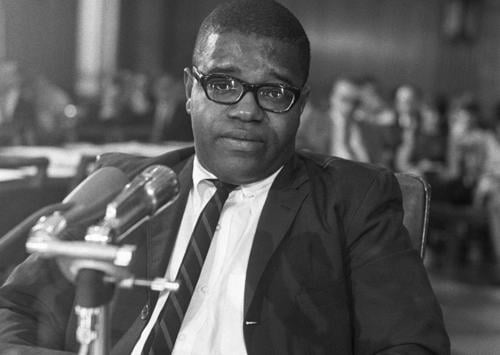
Claude Brown talks with Studs Terkel
Sep. 13, 1965 Discussing the book "Manchild in the Promised Land" with Claude Brown. Brown also discusses growing up in Harlem, New York as an African American man. Includes a clip of a man speaking from the county jail. Includes a song sung by Mahalia Jackson. Includes a clip of children singing.
-
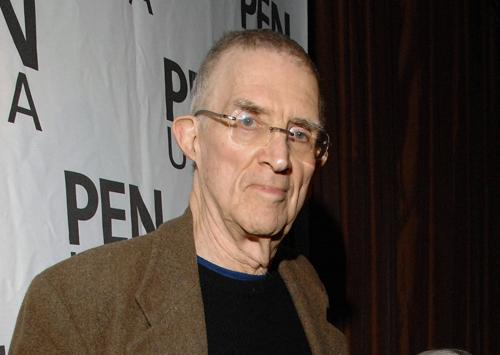
Clancy Sigal discusses his book “Zone of the Interior”
Jun. 11, 1992 Clancy Sigal and Studs Terkel discuss Sigal’s book “Zone of the Interior” and the role that schizophrenia plays in it. Both Sigal and Terkel read excerpts from Sigal’s book.
-
Claire Bloom discusses her career
Oct. 22, 1991 Being discovered by Charlie Chaplin, Claire Bloom always felt like the luckiest actress around. Bloom's favorite roles were Nora in a "Doll's House" and Hedda in "Hedda Gabler". Mary Tyrone of "Long Day's Journey Into Night" is a part Bloom would like to play in the future.
-
Citizens Action Program Senior Citizen Panel
Nov. 20, 1973 Interviewing Paul Booth, Casey Lewan, and Margaret Person at a Senior Citizen's Panel sponsored by Citizens Action Program in Chicago.
-
Cindy Caponera discusses her one-woman show "Against the Grain"
Oct. 26, 1989 Chicago playwright and actress Cindy Caponera discusses and acts out portions of her one-woman show "Against the Grain." Caponera’s show features three soliloquies delivered by different family members of a Chicago fireman in which themes of masculinity, labor rights, and family dynamics are explored. Studs plays "Ace in the Hole" - Johnny Mathis (1961).
-
Christopher Moore discusses his career
1987 Studs Terkel discusses the Chicago Children's Choir with the director and founder, Christopher Moore. They discuss the following: how to produce the sound; training units; patience; age spread; sing-a-long; child vs. adult projects; and various types of heritage music that makes up their repertoire. The following musical excerpts are presented: "Dark Winter Days"; "Angels and Shepherds"; "Illinois"; and "Go Tell It on the Mountain".
-
Christopher Lasch in conversation with Studs Terkel
Sep. 20, 1984 Discussing excellence in education with author, historian and cultural critic Christopher Lasch.
-
Christopher Lasch discusses his book "The New Radicalism in America"
1968 Discussing the book "The New Radicalism in America" and interviewing the author Christopher Lasch.