

-

Dr. Oliver Sacks discusses his book "The Island of the Colorblind"
Jan. 16, 1997 His book, "The Island of the Colorblind," was the result of Dr. Oliver Sacks' travels to Micronesia. Sacks was puzzled by how people that were color blind could tell if a banana was ripe. A man told him that one must rely on the smell of the banana and its texture. The second part of the book is devoted to Sacks' travels to Guam.*Please note: some sections have been edited out from the original recording due to copyright considerations
-
-
Dr. Meir Yoeli discusses medicine
1969 It is not enough to just treat a disease, explained Dr. Meir Yoeli. Dr. Yoeli said there needs to be a bridge for both science and for the truth of the heart. Also a poet, Dr. Yoeli reads a poem in English and then in Hebrew.
-
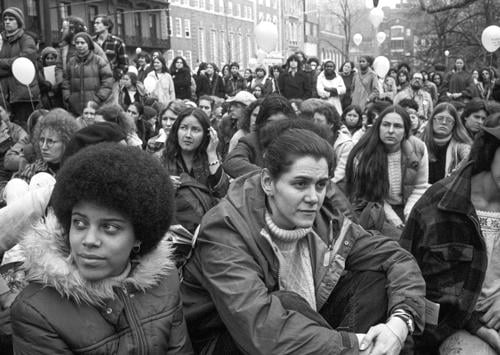
Dr. Marlene Dixon, Nancy Stokely, and Janet Tenney discuss women's rights; part 2
Mar. 11, 1969 Discussing the topic of women and freedom with Marlene Dixon, Nancy Stokely, and Janet Tenney. They discuss feminism, women's rights, and the women's liberation movement. Includes a Elizabeth Knight/Julia Ward Howe song called "Hallelujah".
-
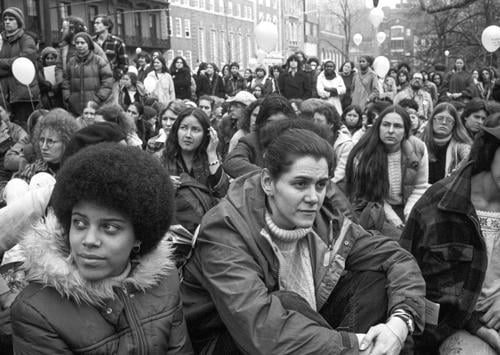
Dr. Marlene Dixon, Nancy Stokely and Janet Tenney discuss women's rights; part 1
Mar. 11, 1969 Discussing women and women's rights with Dr. Marlene, Nancy Stokely, and Janet Tenney. They discuss the women's suffrage movement, gender equality, and women's roles. Includes the women's suffrage song "The New America" by Elizabeth Knight.
-
Dr. M. Merchant discusses Shakespeare and the arts
Aug. 18, 1965 Welsh scholar Dr. M. Merchant speaks about Shakespeare and his impact on other arts and artists. Toward the end, there is an excerpt of Sir John Gielgud in Shakespeare's "Measure for Measure."*Please note: some sections have been edited out from the original recording due to copyright considerations
-
Dr. Linda Murray and Dr. Quentin Young talks about Cook County Public Hospital and the dynamic of public hospitals around the country
Jan. 10, 1979 Interview with Dr. Linda Murray and Dr. Quentin Young which discusses how closing public hospitals can affect minorities and less privileged communities. Also talks about the expectations of medical students and the dynamics of medical school.
-
Dr. Leo Seren discusses atomic fission and nuclear experiments
Feb. 21, 1978 Nuclear physicist, Dr. Leo Seren, discusses atomic fission and nuclear experiments.
-
Dr. Kosta Tsipis discusses the dangers of nuclear war
Mar. 9, 1982 Discussing the dangers of nuclear war and its effect on people with nuclear physicist and co-director of the program of Science and Technology at MIT, Dr. Kosta Tsipis.*Please note: some sections have been edited out from the original recording due to copyright considerations
-
-
Dr. Joseph Burkhalter and Dr. Charles Price talk with Studs about Pharmaceutical Chemistry ; part 2
1964 Studs has a conversation with Dr. Charles Price, American Chemical Society president and chairman of chemistry department at University of Pennsylvania and Dr. Joseph Burkhalter, Professor of pharmaceutical chemistry at University of Michigan, and chairman of American Chemical Society's division of medicinal chemistry. Dr. Price And Dr. Burkhardter discuss the drug industry and working with the government to develop pharmaceutical medicines. Both doctors voice the debate about creation of nuclear technology and how that impacted science in general.
-
Dr. Joseph Burkhalter and Dr. Charles Price talk with Studs about Pharmaceutical Chemistry ; part 1
1964 Studs has a conversation with Dr. Charles Price, American Chemical Society president and chairman of chemistry department at University of Pennsylvania and Dr. Joseph Burkhalter, Professor of pharmaceutical chemistry at University of Michigan, and chairman of American Chemical Society's division of medicinal chemistry. Dr. Price And Dr. Burkhardter discuss the drug industry and working with the government to develop pharmaceutical medicines. Both doctors voice the debate about creation of nuclear technology and how that impacted science in general. (part 1)
-
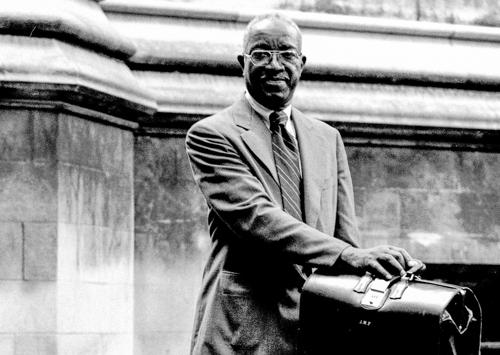
Dr. John Hope Franklin discusses the history of Civil War Reconstruction; part 1
1966 Dr. John Hope Franklin, professor of history at University of Chicago, outlines the history of reconstruction during the American Civil War and briefly his experience at the March to Montgomery; part 1.
-
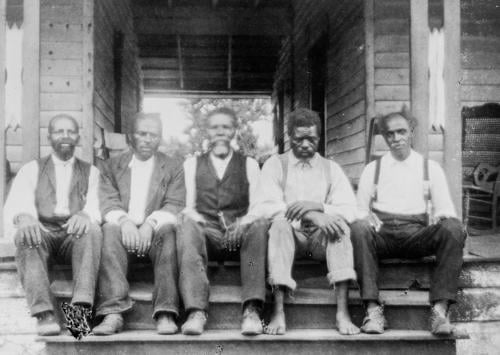
Dr. John Hope Franklin discusses reconstruction after the American Civil War; part 2
1966 Dr. John Hope Franklin, professor of history at University of Chicago, discusses the political history of reconstruction after the Civil War, along with which political decisions led to a power imbalance and the rise of the Ku Klux Klan in the southern states; part 2.
-
Dr. John Gedo discusses psychoanalysis
Sep. 22, 1981 Discussing psychoanalysis with Dr. John Gedo, former president of the Chicago Psychoanalytic Society.*Please note: some sections have been edited out from the original recording due to copyright considerations