

-
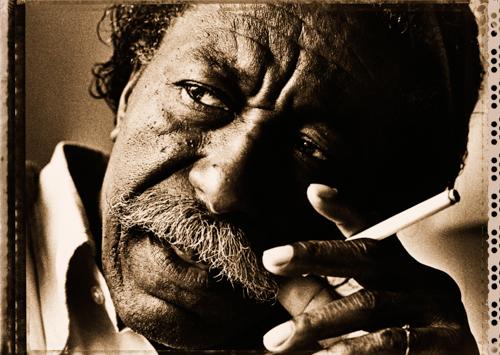
Gordon Parks discusses his book "Shannon"
Sep. 10, 1981 Discussing the book "Shannon" with the author Gordon Parks.
-

Gordon Adams discusses his book, "The Iron Triangle: The Politics of Defense Contracting"
Nov. 1, 1981 Gordon Adams, political scientist, discusses his book, "The Iron Triangle: The Politics of Defense Contracting." He explores the military budget how it is a drain on the taxpayer's money. Adams explains how private contractors, such as Rockwell Corporation, enter into defense contracts and make money off the government's dependence on the military weapons.
-
-
-
-
Gloria Wade-Gayles discusses her book “Pushed Back to Strength: A Black Woman’s Journey Home”
Dec. 3, 1993 Author and poet Gloria Wade-Gayles discusses and reads from her book “Pushed Back to Strength: A Black Woman’s Journey Home,” a collection of essays about race, faith, and family. She discusses how the title of the book was inspired by a phrase her grandmother used to say in which she acknowledges how segregation was pushing her back to her family, to community; pushing her back to strength, stories, ritual, and safety. Studs plays “God Bless the Child” - Billie Holiday (1956), "Wade In The Water" - Brother John Sellers (1960), and "Medley of Spiritual" - Belleville A Cappella Choir.
-

Gloria Steinem discusses the 10th anniversary of "Ms." magazine
Jun. 17, 1982 According to Gloria Steinem, "Ms." magazine is not only a national feminist magazine, but it's also a portable friend. A regular feature of the magazine is to celebrate found women, women who are not celebrities but who should be celebrated for what they do. This interview also includes an excerpt of Aunt Molly Jackson.
-
Gloria Naylor in conversation with Studs Terkel
Mar. 10, 1988 Discussing the book "Mama Day" (published by Ticknor & Fields) with the author Gloria Naylor.
-
Gloria Emerson in conversation with Studs Terkel
Feb. 5, 1977 Interviewing former war correspondent, journalist and author Gloria Emerson.
-
Gladys Joyce Adams and Yvonne Hammond discuss female youth in Chicago ; part 2
1968 The D. J.'s, a group of teenagers, discuss their lives, interests, and ambitions. Gladys Joyce Adams and Yvonne Hammond discuss the female youth and youth groups in Chicago. Joyce and Hammond discuss the girl's club the Divine Ladies and other girl's clubs. Christy and Frank Carney in "West Side" (part 3).
-
Gitta Sereny discusses her book "Into That Darkness"
Feb. 7, 1983 While in a Dusseldorf prison, Gitta Sereny spent 70 hours interviewing Franz Stangl, the commandant of the Treblinka extermination camp. Her book, "Into That Darkness: An Examination of Conscience," questions how could an ordinary man with a wife and children become such an evil monster. Stangl rationalized his job by saying he never hurt anyone, that he never murdered anyone. Sereny said in the end, the only guilt Stangl harbored was that of still being alive.*Please note: some sections have been edited out from the original recording due to copyright considerations
-
Giora Feidman discusses klezmer music
Jun. 14, 1990 Interviewing Giora Feidman, an Argentinian clarinetist who specializes in the klezmer musical tradition.
-
Gilbert Moses discusses The Free Southern Theater and his play "Blues for Mister Charlie" with Studs Terkel ; part 2
Aug. 10, 1966 Studs interviews Gilbert Moses about his play, "Blues for Mister Charlie" and The Free Southern Theater. They discuss a variety of plays that include, "White America," "Roots," and "Blues of Mister Charlie."
-
Gilbert Moses discusses "Waiting for Godot" and the Free Southern Theatre with Studs Terkel ; part 1
Aug. 10, 1966 Studs interviews Gilbert Moses about the Free Southern Theatre that performed throughout Mississippi depicting the lives of Southern blacks. Moses describes the audiences and their reactions to the plays and their own participation in acting out their lives.
-
Gian Carlo Menotti discusses his career, his operas, and his colleagues
Mar. 20, 1981 Gian Carlo Menotti discusses his career, his operas, and his colleagues. Menotti's operas they discuss are "Amelia goes to the Ball", "The Consul", and "The Medium".