

-
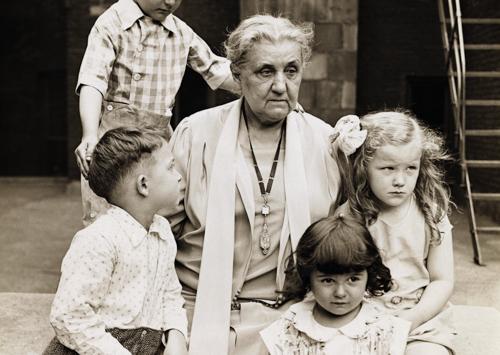
Jessie Binford discusses Hull House and Chicago ; part 1
1968 Jessie Binford discusses Chicago and Hull House
-
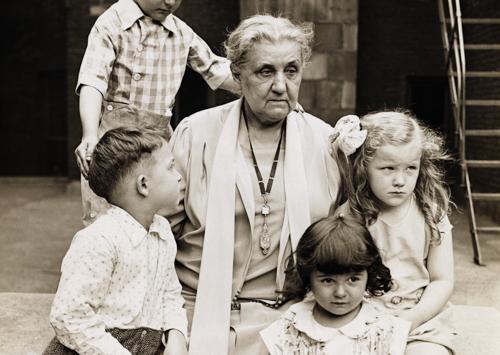
Jessie Binford discusses Chicago and Hull House
1968 Jessie Binford discusses Hull House and Chicago.
-
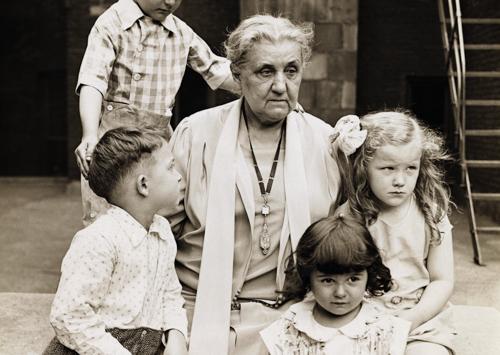
Jessie Binford discusses Chicago and Hull House
1968 Jessie Binford discusses Hull House and Chicago.
-

Jessica Tandy and Hume Cronyn discuss acting
May. 13, 1975 In addition to talking about Noel Coward's plays, both Jessica Tandy and Hume Cronyn talk about the difficulties in acting. Getting rid of her accent is one of Tandy's hurdles. Cronyn revealed being able to give the same performance night after night and get the same reaction from audiences was his difficulty.
-

Jessica Mitford discusses her book "Kind and Usual Punishment: The Prison Business"
Sep. 14, 1973 Jessica Mitford an English born author, investigative journalist, and civil rights activist discusses her book "Kind and Usual Punishment: The Prison Business,". Ms Mitford and Studs discuss her finding that prisoners were used as test subjects for drug trials and other medical research, and slave labor. Ms Mitford's book makes the argument that prisons are a governments means to making money from the prisoners they have punished. They speak about reform needed in the laws and decriminalization of many things and the abolishing of prison altogether. Ms.
-
-

Jerzy Kosinski discusses his book "Being There"
1970 Jerzy Kosinski discusses his book "Being There". Includes Studs Terkel reading from Kosinski's book "Being There".
-
-
-
Jerry Hadley discusses his latest CD release- Golden Days - Tenor hits from the Golden Age of Operetta
Oct. 21, 1994 Interview with Jerry Hadley on his upcoming performance in Rake's Progress as well as his recently released CD Golden Days - Tenor hits from the Golden Age of Operetta
-
Jerry Dincin and Michael Sternberg discuss Thresholds, a social service organization
May. 14, 1975 Discussing the work of Thresholds, a Chicago social service organization, and interviewing Jerry Dincin and Michael Sternberg. They discuss what Thresholds provides and how it helps people with their confidence and mental health. Includes a song called "Young Paul".
-
Jerry Davidson and Mike Bell discuss the Elan School in Maine
Feb. 26, 1976 Interviewing Jerry Davidson and Mike Bell about the Elan School in Maine for children with learning disabilities (Part 2).
-
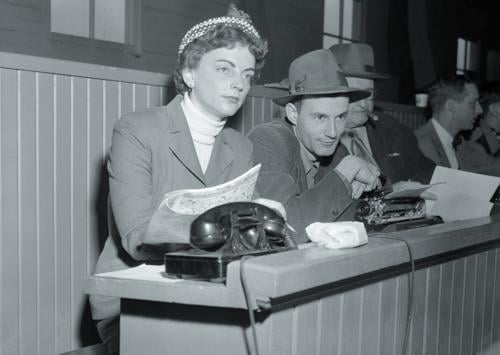
Jerome Holtzman discusses baseball, journalism, and his book "No Cheering in the Press Box"
Aug. 15, 1974 Sportswriter Jerome Holtzman discusses his book "No Cheering in the Press Box."
-
Jeremy Bernstein discusses his book "Three Degrees Above Zero: Bell Labs in the Information Age"
Nov. 22, 1984 Theoretical physicist and author Jeremy Bernstein discusses his latest work. The book focuses on the inventors and innovations that came out of Bell Laboratories, also known as Bell Telephone Laboratories, AT&T Bell Laboratories, and recently Nokia Bell Labs.
-
Jens Kruuse discusses his book "A War for an Afternoon" ; part 1
1968 When asked, Jen Kruuse said he wrote his book, “A War for an Afternoon,” as a result of life being madness. As a morale booster, to make the men of the SS army feel invincible, they were ordered to exterminate the town of Oradour-sur-Glane, France. The women and children of the town were rounded up, placed in the town’s church and the church was burned. All the men of the town were shot dead. The entire incident, explained Kruuse, was madness, pure madness.