

-

Members of the Fine Arts Quartet discuss chamber music
Oct. 1, 1964 Studs Terkel interviews the members of the Fine Arts Quartet, 1st violin Leonard Sorkin, 2nd violin Abram Loft, viola Gerald Stanick, and cello George Sopkin. The members of Fine Arts Quartet discuss the following: Elizabeth Sprague Coolidge's contributions to chamber music in America, the centennial anniversary of Coolidge's birth, the history of chamber music in America, the nature of their rehearsals, and their performances.
-
Members of the Earth Club radio show discuss their musical repertoires
Feb. 14, 1994 Howard Levy, Stuart Rosenberg, and Johnny Frigo reminisce about their discovery of musical genres that inspired them and discuss the early roots of folk music.
-
Melvin Douglas and Frank Lovejoy discuss their roles in the play "The Best Man"
Oct. 2, 1961 Melvin Douglas and Frank Lovejoy discuss their roles in Gore Vidal's play "The Best Man", politics, and their careers.
-
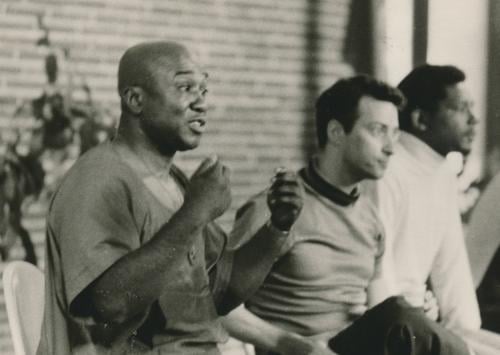
Mel River, Ken Jackson, and Fran Christman discuss criminal justice reform and advocacy
Nov. 20, 1970 Discussing prisons and interviewing members of the Fortune Society, an reentry services and advocacy group for individuals with justice involvement, headquartered in New York City. They also discuss capital punishment and life in prison. www.fortunesociety.org
-
Mel Lambert and five Puerto Rican boys discuss the Jobs Project and life in Chicago ; part 1
1968 Studs interview with Mel Lambert and five Puerto Rican boys (Harry, Carlos, Vic, Jose, and Hector) about their life in Puerto Rico and Chicago. They discuss learning English and other subjects in the jobs project. The five boys talk about gang involvement and interactions with other race and ethnic groups. They also discuss their goals, economic opportunity in Chicago, and their difficult experiences of learning English and getting an education.
-
Mel Lambert and five Puerto Rican boys discuss life in Chicago and the Latin King gang ; part 2
1968 Studs interview with five Puerto Rican boys: Hector, Jose, Victor, Harry and Carlos. Two other young men enter the conversation at the end: Raphael and Benjamin. Each boy describes a memory and some express a desire to return to Puerto Rico, while others wish to stay in America. The boys describe some about gang life with the Latin Kings and the violent relationship between gangs in Chicago. Studs suggests a peace conference with all gang leaders, and the boys describe their opinion of the outcome of such a meeting.
-
-
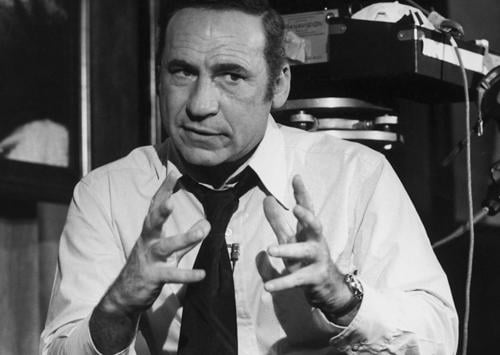
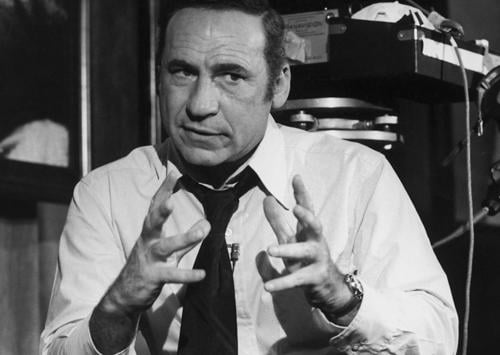
Mel Brooks discusses his new movie "The Producers"
Jul. 2, 1968 In this interview Mel Brooks discusses his new movie "The Producers". The following is discussed: the plot; the other actors in the film; the satirical and campy nature of the film; . Brooks performs several different impersonations throughout the interview.
-
Meg Christian discusses feminism and the women's music industry
Sep. 16, 1981 Meg Christian discusses songwriting and the music industry, especially her work in the feminist movement.
-
Mckinley Olson discusses the book "Unacceptable Risk: The Nuclear Power Controversy." and the dangers of atomic energy
Aug. 23, 1974 The interview begins with Mr Olson reading the first 3 paragraphs of his book. McKinley Olson discusses the dangers of atomic energy plants and the book "Unacceptable Risk: The Nuclear Power Controversy." Mr Olson describes several forms of alternative/renewable energy sources as a safe replacement of nuclear energy.
-
Mazatl Galindo and Alejandro Galindo discuss traditional and folk music from South and Central America
Nov. 23, 1982 Chilean folk songs have been removed due to copyright restrictions: "If We Are Americans;" a flute song for the harvest celebration; the song "Jacinto Cenobio;" song ["Winos Poinas"]; a Mexican flute song; the song "La Fiesta De San Benito;" the song "La Pulque;" and the song "El Condor Pasa." but are discussed within the program.
-
Maya Angelou discusses her early life and African American culture and people
Apr. 1, 1960 Angelou discusses: her early life; her international travels; dancing; blues and jazz music; and the book "Youngblood" by John Oliver Killens. In this program "In the Evening (When the Sun Goes Down)" and "Joe Turner No. 2 (Blues of 1892)" by Big Bill Broonzy, "I Ain't Gonna Pick No More Cotton" by Sam Lightnin' Hopkins is played, as well as other musical selections.
-
Maya Angelou discusses her early life and African American culture and people
Apr. 1, 1960 Angelou discusses: her early life; her international travels; dancing; blues and jazz music; and the book "Youngblood" by John Oliver Killens. Musical selections have been removed due to copyright.
-
Maya Angelou discusses her book “Gather Together in My Name”
May. 13, 1974 Writer and poet Maya Angelou talks about her life, Creole influences, and her book “Gather Together in My Name” with Studs Terkel. Angelou reads an excerpt from the book and the recording opens with Angelou reading one of her poems.
-
Maya Angelou discusses her book "I Know Why the Caged Bird Sings"
Mar. 13, 1970 Angelou discusses her book "I Know Why the Caged Bird Sings" and recites "When I Think About Myself." She talks about growing up in Stamps, Arkansas, and her family. Copyrighted material has been removed.