

-
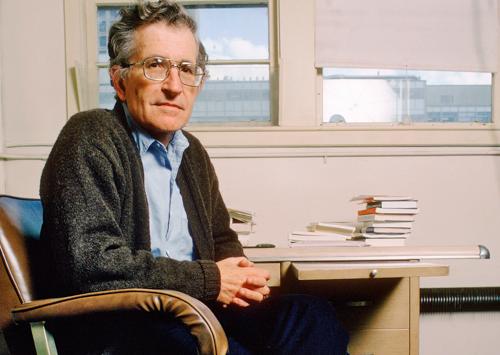
Noam Chomsky discusses his book "American Power and the New Mandarins"
Jan. 19, 1970 Noam Chomsky discusses his book "American Power and the New Mandarins," the Vietnam war, and the role of intellectuals, including interview with A.J. Muste; audio is slowed down from 47:30 - 52:52.
-

-
-
Nikolay Akimov, Theodore Komisarjevsky and Pavel Markov discuss the Soviet theater
Aug. 16, 1959 Nikolay Akimov, Theodore Komisarjevsky and Pavel Markov discuss the Soviet theater. The ending music on this record was edited out
-
Nicola Geiger discusses her background and her time spent in the far east
Oct. 21, 1974 Born in Hamburg, Nicola Geiger, recalls her upbringing and her life under Nazi Germany. She lost two children in World War II. Later in life, she worked in both Japan and Korea. Geiger knew that she alone could not change the world but that she worked tirelessly to get other people to work on peace, too.
-
Nick Cherniavsky and Barbara (Bobbe) Herndon discuss capturing the oral history of the Progressive Mine Workers
Jul. 20, 1976 Nick Cherniavsky and Barbara (Bobbe) Herndon share their work of collecting oral histories of the coal miners of Southern Illinois who were members of the Progressive Mine Workers of America during the 1930s. The following oral history segments are played: Frank Bertetti, Joe Ozanic, Jack Battuello, James (Jim) Hopley, and Irene Allard.
-
Nicholas Von Hoffman discusses university and college educations ; part 1
Jun. 9, 1965 Journalist Nicholas Von Hoffman shares his critical thoughts about universities and colleges. Students are told what to read for class and students are taught how to pass exams, says Von Hoffman. Testing and exams don't work, contends Von Hoffman. Students must be allowed to read more about a subject on their own as opposed to what's solely offered by the curriculum's books.
-
Nicholas Von Hoffman discusses his book “Left at the Post”
Dec. 18, 1970 Nicholas Von Hoffman talks about his book "Left at the Post: Passions, Prejudices, and Laments of One of America's Most Generously Biased Writers". Additional topics include biased journalism, objectivism in news reporting, and politics.
-
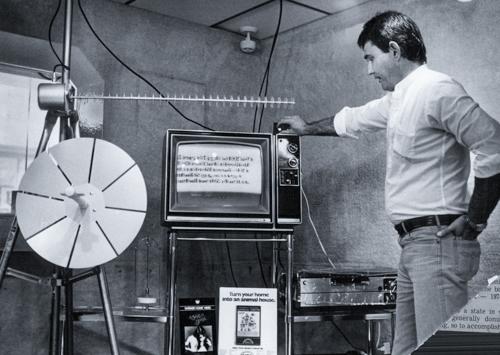
Nicholas Johnson talks about communication and its impact
Jan. 16, 1981 Interviewing Nicholas Johnson, a former member of FCC in which discusses communication, advanced technology, the role of the public, censorship and control of information
-
Newton Minow discusses broadcasting
Jan. 11, 1964 Interviewing Newton Minow, Chicago lawyer and chairman of the Federal Communications Commission. He discusses broadcasting as a public service and spends a great deal of time on the history of commercials and how they changed over time.
-
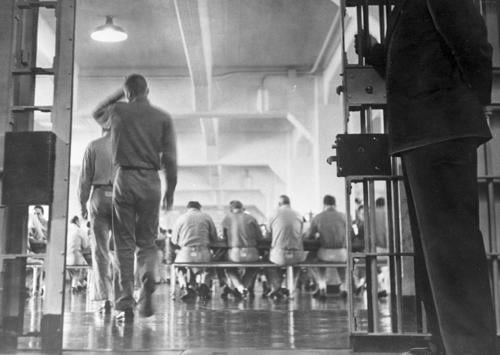
Nelson Algren, Nathan Kantrowitz, and David Maurer discuss language and characteristics of the criminal underworld
Jan. 29, 1967 Nelson Algren, Nathan Kantrowitz, and David Maurer discuss language and criminal subculture, including the development of institutional slang at different prisons, the nature of drug addiction and its influence on criminal language and vocabulary, and the myth of the criminal mind. Includes an Interview with an inmate at a Chicago prison.
-
Nelson Algren discusses love of a city
Mar. 9, 1961 Author Nelson Algren discusses what it means to love a city, the re-release of his book, "Chicago: City on the Make," and his interactions with Irish writer and playwright, Brendan Behan.
-
Nelson Algren discusses capital punishment
1965 Discussing capital punishment with author Nelson Algren. Includes interviews with William (Bill) Witherspoon, a death row inmate; Jack Johnson, warden of Cook County Jail; and an [unidentified woman] who marched in protest at the execution of James Dukes in 1962.
-
Nelson Algren discusses "How the Devil Came Down Division Street"
Feb. 2, 1959 Nelson Algren discusses his short story, "How the Devil Came Down Division Street," the art of writing, and writers of the Beat Generation.
-
Nelson Algren and Mario De Vecchi discuss "La Dolce Vita," part 1
Jun. 17, 1961 Nelson Algren and Mario De Vecchi discuss the international appeal of Federico Fellini’s film, “La Dolce Vita.” In part one, Algren and Devecchi focus on the film’s main character, journalist Marcello Rubini, and his quest for identity, particularly in relation to his interactions with the film’s intellectual character, Steiner. They discuss the film’s key metaphorical images and its portrayal of the influence of media and the emotional detachment and dehumanization it can create.