

-

-
Richard and Patricia Waterman talk with Studs Terkel ; part 1
1953 Terkel interviews anthropologists Richard and Patricia Waterman. This interview is done in two parts.
-
Richard "Skip" Richeimer discusses the Free Speech Movement
1964 Discussing UC Berkeley's Free Speech Movement with Richard "Skip" Richeimer. There is no free speech at UC Berkeley and the university is no longer concerned with the students and the faculty on this matter. Richeimer says the main problem is whether the administration of the university has the right to control the content of speech.
-
Richard Carbray, Howard Schomer, Joseph Sittler and Gordon Zahn talk to Studs Terkel ; part 2
Jan. 18, 1965 Discussing "Father Roberts and Vatican III" and interviewing Richard Carbray, Howard Schomer, Joseph Sittler and Gordon Zahn
-
Richard Carbray, Howard Schomer, Joseph Sittler and Gordon Zahn talk to Studs Terkel ; part 1
Jan. 18, 1965 Discussing "Father Roberts and Vatican III" and interviewing Richard Carbray, Howard Schomer, Joseph Sittler and Gordon Zahn
-
Rich Bailey and Rick Cluchey discuss Samuel Beckett and theater
Jul. 11, 1975 Rich Bailey and Rick Cluchey discuss performing Endgame by Samuel Beckett and Beckett's influence on their careers. Duplicate to file ID 18646. This recording does not include the musical tribute.
-
Riane Eisler discusses her book, "Sacred Pleasure: Sex, Myth, and the Politics of the Body"
Jun. 26, 1995 Interviewing Riane Eisler, historian, sociologist, and author of the book, "Sacred Pleasure: Sex, Myth, and the Politics of the Body." Eisler discusses masculine and feminine stereotypes and the part they play in relationships. Content Warning: This conversation has the presence of outdated, biased, offensive language. Rather than remove this content, we present it in the context of twentieth-century social history to acknowledge and learn from its impact and to inspire awareness and discussion.
-
Riane Eisler discusses her book "The Chalice and the Blade: Our History, Our Future"
Mar. 3, 1988 Riane Eisler, anthropologist and historian, discusses the history of gender roles, religious influences, and cultural mythology.
-
Reverend Grant Gallup discusses his time spent in Nicaragua
Jan. 13, 1992 Even though unemployment is at 60% in Nicaraqua, and the people are very poor, Father Grant Gallup would rather live in Manaqua, Nicaraqua than in the United States. Gallup explained there are 600,000 shacks in Nicaraqua. In the US, police tear down shacks that the homeless build. According to Gallup, the press is freer in Nicaraqua as opposed to self-serving in the United States.
-
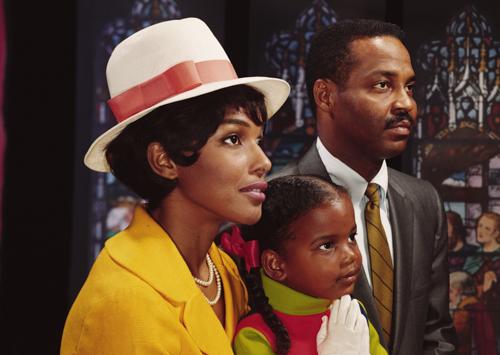
Reverend Albert B. Cleage, Jr. discusses his book "the Black Messiah"
1967 Discussing the book "the Black Messiah" with the author Reverend Albert B. Cleage, Jr. He discusses the African American church and theology. He also discusses broader topics such as civil rights and African American history. Includes a clip of an interview with a woman named Mrs. Alexander at the beginning. Includes a clip of the song "Beulah Land" sung by the Georgia Sea Island Singers.
-
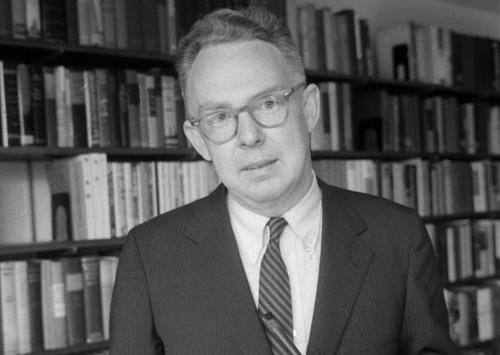
Rev. W. Alvin Pitcher and Dr. Richard Wade discuss race relations, civil rights, and socio-economic differences
Aug. 23, 1965 Reverend W. Alvin Pitcher and Dr. Richard Wade discuss how violence and civil disobedience intertwine with civil rights, economic differences, and the importance of education.
-
Rev. George Morey and Jim Osborne continue their discussion with Studs Terkel about the War on Poverty; part 2
Jul. 29, 1966 Interview with Rev. Georg Morey and Jim Lee Osborne. They discuss Jim's work and involvement with the War on Poverty and the reason the Chicago Commission fired him after the War on Poverty conference in Washington, DC.
-
Rev. George Morey and Jim Lee Osborne discuss life in the Appalachas compared to life in Chicago; part 1
Jul. 29, 1966 Interview with Rev. George Morey and Jim Lee Osborne. They discuss southern country living and compare it to urban life and stereotypes. Studs reads a short excerpt from an article written by Mike Royko, columnist from the Chicago Tribune, who also interviewed Jim Lee Osborne. Also includes a short excerpt from an interview with Billy Jo Gatewood, another Appalachian transplant to Chicago.
-
-
Rev. Arthur C. Bryant discusses his works and his congregation
Jul. 16, 1974 Rev. Arthur C. Bryant talks about changing the conditions of the modern farm worker because they work in dehumanizing conditions. Bryant also discusses the charges against him - the neglect of duty and the inability to conduct pastoral office duties.*Please note: some sections have been edited out from the original recording due to copyright considerations