

-

William Kennedy discusses his book "Riding the Yellow Trolley Car"
May. 18, 1993 Author William Kennedy, explains how he came up with the title for his book, "Riding the Yellow Trolley Car: Selected Nonfiction." Also in the interview, Kennedy talks about other writers: Patrick Kavanagh, James Joyce, Bernard Malamud and J.P. Donleavy.
-
-
William Hoffman, Jr. reads from and discusses his book "The Loser" ; part 2
1968 With the continuation of this interview, William Hoffman, Jr. talks about his experiences at the race track, his experiences when bouncing checks and his experience having spent one night in jail in Tijuana. With assistance from Gambler's Anonymous, Hoffman, started to write books and turn his life around, to become a winner.
-
William Hoffman, Jr. reads from and discusses his book "The Loser" ; part 1
1968 With this first part of the interview, William Hoffman, Jr. gives some background into his childhood and growing up, as well as some reasons why he felt the need to be successful at gambling.
-
William Gibson discusses writing plays
1969 Now being a professional playwright, William Gibson talked about being able to write one of his plays in 8 days. A lot of the discussion is about his play, "The Miracle Worker". After reading one of Annie Sullivan's letters, and learning about a battle royale that Sullivan had with Helen Keller, Gibson envisioned what that battle royale would look like. It became a now famous part of the play.
-
William Friedkin in conversation with Studs Terkel
Oct. 1, 1985 Discussing the films "The People vs. Paul Crump", "To Live and Die in Los Angeles," and "The French Connection," with director and screenwriter William Friedkin.
-
William Ferris discusses intricacies between musical techniques and cultures
Feb. 13, 1990 Music director William Ferris explains various vocal techniques displayed during concerts from the William Ferris Chorale.
-
William Ferris discusses instruments in the William Ferris Chorale
Dec. 15, 1989 Music director William Ferris discusses the singers and music of the William Ferris Chorale. Ferris provides insight on the types of instruments used by the chorale and shares origins about them. He also touches on adopted vocal styles and techniques.
-
William Ferris and John Vorrasi discuss their past and present concerts
Dec. 7, 1993 Interviewing William Ferris, contemporary composer and conductor, and John Vorrasi, lead tenor, as they discuss the beginning and successes of their group called the William Ferris Chorale.
-
William Brashler talks about his book "Bingo Long's Traveling All-Stars and Motor Kings"
Dec. 10, 1973 Mr. Brashler converses with Studs about his research for the novel and the players he had spoken with to gather information for the book. The novel tells the story of a baseball team that revolts from a tyrannical Negro League owner and spends the 1939 season barnstorming around the Midwest. Includes two excerpts of a Cool Papa Bell interview talking about their travel as "barnstormers". Studs and Mr. Brashler read several exchanges of dialogue from the book.
-
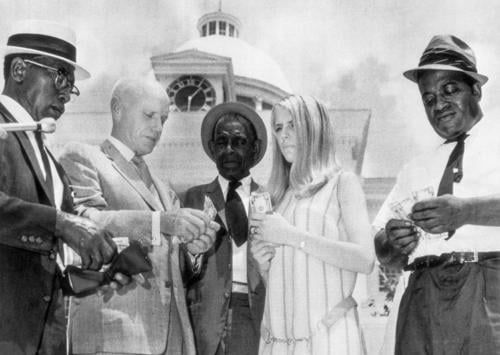
William Bradford Huie talks with Studs Terkel
Mar. 29, 1967 William Bradford Huie discusses his novel The Klansman. Includes recordings of interviews from Rev. Paschal Carlton, an unknown Alabama cab driver, and an unknown woman of Birmingham, Alabama.
-
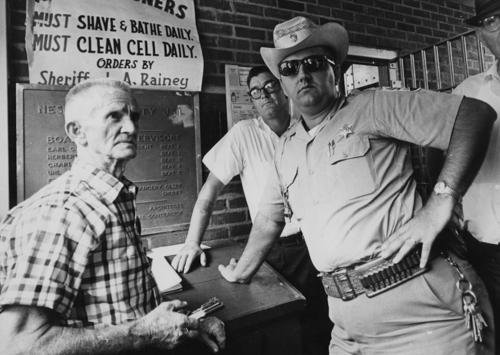
William Bradford Huie discusses his book "Three Lives for Mississippi"
May. 20, 1965 Author William Bradford Huie discusses his book "Three Lives for Mississippi;" reads passages from book.
-
William Ball discusses the American Conservatory Theater
Aug. 16, 1966 William Ball discusses the American Conservatory Theater in Pittsburg, PA. They discuss in great detail how different the company is. Specifically that they keep themselves learning and perfecting the classic style. Dick Christiansen theater and film critic joins the conversation.
-
William Appleman Williams talks with Studs Terkel
Feb. 12, 1965 Discussing "Great Evasion" and interviewing historian William Appleman Williams.
-
Willard Van Dyke discusses American history and its effects on the film, photography, and the arts
Apr. 3, 1985 Willard Van Dyke, cinematographer and co-director of documentaries like "The City" and "The River," talks about 20th century American history and how it effected the arts. Using his documentaries and other artists' work, he explores how the Great Depression, World War II, and the Cold War changed American art and culture. He discusses Public Works of Art, war propaganda, and McCarthyism and their challenges for artists. Near the end of this interview, Van Dyke discusses the changes in modern still photography and documentaries as Americans forget history.