

-

Will D. Campbell discusses his book "Providence"
Aug. 26, 1992 Content Warning: This conversation includes racially and/or culturally derogatory language and/or negative depictions of Black and Indigenous people of color, women, and LGBTQI+ individuals. Rather than remove this content, we present it in the context of twentieth-century social history to acknowledge and learn from its impact and to inspire awareness and discussion. Will D. Campbell, minister, activist, and author of “Providence," discusses religion, civil rights, and American history.
-
Will Campbell discusses his book “Forty Acres and a Goat: A Memoir”
Feb. 13, 1987 Preacher Will Campbell discusses and reads from his book “Forty Acres and a Goat: A Memoir” and recounts his experience during the Civil Rights movement in the South. Studs plays “His Eye Is On The Sparrow” - Mahalia Jackson (1958).
-
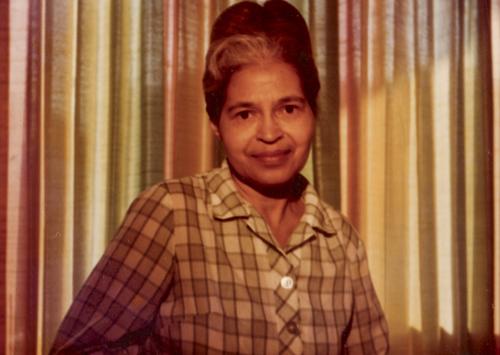
Rosa Parks and Myles Horton discuss the Highlander Folk School, the Montgomery Bus Boycott, and the American Civil Rights Movement
Jun. 8, 1973 Rosa Parks and Myles Horton discuss the importance of the Highlander Folk School, the Montgomery Bus Boycott, and the American Civil Rights Movement. The story of these two prominent figures of the Civil Rights Movement have intervened in their fight for social equality. Includes a fragment of an interview with E. D. Nixon well known civil rights leader.
-

Paul Cowan discusses his book "The Making of an UnAmerican," part 1
May. 4, 1970 Writer and activist Paul Cowan discusses the events and experiences that inspired his book "The Making of an UnAmerican," part 1.
-
Herbert Kohl discusses Myles Horton and the book "The Long Haul: An Autobiography"
Apr. 5, 1990 Progressive educator Herbert Kohl discusses educator and founder of the Highlander Folk School Myles Horton and the book about him, "The Long Haul: An Autobiography." The book was written by Herbert Kohl and his wife, Judith Kohl.
-
Guy Carawan and Evan Carawan discuss the impact of the Highlander Folk School
Feb. 23, 1995 Interviewing activist and musician Guy Carawan and his son, musician Evan Carawan. They discuss the impact of the Highlander Folk School during the Civil Rights Movement and their relationship with folk music. Includes a test tone that lasts 20 seconds. Content Warning: This conversation has the presence of outdated, biased, offensive language. Rather than remove this content, we present it in the context of twentieth-century social history to acknowledge and learn from its impact and to inspire awareness and discussion.
-
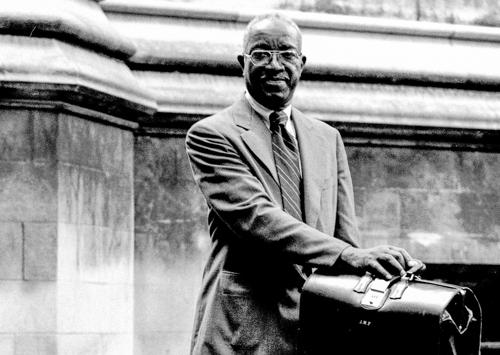
Dr. John Hope Franklin discusses the history of Civil War Reconstruction; part 1
1966 Dr. John Hope Franklin, professor of history at University of Chicago, outlines the history of reconstruction during the American Civil War and briefly his experience at the March to Montgomery; part 1.