

-

Sylvia Syms discusses her career as a singer and those that have influenced her
Nov. 24, 1976 Studs interview with Sylvia Syms about her career through the years and the people who influenced her. They discuss Jazz music and composers who Syms calls poets. The music numbers are removed from this edited version.
-
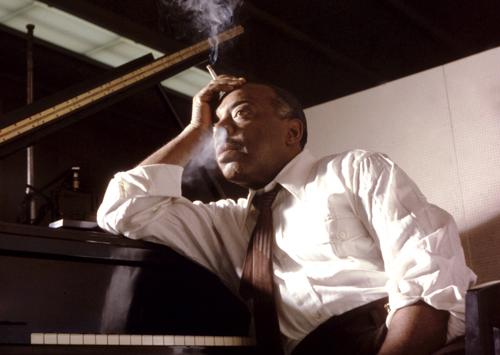
Studs Terkel and William (Bill) Leonard discuss their favorite memories of Frank Holzfeind and the Blue Note Jazz Club in Chicago
Jan. 9, 1975 Studs Terkel and William (Bill) Leonard share memories of the Blue Note Jazz Club as a tribute to Frank Holzfeind. Music is played throughout the episode: "After You've Gone" by the Benny Goodman Sextet, "The Flat Feet Floogie" by Slim and Slam, "How High the Moon" by Sarah Vaughan, "Destination K.C." by Count Basie, "West End Blues" by Louis Armstrong, "Lil' Augie Is A Natural One Man" by Chet Roble, and "Rock Skippin' at the Blue Note", Duke Ellington. Songs have been removed for copyright reasons.
-
Richard Wang discusses Charles Mingus' "Epitaph"
Aug. 23, 1990 Jazz scholar and historian Richard Wang discusses Charles Mingus' "Epitaph", a 4,237 measure-long composition. Wang discusses Mingus’ upbringing and how he was trained on the trombone originally. Throughout the interview, performances of the Epitaph are played and Wang notes in the composition where listeners can hear Mingus’ classical training, as well as where other classical musicians, such as Duke Ellington and Claude Debussy, most likely were referenced as inspiration in the composition.
-
Red Saunders discusses jazz music and jazz musicians
Mar. 16, 1978 Red Saunders discusses jazz music and jazz musicians.
-
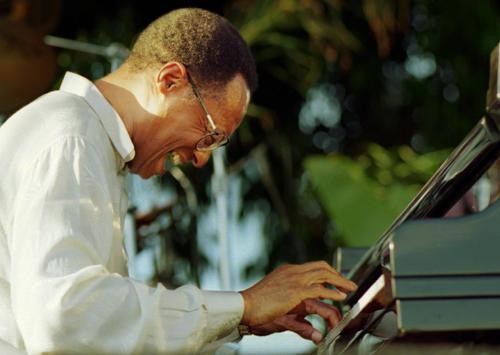
Ramsey Lewis discusses his career
Dec. 22, 1980 Starting at a young age, Ramsey Lewis really loved music and as he got older, he'd practice five or six hours a day. Lewis says he knew nothing about jazz until he met Wallace Burton at the age of 15. Burton hired Lewis on the spot to play in his band. Church music, Spanish music, Duke Ellington and the Beatles, says Lewis, were all great influences to him.
-
Ralph Gleason discusses jazz, jazz artists, and jazz festivals ; part 1
Jul. 31, 1971 Studs interviews jazz and pop critic, and founding editor of "Rolling Stone" magazine, Ralph Gleason while in Berkeley, California (3 parts). Topics include the history of jazz, blues, and jazz culture, and how race played in the development and distribution of the music. Songs include Louis Armstrong's "(I'll Be Glad When You're Dead) You Rascal You."
-
Phyl Garland discusses her book "Sound of Soul" and the history of black music in America ; part 2
Nov. 25, 1968 Studs interviews Phyl Garland about her book "Sound of Soul." They discuss various musicians that she mentions in her book and their influence on black music. Garland explains the music of young black artists and how commercialization of music gave blacks an opportunity that they would not have had otherwise. Garland talks about how Fannie Lou Hamer used music to express her message in the Civil Rights Movement and as a women's rights activist. Studs and Garland discuss various black female artists and their music.
-
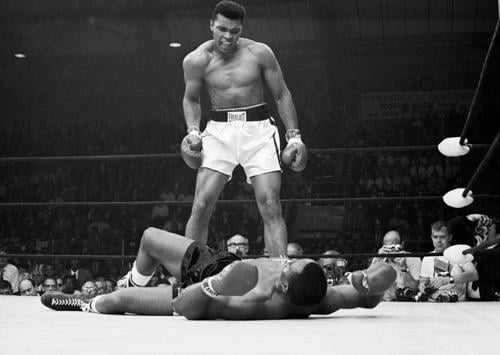
Muhammad Ali discusses his book "The Greatest: My Own Story"
Nov. 26, 1975 Content Warning: This conversation includes racially and/or culturally derogatory language and/or negative depictions of Black and Indigenous people of color, women, and LGBTQI+ individuals. Rather than remove this content, we present it in the context of twentieth-century social history to acknowledge and learn from its impact and to inspire awareness and discussion. Muhammad Ali discusses his book "The Greatest: My Own Story," touching on topics including his childhood and family, conversion to Islam, stance on the Vietnam War, and experiences in jail.
-
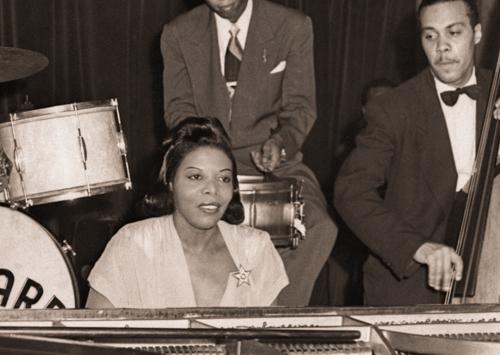
Mary Lou Williams and her manager Father Peter O'Brien discuss Williams' career
Sep. 15, 1978 Studs Terkel interviews Mary Lou Williams and her manager, Father Peter O'Brien. They discuss music, musicians, and instruments. Some clips of piano music playing at the end.
-
Marian McPartland discusses her career as a Jazz pianist
Feb. 22, 1978 Studs interviews Marian McPartland, who is in Chicago to perform at Rick's Cafe and the Chicago Public Library. They discuss her various performances and recorded albums. McPartland shares techniques of playing Jazz with a piano. She discusses people and events that influenced her music. The musical numbers are removed from this edited version of the original recording.
-
Marian McPartland and Jimmy McPartland discuss their Jazz careers
Sep. 27, 1973 Studs interviews Jimmy and Marian McPartland. The McPartlands reflect on the people who influenced their music in Jazz. Studs quotes Jimmy McPartland and reads part of a critic's column about Marian in the Chicago Sun Times. Marian shares a little about what it is like to be a female musician in Jazz. Both discuss their past career and their futures. Jimmy reflects on his hard times in the 1920s-1930s. The musical numbers are removed from this edited version of the original recording.
-
James Dapogny discusses jazz and the many faces of the genre
Aug. 14, 1984 Bandleader, jazz musicologist and composer James Dapogny discusses his work in reviving the sound and art of jazz. Dapogny's work is mainly associated with his group James Dapogny's Chicago Jazz Band and his career in publishing lost works of Ferdinand "Jelly Roll" Morton.
-
Jabbo Smith discusses his music from childhood and his career in Jazz as a trumpet and trombone player
Feb. 24, 1981 Studs interviews Jabbo Smith and presents some of his musical performances. The musical pieces are removed from this edited version of the original recording. Smith shares the story of his childhood in the Jenkins Orphanage and how he came to learn music there. He discusses the songs he wrote and people he played with throughout his career and how he came out of retirement in Holland on the trombone.
-
Hugh Wiley Hitchcock and Stanley Sadie discussing the book "The New Grove Dictionary of American Music"
Nov. 4, 1986 Discussing the book "The New Grove Dictionary of American Music". They talk about American music and musicians of all kinds and from different periods. Includes Charles Ive's song "At the River" sung by Cleo Laine in the middle of the program.
-
Dempsey Travis discusses jazz artists and recalls his early memories of Chicago jazz
Feb. 1, 1989 Dempsey Travis presents a jazz program and discusses the life, the music, and the community of Chicago jazz from before The Great Depression until World War II. Travis discusses 1920s-1930s Chicago for Black families including rent parties, breakfast dances, employment opportunities, union strikes, and jazz.