

-

Emily Kimbrough discusses her book "Forever Old, Forever New"
Jan. 1, 1965 Discussing her travels to Greece and her book "Forever Old, Forever New" with the author Emily Kimbrough.
-
Elizabeth Janeway discusses her book "Man's World, Woman's Place"
1970 Elizabeth Janeway discusses her book "Man's World, Woman's Place" and the gender role women are taught since birth; reads passage from book; includes interview at 16:01 with a woman speaking against the Women's Movement during an outdoor protest.
-
Edward Scobie discusses his book "Black Britannia"
Jan. 17, 1973 There is a great deal of history to be found in Edward Scobie's book, "Black Britannia: A History of Blacks in Britain," including description of the anti-Black attitude of some of the English people.*Please note: some sections have been edited out from the original recording due to copyright considerations
-
Edward Said discusses the book "Covering Islam"
1980 Discussing the book "Covering Islam" with the author Edward Said.
-
Edward Keating discusses the magazine Ramparts
Mar. 1, 1967 Discussing the philosophy of "Ramparts" and interviewing Edward Keating.
-
Educator Harold Taylor talks with Studs Terkel ; part 2
1965 A short clip of Studs Interviewing educator Harold Taylor. The two briefly discuss what it would be like for the United States of America to use its resources in a way to become a "vast meeting ground of people," in which American citizens are exposed to a variety of the arts from different cultures in an effort to become a "teacher in the world."
-
Educator Harold Taylor talks with Studs Terkel ; part 1
1965 Harold Taylor and Studs look in-depth at the definition of what it means to be a "student," including on-campus protests, gaining life experience by teaching and challenging the mainstream social order. Includes a brief reading from Taylor's speech, "Preparation of American Teachers in the Field of World Affairs."
-
Economist Robert Theobald discusses his ideas for a better world
Jan. 8, 1968 Poor people, politicians, guaranteed basic income and power are all among the topics that Robert Theobald covers to achieve a better world for mankind. Using the media better to sway the public's opinion, so that the politicians will vote in the masses' interests are all apart of Theobald's plan, too.
-
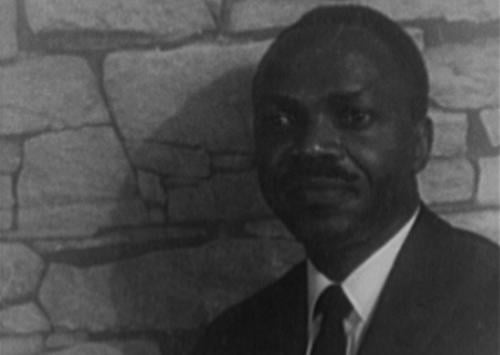
E.R. Braithwaite discusses his career and the book "Reluctant Neighbors"
1972 E.R. Braithwaite, Guyanese-born British-American novelist, writer, teacher and diplomat discusses his writing and career. The interview opens with Mr. Braithwaite, reading from his book "Reluctant neighbors".
-
Dr. Willard Gaylen discusses his book "Feelings" and how humanity and feelings are connected
Feb. 23, 1979 Dr. Williard Gaylen, a physician and professor of psychiatry at Columbia, discusses how feelings define humanity. He explains that there are no "bad" or "good" feelings, because even anxiety and guilt are strictly human emotions. Dr. Gaylen also talks about how envy is the only useless feeling. Two recordings of people talking about pride and guilt are also played.
-
Dr. Theodor Rosebury discusses his book "Microbes and Morals" and the cultural history of communicable diseases and infections
1970 Dr. Theodor Rosebury discusses the history and myths of communicable and sexually transmitted infections, how they are represented in media, and the impact of shame.
-
Dr. Theodor Rosebury discusses his book "Life on Man"
1969 Dr. Theodor Rosebury dissects cultural ideas around cleanliness and shame as presented in his book "Life of Man".
-
Dr. Samuel Gorovitz discusses the book "Doctors' Dilemmas"
Sep. 22, 1982 In his book, "Doctors' Dilemmas: Moral Conflicts in Medical Care," Samuel Gorovitz tries to show his readers the moral dilemmas that doctors face. Gorovitz explained that physicians need to learn what it’s like to be a patient. Gorovitz also believed that before a student enter medical school, he or she should have spent some time in a hospital as a patient.
-
Dr. Samuel Epstein reads from and discusses his book, "The Politics of Cancer"
Nov. 18, 1978 Making people aware that toxic chemicals in our everyday lives can cause cancer has been one of Dr. Samuel Epstein’s main goals. According to his book, “The Politics of Cancer,” the government really won’t step in until there is a public outcry.
-
Dr. Ronald Glasser discusses his the book "The Greatest Battle"
Nov. 29, 1976 Dr. Ronald Glasser talks about his book "The Greatest Battle," which explores cancer and the environmental factors that can cause it. He talks about smoking, food additives and diet, infectious diseases, and germs.