

-

TV critic Les Brown discusses his book "Encyclopedia of Television"
Dec. 9, 1977 TV critic Les Brown discusses his book "Encyclopedia of Television."
-

Turner Catledge discusses his book "My Life and the Times"
1970 Discussing the book "My life and the times" and interviewing the author Turner Catledge. Turner Catledge discusses his life and his career at the "New York Times".
-
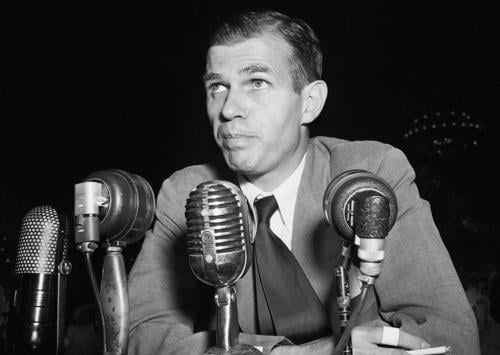
Tony Hiss discusses his book "Laughing Last"
Mar. 14, 1977 Content Warning: This conversation includes racially and/or culturally derogatory language and/or negative depictions of Black and Indigenous people of color, women, and LGBTQI+ individuals. Rather than remove this content, we present it in the context of twentieth-century social history to acknowledge and learn from its impact and to inspire awareness and discussion. The book, "Laughing Last: Alger Hiss" is the biography of Tony Hiss' father. Although Alger Hiss was convicted of perjury and did time in prison, Tony Hiss said his father, Al, was doing all right.
-
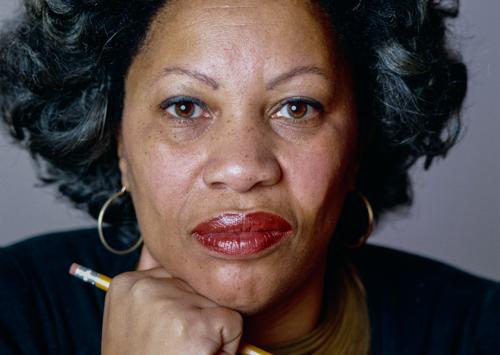
Toni Morrison reads from and talks about her book "Sula"
Apr. 16, 1974 Studs Terkel interviews writer Toni Morrison. This interview begins with a reading from the book, "Sula" by Morrison Morrison continues to read excerpts from her novel "Sula" and discusses her literature.
-
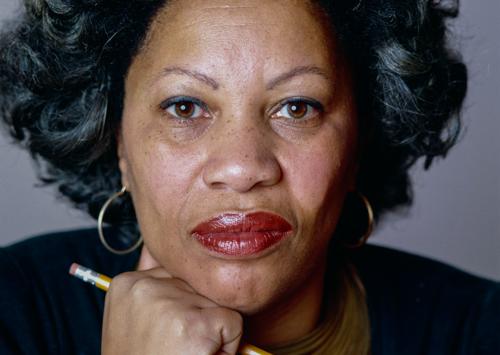
Toni Morrison discusses her book "Tar Baby"
Apr. 16, 1981 Presidential Medal of Freedom and Nobel Peace Prize winner for literature Toni Morrison discusses her latest work. Morrison intertwines the ideas of race, mythology, and gender in her book while laying a complex narrative for the reader. The narrative makes the reader question their true identity and reflect on their cultural identity and background.
-
Tom Wolfe discusses his new book "In Our Time"
Oct. 1980 Author and journalist Tom Wolfe discusses his new book, "In Our Time," which focuses on the ever-changing culture and ethics of America. Drawing examples from his cartoons he discusses how the counterculture of the 1960s, TV evangelists, politicians, and actors are challenging mores and values of the American people.
-
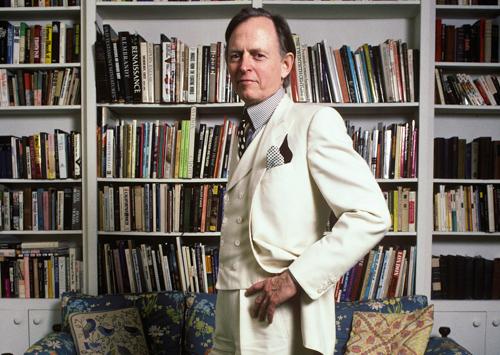
Tom Wolfe discusses his book "From Bauhaus to Our House"
Nov. 16, 1981 Discussing the book "From Bauhaus to our house" with the author and journalist Tom Wolfe.
-
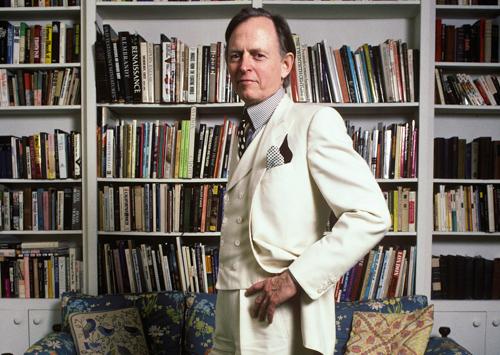
Tom Wolfe discusses an essay on Las Vegas
Aug. 11, 1965 Studs Terkel has a brief conversation with Tom Wolfe and reads "Las Vegas (What?) Las Vegas (Can't hear you! Too noisy) Las Vegas!!!!" from Tom Wolfe's collection "The Kandy-Kolored, Tangerine-Flake Streamline Baby." Songs of the 20's interspersed throughout: "My Heart Belongs to Daddy" Cole Porter "Puttin on the Ritz" Irving Berlin "Look for the Silver lining" Jerome Kern/B.G. DeSylva "Sunny Side Of the Street" Jimmy McHugh/Dorothy Fields
-
Thomas Cottle discusses his book "Children's Secrets"
Feb. 25, 1980 Sociologist and clinical psychologist Thomas Cottle discusses his book "Children's Secrets." In the book, children reveal, in their own words, the impact of such painful secrets as violence, infidelity, incest, debt, alcoholism, and mental illness--on each member of their family.
-
Theon Wright discusses his book "Rape in Paradise"
Nov. 2, 1966 Discussing the book "Rape in Hawaii" and interviewing the author Theon Wright.
-
Terkel reads Christmas stories.
Dec. 23, 1992 Reading three Christmas stories
-
Terkel comments and Ronald Blythe reads Report from an English village ; part 2
Sep. 19, 1986 Reading "Report from an English Village" and interviewing the author Ronald Blythe while Studs was in London.
-
Tennessee Williams talks with Studs Terkel
Dec. 1961 Playwright Tennessee Williams discusses his play "The Night of the Iguana," which was currently playing at the Blackstone Theatre in Chicago. The conversation takes place in Mr. Williams' room at the Blackstone Hotel.
-
Tennessee Williams discusses his career
May. 1, 1981 Tennessee Williams said he'll stop writing when he can no longer produce good work. He spoke of being puzzled as to why so little of his work gets produced in New York. Williams also talked about taking offense when the first sequences of the TV show "Dallas" aired. He explained that the owner of the great estate in "Dallas" was a copy of his Big Daddy character, who was a wealthy plantation owner.
-
Talking with Jules Feiffer
Nov. 30, 1979 The cartoonist and author talks about his latest work, Tantrum, which Studs describes as a novel-in-cartoon-form. The oddly-compelling story of a respectable business man who regresses to toddler-like behavior can be seen as an early example of a graphic novel.*Please note: some sections have been edited out from the original recording due to copyright considerations