

-

Barbara Carroll discusses her life as a jazz pianist
Jul. 12, 1989 Barbara Carroll demonstrates her piano skills, discusses her career as a singer and musician, and shares her passion for jazz music.
-
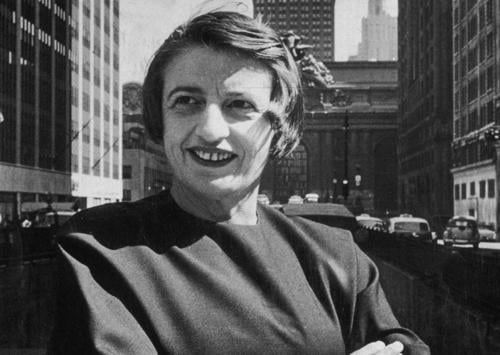
Barbara Branden discusses "The Passion of Ayn Rand"
Aug. 26, 1986 Discussing "The Passion of Ayn Rand" (published by Doubleday) with the author Barbara Branden.
-
Barbara Blaine, Ruth Graff, and Nina Polcyn-Moore discuss the Catholic Worker Movement
1986 Interviewing Catholic workers Barbara Blaine, Ruth Graff, and Nina Polcyn-Moore. They discuss their lives, Catholic worker houses, and poverty. Includes an interview with Dorothy Day. Content Warning: This conversation has the presence of outdated, biased, offensive language. Rather than remove this content, we present it in the context of twentieth-century social history to acknowledge and learn from its impact and to inspire awareness and discussion.
-
Barbara and Betty Underwood discuss their book “Hostage to Heaven”
Nov. 15, 1979 Barbara and Betty Underwood, authors of the book “Hostage to Heaven,” discuss Betty’s involvement with Sun Myung Moon and the Unification Church.
-
Authors Louise Erdrich and Michael Dorris discuss "Tracks: A Novel"
Sep. 16, 1988 Living in the past and the present, Native American Indians and Catholicism are all parts of Louis Erdrich's book, "Tracks: A Novel." Both Michael Dorris and Erdrich have Native American Indian backgrounds. The husband and wife team also talk about how they take long walks with one another and discuss with each the ideas of future books and the books' characters.
-
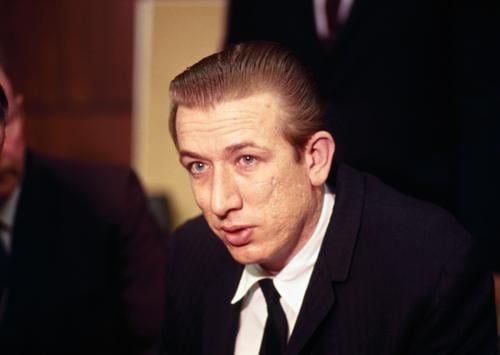
Authors Jack Altman and Dr. Marvin Ziporyn discusses their book "Born to Raise Hell"
1967 Richard Speck, the man who murdered eight student nurses in 1966, is the topic of Jack Altman's and Dr. Marvin Ziporyn's book, "Born to Raise Hell: The Untold Story of Richard Speck -- The Man, The Crime, The Trial". Altman saw Speck's public and private image as being quite different. When asked to smile for the cameras, Speck obeyed authority and was labeled a monster by the press when in reality, he blocked out the murders and was disgusted by his actions. Dr. Ziporyn sees this murderous violence as a disease and not as a monster as the press portrayed it.
-
Author Ronald Steel discusses his book "Walter Lippmann and the American Century."
Nov. 1981 Ronald Steel goes in-depth about his biography of journalist Walter Lippman.
-
August Everding discusses his opera production of “Ring of the Nibelungen”
Mar. 14, 1996 German director August Everding discusses his career from theater to opera and shares themes from his current opera productions.
-
August Derleth discusses the books he writes ; part 1
To date, August Derleth said he's written 135 books. A good number of his books are of Sauk City, Wisconsin, the German town where is was born and raised. Derleth explained writing books on poetry are not big money makers and for that reason, he then turns to writing horror stories or mystery novels.
-
August Derleth discusses his writing influences ; part 2 | In the 2nd interview, Iris Ford discusses and demonstrates playing the sleigh bells
In conclusion, August Derleth, spoke of his biggest influences, Henry David Thoreau and Ralph Waldo Emerson. Derleth believed that one day there would be a renaissance of great literary authors. With regards to playing the sleigh bells in churches, Iris Ford says its like blending something ridiculous to the sublime. Ford, a self-taught sleigh bell player, plays for all types of religious orders. Because playing the music is for God, says Ford, it needs to be exceptional.
-
Auburn University student discusses the Civil Rights march on campus and his involvement
1965 Studs interviews a white student on the Auburn University campus after a Civil Rights march. The student explains that he is there to be sure a white face is present and to stand up for democracy. He describes the event and speaks to his family background. The student expresses the experience of black students on the integrated campus and how it has changed. (Tape 6, part 2)
-
Athol Fugard discusses his play "Master Harold…and the Boys"
May. 6, 1983 Discussing the play "'Master Harold'--and the Boys," with playwright Athol Fugard.
-
Astrid Varnay and Felicia Weathers discuss the opera “Salome”
1967 Opera singers Astrid Varnay and Felicia Weathers discuss the opera “Salome” and the complexity of its lead role with Studs Terkel. Recordings of Varnay singing a piece from the Flying Dutchman and Weathers singing a piece by Strauss are played. Paul Vodicka delivers a few messages toward the conclusion.
-
Asa Baber reads from and discusses his book "Land of a Million Elephants"
Jun. 8, 1970 Having spent time as a Marine in southeast Asia and his military experience became material for Asa Baber's first book, "Land of a Million Elephants". Baber also talks about how he formulated his book. "Writing is music. Writing is jazz," said Baber. He didn't believe writing was about concepts and structure.
-
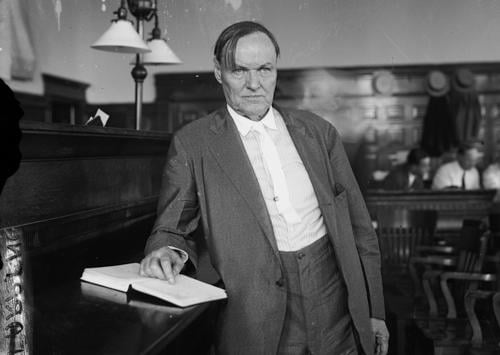
Arthur Weinberg discuess his biography of Clarence Darrow
Dec. 8, 1980 Terkel interviews author Arthur Weinberg. His latest book is called: "Clarence Darrow: A Sentimental Rebel".