

-

Norman Maclean reads from and discusses his book "A River Runs Through It"
Jun. 8, 1976 Fly fishing, relationships and people Norman Maclean has met are all apart of his book, "A River Runs Through It." Maclean's father taught Maclean and his brother the art of fly fishing. Maclean's book is semi-autobiographical with three short stories.
-
-
-
Norma Field reads from and discusses the book "In the Realm of a Dying Emperor"
Jan. 22, 1992 "In the Realm of a Dying Emperor: A Portrait of Japan at Century's End," is Norma Field's story of dissenters against Emperor Hirohito. There's the story of Mr. Chibana, a supermarket owner, who was arrested for burning the flag of the Rising Sun because he learned of the mass suicides by the people of Okinawa. There were also some that believed Emperor bore some responsibility for WWII when being told it was imperative to fight the sacred war.
-
Norbert Blei reads from and discusses his book "Chi-Town"
Oct. 19, 1990 When talking about his book, "Chi-Town," Norbert Blei said all the communities in Chicago offer everyone the groups' separate ethnic cultures. Blei also talks about riding the Douglass Park El and the old man sitting on a bench, who he encounters at Grant Park. Lastly, Blei talks about writers who have influenced him.
-
Nora Sayre discusses her book Running Time: Films of the Cold War
May. 4, 1982 Nora Sayre discusses her book "Running time: Films of the Cold War" and how Russian-American relations affected Hollywood and celebrity blacklists.
-

Nora Ephron discusses feminism and her book "Crazy Salad"
Jul. 28, 1975 Nora Ephron discusses the women’s movement and her book, “Crazy Salad: Some Things About Women.” Ephron discusses the influence of writer Dorothy Parker on her work, as well as topics including women’s rights; the exploitation of women in politics, war, and advertising; the many conflicts she faces in her role as a journalist; and traditional and non-traditional gender roles. Includes an excerpt from a previous interview with Dorothy Parker.
-
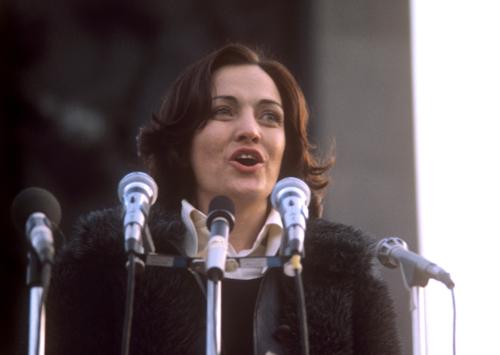
Nobel Peace Prize recipient Mairead Corrigan Maguire discusses the struggle for peace in Northern Ireland, and around the world
Dec. 1, 1993 Nobel Peace Prize recipient Mairead Corrigan Maguire discusses the struggle for peace in Northern Ireland, and around the world. Maguire, an Irish peace activist, founded Community of Peace People.
-
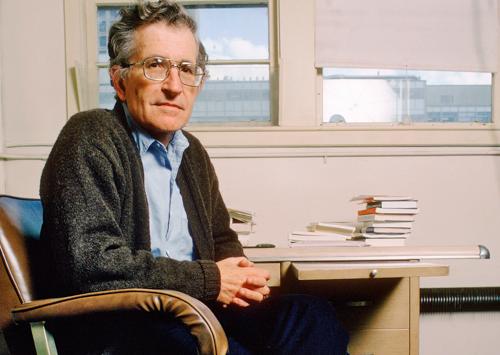
Noam Chomsky discusses his book "American Power and the New Mandarins"
Jan. 19, 1970 Noam Chomsky discusses his book "American Power and the New Mandarins," the Vietnam war, and the role of intellectuals, including interview with A.J. Muste; audio is slowed down from 47:30 - 52:52.
-
-
-
Nikolay Akimov, Theodore Komisarjevsky and Pavel Markov discuss the Soviet theater
Aug. 16, 1959 Nikolay Akimov, Theodore Komisarjevsky and Pavel Markov discuss the Soviet theater. The ending music on this record was edited out
-
Nicolai Ghiaurov discusses his career
Through his interpreter, the well-known and handsome Bulgarian opera singer, Nicolai Ghiaurov, talks about his profession. At the age of five, he sang a song for his family and it was then when others around him realized his talent. Ghiaurov had first wanted to be an actor. "Don Giovanni," was one of Ghiaurov's favorite roles to play with his acting and interpretation of Mozart's music.
-
Nicola Geiger discusses her background and her time spent in the far east
Oct. 21, 1974 Born in Hamburg, Nicola Geiger, recalls her upbringing and her life under Nazi Germany. She lost two children in World War II. Later in life, she worked in both Japan and Korea. Geiger knew that she alone could not change the world but that she worked tirelessly to get other people to work on peace, too.
-
Nicholas Von Hoffman discusses university and college educations ; part 1
Jun. 9, 1965 Journalist Nicholas Von Hoffman shares his critical thoughts about universities and colleges. Students are told what to read for class and students are taught how to pass exams, says Von Hoffman. Testing and exams don't work, contends Von Hoffman. Students must be allowed to read more about a subject on their own as opposed to what's solely offered by the curriculum's books.