

-

Rudolf Dreikurs discusses his book "Social Equality and the Challenge of Today" ; part 2
1968 Child psychiatrist and educator Rudolf Dreikurs discusses his book "Social Equality and the Challenge of Today," Part 2 of 2.
-
Rudolf Dreikurs discusses his book "Social Equality and the Challenge of Today" ; part 1
1968 Child psychiatrist and educator Rudolf Dreikurs discusses his book "Social Equality and the Challenge of Today," Part 1 of 2. The discussion focuses on child psychiatry and human misbehavior.
-
Roy Dotrice and Patrick Garland discuss the play "Brief Lives"
Sep. 25, 1970 Patrick Garland directs Roy Dotrice, who plays the old and lonely John Aubrey in "Brief Lives". While in studio, Dotrice reenacts part of the one-man show. Garland explains that the play is about John Aubrey, on the last day of his life, telling the audience about the past lives he's encountered.
-
Roy Blount Jr. shares stories from his latest collection.
Oct. 8, 1982 The writer, speaker, and humorist discusses his book, One Fell Soup: or I'm Just a Bug on the Windshield of Life.*Please note: some sections have been edited out from the original recording due to copyright considerations
-
Roxana Robinson discusses her book “Georgia O’Keeffe: A Life”
Sep. 8, 1989 Art historian Roxana Robinson discusses and reads from her book “Georgia O'Keeffe: A Life.” Robinson discusses the different eras of painting O’Keeffe went through during her lifetime and the outside forces that inspired these changes in subject matter, such as her attending the Art Students League of New York, her moving to Santa Fe, and her relationship with Alfred Stieglitz. Studs plays “Tosca, Act II: Vissi d’arte, vissi d’amore” - Renata Tebaldi, George London, Francesco Molinari-Pradelli (1959).
-
Ross Miller discusses his book "American Apocalypse: The Great Fire and the Myth of Chicago"
Jun. 7, 1990 Author Ross Miller discusses his latest work, which centers around Chicago and the aftermath of the Great Chicago Fire and its effects on rebuilding the metropolis and the advantages of gaining a new take on architecture and society.
-
Ross Firestone discusses his book "Swing, Swing, Swing: The Life & Times of Benny Goodman"
Mar. 26, 1993 Benny Goodman was one of 12 children and when he was little, his father took him to a synagogue where he learned to play the clarinet. Ross Firestone's book, "Swing, Swing, Swing: The Life and Times of Benny Goodman" is full of information about the musician. Goodman was a perfectionist, always wanting to better at his craft. According to Firestone, as a band leader, Goodman never thanked any musicians that played for him or with him.
-
Rosalie Sorrels discusses her career
Sep. 10, 1982 Rosalie Sorrels discusses her career, family, and folk music. Includes Rosalie Sorrels reading her mother's writing. The following songs have been removed due to copyright restrictions: "Traveling Lady", "You Can't Go Home Again", "Her Mantle So Green", "If You Love Me", and "The Long Memory". Cal Hans plays the dobro in the background and makes some comments. Includes performance by pianist Daniel Varsano at the end.
-
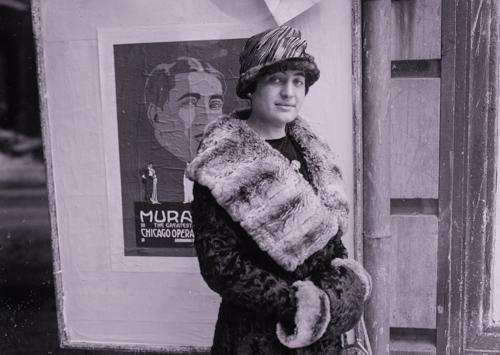
Rosa Raisa, in Chicago for the restoration of the Auditorium Theater, reflects on her career
Dec. 13, 1961 Studs Terkel interviews soprano Rosa Raisa about her career in Opera.
-
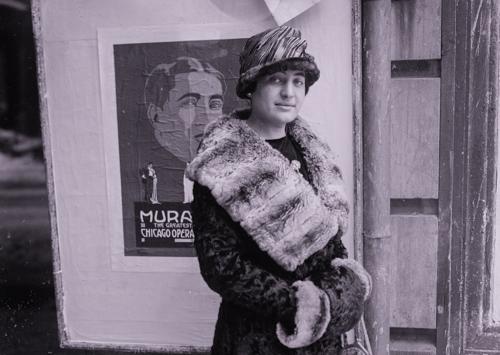
Rosa Raisa reflects on her career and her time in Chicago
Nov. 6, 1959 Renowned soprano, Madame Rosa Raisa discusses her career, early training, Chicago debuts, travels, teaching, and hobbies post opera.
-
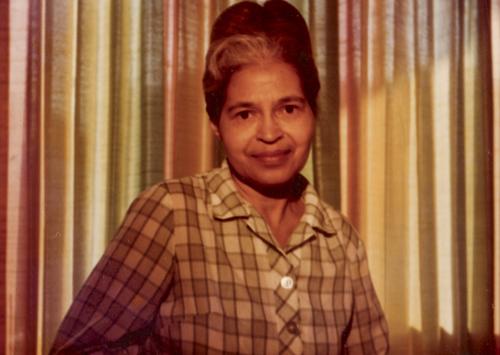
Rosa Parks and Myles Horton discuss the Highlander Folk School, the Montgomery Bus Boycott, and the American Civil Rights Movement
Jun. 8, 1973 Rosa Parks and Myles Horton discuss the importance of the Highlander Folk School, the Montgomery Bus Boycott, and the American Civil Rights Movement. The story of these two prominent figures of the Civil Rights Movement have intervened in their fight for social equality. Includes a fragment of an interview with E. D. Nixon well known civil rights leader.
-
Rory Gilbert and Nikki Nelson discuss battered wives and family abuse
Jul. 28, 1981 Rory Gilbert of United Charities and family therapist Nikki Nelson discuss battered wives and family abuse. The song "She Sits On The Table" by Tom Paxton is played at the end of the interview (00:49:48-end).
-
Ronnie Gilbert in conversation with Studs Terkel
Apr. 18, 1985 Interviewing folksinger and activist Ronnie Gilbert.
-
Ronnie Dugger discusses his book "Politician: The Life and Times of Lyndon Johnson"
Jul. 15, 1982 Ronnie Duggar’s book, “Politician: The Life and Times of Lyndon Johnson,” shows Johnson’s rise to power. Duggar explained that from a young age, Johnson knew to court power. While at the Teachers College in Texas, Johnson told his cousin, “It starts at the president’s office,” where Johnson was the president’s right arm man. Once in the Senate, Johnson chose to be on the Armed Services Committee because he knew Senator Richard Russell ran the Senate. Johnson courted powerful men and in exchange, these men would advance his career.
-
Ronnie Dugger discusses his book "On Reagan: The Man & His Presidency"
Nov. 29, 1983 Past radio transcripts of former President Ronald Reagan were being hidden or suppressed. Ronnie Dugger worked tirelessly at getting the transcripts so that people would learn the truth about Reagan. In Dugger’s book, “On Reagan: The Man & His Presidency,” Dugger points out that President Reagan was against the ERA. He didn’t believe in anti-trust, and he opposed every civil rights act every placed in front of him. Dugger said Reagan’s genius was that he’d get elected without people knowing of his records.