

-

James Leo Herlihy discusses some of his books and some of his theories on life
1969 At the age of seven, James Leo Herlihy, started writing short stories and had thoughts of becoming a writer. Here, he shares his theory about the song, "Eleanor Rigby," and where all the people come from. Herlihy also conveys that the material of his literature is life itself.*Please note: some sections have been edited out from the original recording due to copyright considerations
-
-
James Graham-Lujan discusses the works of Federico Garcia Lorca; part 2
1964 James Graham-Lujan concludes by talking about Garcia Lorca's most celebrated plays, Blood Wedding, Yerma, and The House of Bernarda Alba. Tragedy is brought about due to the passion of a woman in each of the plays.
-
James Graham-Lujan discusses the works of Federico Garcia Lorca; part 1
1964 Discussing the works of Federico Garcia Lorca with translator James Graham-Lujan. Garcia Lorca was a great poet and playwright and he re-vitalized Spanish theater with his eleven plays, according to Graham-Lujan. Garcia Lorca's life was joyous and full of life unlike the theme of his plays, which was tragedy and death.
-
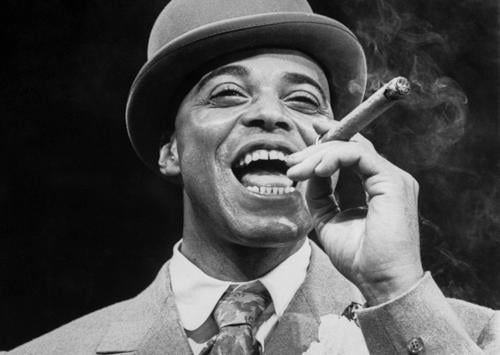
James Earl Jones discusses the play "Othello"
Feb. 1, 1968 Jones discusses the play "Othello" where he plays the lead character Othello.
-
James David Barber discusses his book, "The Pulse of Politics: Electing Presidents in the Media Age," with the author James David Barber
May. 30, 1980 James David Barber, author and political scientist, discusses his book, "The Pulse of Politics: Electing Presidents in the Media Age." He explains the premise of his beliefs that presidential elections run a cycle of "conflict, conscience, conciliation," and how media affects this. He uses examples of elections from Teddy Roosevelt to Jimmy Carter. Presidential campaign songs are played throughout the interview. A record is played to hear the voices of Teddy Roosevelt and Franklin D. Roosevelt.
-
James Dapogny discusses jazz and the many faces of the genre
Aug. 14, 1984 Bandleader, jazz musicologist and composer James Dapogny discusses his work in reviving the sound and art of jazz. Dapogny's work is mainly associated with his group James Dapogny's Chicago Jazz Band and his career in publishing lost works of Ferdinand "Jelly Roll" Morton.
-
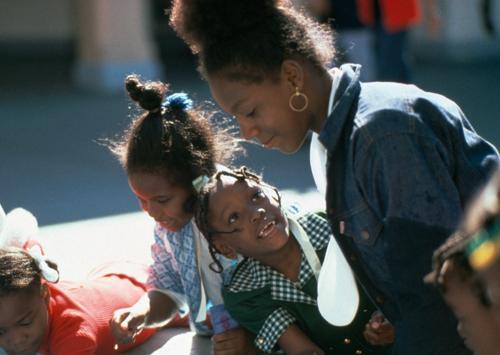
James Comer and Alvin Poissaint talk with Studs Terkel
Aug. 5, 1975 James Comer and Alvin Poissaint discuss their book " Black Child Care: How to Bring Up A Healthy Black Child In American - A Guide to Emotional and Psychological Development". They discuss raising a Black child in America in the 1970's, amid racism. Clip played of Odetta "All the Pretty Little Horses"(Studs Terkel Archive WAV ID 1853133-3-1)
-
James Clement, Mrs. Barry Norton, and Pearl Shaw discuss Chicago schools ; part 1
1965 Discussing the "Chicago Schools Challenge " and interviewing James Clement, Mrs. Barry Norton, and Pearl Shaw.
-
James Cameron discusses his experiences as a Brittish Journalist and his political and social beliefs ; part 4
Jun. 4, 1973 Studs Terkel interview with James Cameron, Brittish journalist. They discuss a variety of topics with politics and young people's attitudes the majority of the interview. This interview is done in Chicago, while the other three parts were done at Lewis and Clark College.
-
James Cameron and Studs Terkel discuss their experience in Lincoln Park and how the peaceful demonstration changed to violence with the use of police tear gas ; part 1
Aug. 28, 1968 Studs Terkel and James Cameron talk about their witness of the peaceful demonstration at Lincoln Park the night before. They discuss the kind and caring interaction between older adults and the young. Both reflect on how the event changed from peaceful to somewhat violent when police gathered and used tear gas on the crowd.
-
James Blake pianist, author, and petty thief talks about his book "The Joint"
Jun. 19, 1971 Mr. Blake talks to Studs about his book "The Joint." The book is a collection of letters written by Mr. Blake while in prison off and on for 13 of 20 years. He reads out loud some of the letters from the book.
-
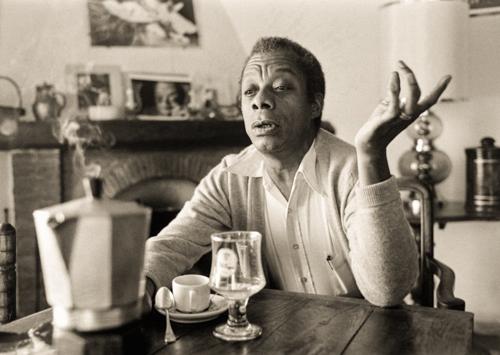
James Baldwin discusses his book," Nobody knows my name: more notes of a native son"
Jul. 15, 1961 Interviewing novelist and fighter for civil rights for all, James Baldwin and discussion on the book "Nobody Knows My Name more notes of a native son". They discuss the book and Mr. Baldwin's political beliefs and his work towards change in the civil rights movement.
-
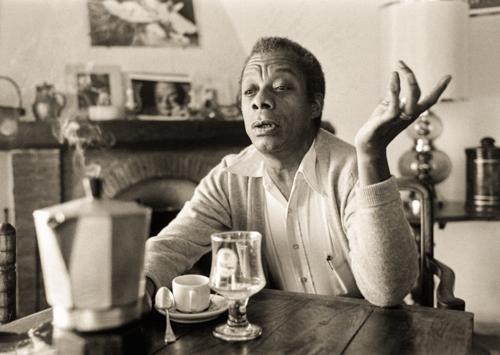
James Baldwin discusses his book "The Evidence of Things Not Seen"
Nov. 22, 1985 John Baldwin talks about his book "The Evidence of Things Not Seen" in which discusses the Wayne Williams Atlanta child murders of 1979-1981. This record is part of the Studs Terkel Almanac.
-
James Baldwin discusses his book "The Devil Finds Work"
Apr. 29, 1976 Studs interviews novelist and fighter for civil rights for all James Baldwin, and discusses the book "The Devil Finds work" They discuss Mr. Baldwin's political beliefs and his work towards change in the civil rights movement.