

-
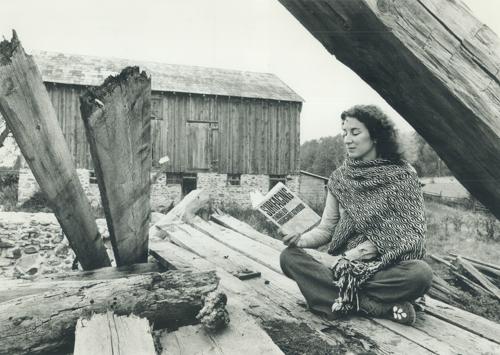
Margaret Atwood discusses her poetry and her novel, "Surfacing"
Jan. 28, 1976 Canadian poet and novelist Margaret Atwood discusses her poetry and her first novel, “Surfacing,” focusing on the novel’s symbolism and the themes of nature, religion and memory. She compares life, attitudes, and politics in Canada with those of the United States.
-

Margaret Atwood discusses her novel "Life Before Man"
Mar. 3, 1980 Author Margaret Atwood discusses her novel "Life Before Man;" interview begins at :45.
-

-
Marcel Ophuls discusses his documentary films
Apr. 30, 1984 Discussing the showing of his films with film maker Marcel Ophuls.
-
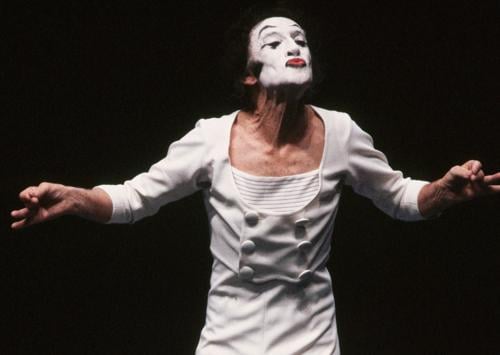
Marcel Marceau talks with Studs Terkel
Oct. 6, 1960 French actor and mime Marcel Marceau discusses the art of pantomime and many of his performances including "The Overcoat" by Gogol and "The Mask Maker". Marceau also discusses the history of pantomime, his inspirations, and how he came to be a mime.
-
Marcel Marceau talks about adapting his work to film
Oct. 17, 1974 The famed French mime and actor discusses illusion and reality, as depicted in the surrealist horror film, Shanks.*Please note: some sections have been edited out from the original recording due to copyright considerations
-
Marcel Marceau discusses the art of mime ; part 2
Mar. 21, 1973 Marcel Marceau, world renown mime, talks about when he performed in prisons in France, Germany, and Chicago, including death row inmates who he could not see. He also discusses moments where he met famous silent actors such as Charlie Chaplin, Harpo Marx, and Stan Laurel. They then discuss childhood and aging. Content Warning: This conversation has the presence of outdated, biased, offensive language. Rather than remove this content, we present it in the context of twentieth-century social history to acknowledge and learn from its impact and to inspire awareness and discussion.
-
Marcel Marceau discusses the art of mime ; part 1
1970 Marcel Marceau, world renown mine, discusses the art and history of pantomime. Marceau talks about mime throughout history from Ancient Rome to the 20th century. He discusses some well-known mimes such as Pierrot and Charlie Chaplin. From aging, to humor and tragedy, and different cultures, Marceau explores about how the art of mime affects and reflects society. They also discuss how Marceau created and plays Bip and how the audience interacts with his character.
-
Marc Pachter discusses his book "Abroad in America"
Jul. 21, 1976 Europeans' opinions about their visits to America - this is the premise of Marc Pachter's book, "Abroad in America: Visitors to the New Nation, 1776-1914." According to Pachter, some people thought America was a moral society but that our manners were dreadful. Charles Dickens liked Boston but thought there were no rules in American society. He also despised the adulation that he received when he first visited.*Please note: some sections have been edited out from the original recording due to copyright considerations
-
Mance Lipscomb discusses the blues
Apr. 26, 1965 Interviewing American blues singer and guitarist, Mance Lipscomb, about his life, musical inspirations, and interest in blues music.
-
Malcolm Dalglish, Grey Larsen, Pete Sutherland in conversation with Studs Terkel
Jun. 15, 1984 Interviewing Malcolm Dalglish (dulcimer player and vocals), Grey Larsen (vocals, assorted instruments) and Pete Sutherland (fiddler and vocals) of the musical group Metamora.
-

Mahalia Jackson discusses the civil rights movement and the upcoming freedom rally
May. 17, 1963 Studs Terkel interviews gospel vocalist Mahalia Jackson. Jackson discusses the freedom rally that will be taking place at McCormick's Place in Chicago, IL.
-
Mahalia Jackson discusses her affinity for gospel music and singing
1956 Mahalia Jackson talks about her discovery of the blues and what drew her to become a gospel singer. She also discusses her tours around Europe and the U.S.
-
Maggie Renzi and John Sayles discuss the movie "Return of the Seacaucus Seven"
Feb. 1, 1981 Discussing the movie "Return of the Secaucus seven" with Maggie Renzi and John Sayles.
-
Maggie Kuhn discusses the elderly and nursing homes
Sep. 29, 1975 Maggie Kuhn, founder of the Gray Panthers, discusses the elderly and nursing homes. Kuhn notes the separation we currently see of older generations from the rest of the population, often in the form of separate housing and how this only enforces negative stigmas of the elderly. Studs plays "Hello in There" - John Prine (1971) and "Me and Bobby McGee" - Janis Joplin (1971) which have been removed due to copyright.