

-

Dennis Smith in conversation with Studs Terkel
Apr. 4, 1980 The working New York fireman and writer sits down to talk about his latest, Glitter & Ash, a novel about politics and privilege. Includes a clip from an interview with Brooklyn fireman Tommy Gates.*Please note: some sections have been edited out from the original recording due to copyright considerations
-
Dennis Russell Davies discusses his career in classical music
Apr. 15, 1997 Music director and contemporary conductor of the Brno Orchestra, Grammy winner, and pianist Dennis Russell Davies discusses his innovative techniques when conducting pieces by musicians such as Philip Glass and his work with music fusion.
-
Denise Levertov discusses her career and poetry
May. 7, 1984 Studs and Levertov compare and contrast her early work with her later efforts, before an appearance at the School at the Art Institute. Includes clips from a 1969 interview.*Please note: some sections have been edited out from the original recording due to copyright considerations
-
Debra Evenson and Gisela Lopez discuss the U.S. embargo on Cuba
Sep. 1, 1994 Attorney Debra Evenson and Gisela Lopez discuss the U.S. embargo on Cuba, the 1994 Cuban craft crisis, and food shortages and life in Cuba.
-
David Hawk discusses his work with Amnesty International
Feb. 7, 1984 History, genocide, human rights and Amnesty International are all topics of this interview with David Hawk. Solutions to the problems in Cambodia are presented by Hawk, too. There is also an excerpt from Studs Terkel's conversation with William Shawcross.
-
Daniel Ellsberg discusses his family and his beliefs about the hydrogen bomb ; part 2
Dec. 31, 1979 Daniel Ellsberg, political activist, discusses the creation and use of the atomic and hydrogen bombs. He discusses his family including how his son helped him leak the Pentagon Papers and has since protested with him, including being jailed. He also talks about his father who quit his job over the creation of the hydrogen bomb and how his father's choice helped him to decide to release the Pentagon Papers.
-
Dalton Trumbo reads from and discusses his book ; part 2
Content Warning: This conversation includes racially and/or culturally derogatory language and/or negative depictions of Black and Indigenous people of color, women, and LGBTQI+ individuals. Rather than remove this content, we present it in the context of twentieth-century social history to acknowledge and learn from its impact and to inspire awareness and discussion. Resuming the conversation with regards to his book, "Additional Dialogue: Letters of Dalton Trumbo, 1942-1962," Dalton Trumbo now talks about his time after being in prison for 10 months.
-
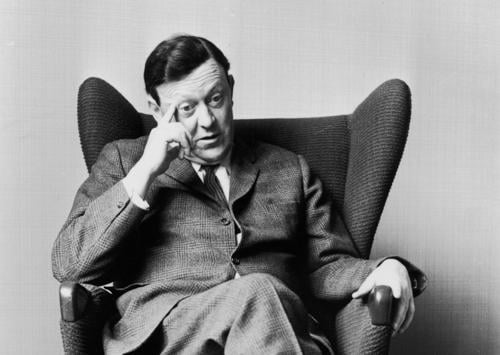
Conor Cruise O'Brien discusses Africa
Apr. 29, 1965 Conor Cruise O'Brien discusses the culture and political state of Africa and his experiences with journalism in African countries including Congo and Ghana.
-
Clifton Fadiman reads from and discusses Cricket, a magazine for young people.
Just because a person is young doesn't mean he or she wouldn't want to read and learn from a magazine. Clifton Fadiman is proud of the work Cricket has done, as he's received letters from children, parents, grandparents, and school teachers from all other the world.*Please note: some sections have been edited out from the original recording due to copyright considerations
-
Cleveland Amory strikes back
Nov. 14, 1979 The outspoken reporter, critic, and commentator joins Studs to discuss his book, The Trouble with Nowadays: A Curmudgeon Strikes Back.*Please note: some sections have been edited out from the original recording due to copyright considerations
-
Claire Culhane discusses her time in Vietnam during the war
In 1967, Clair Culhane worked as a hospital administrator at a tuberculosis hospital near Saigon, Vietnam. She discusses what she observed at the hospital and her anti-war work when she returned home.
-
Cindy Caponera discusses her one-woman show "Against the Grain"
Oct. 26, 1989 Chicago playwright and actress Cindy Caponera discusses and acts out portions of her one-woman show "Against the Grain." Caponera’s show features three soliloquies delivered by different family members of a Chicago fireman in which themes of masculinity, labor rights, and family dynamics are explored. Studs plays "Ace in the Hole" - Johnny Mathis (1961).
-
Charlie Hill discusses his approach to comedy
Sep. 23, 1982 Charlie Hill talks about his comedy career, the portrayal and stereotypes of Native American Indians, and the Bureau of Indian Affairs.*Please note: some sections have been edited out from the original recording due to copyright considerations
-
Cathy Berberian discusses her singing style
1967 Cathy Berberian reflects on the evolution of her avant-garde singing style and her work with various contemporary music composers. Includes an interview with John Cage. Content Warning: This conversation has the presence of outdated, biased, offensive language. Rather than remove this content, we present it in the context of twentieth-century social history to acknowledge and learn from its impact and to inspire awareness and discussion.
-
Carmen Alvarez and Juan Aguirre discuss the fight for democracy in Spain
Oct. 31, 1974 Terkel interviews Carmen Alvarez and Juan Aguirre about the changing political climate in Spain during the mid-seventies when Francisco Franco was losing power and the fight for democracy was gaining traction throughout Spain.*Please note: some sections have been edited out from the original recording due to copyright considerations. This recording includes audio from a 1937 newsreel about Spanish novelist and philosopher Miguel de Unamuno.