

-

Robert Bendiner discusses his book "Just Around the Corner" ; part 1
Aug. 23, 1967 Although he was not a historian, Robert Bendiner said he believed he could provide accounts of events through a journalist's eyes with his book "Just Around the Corner: A Highly Selective History of the Thirties". It was a depressing time, recalls Bendiner, a time he hopes no one has to experience again. Businesses needed people to buy goods but there wasn't enough money for people to buy food let alone goods and materials. Bendiner recalls Riverside Drive was once affluent and picturesque. The view then turned to one full of Hooverville shacks.
-
Richard Wilbur discusses his career
Mar. 30, 1960 The professor, translator, and Pulitzer Prize-winner talks about his poetry and reads a few selections.*Please note: some sections have been edited out from the original recording due to copyright considerations
-
Reverend William Bell Glenesk discusses his ministry
Becoming a preacher was the last thing Reverend William Bell Glenesk ever had in mind. Glenesk found ministers and their sermons to be long and boring. The church, Glenesk said is very much like theatre and he wanted people to attend church or the gymnasium of God and to be a part of lots of music and dance.
-
Reverend Theo Kotze and Helen Kotze discuss South Africa
Sep. 21, 1980 Reverend Theo Kotze and Helen Kotze discuss race relations, religion, and their lives in South Africa. Includes an interview with Albert Luthuli. Includes a 35 second testing tone.
-
Rev. Will D. Campbell in conversation with Studs Terkel
Feb. 1, 1978 The Southern Baptist minister and civil rights activist joins Studs to talk about his book, Brother to a Dragonfly, and to reflect on the loss of his brother Joe.*Please note: some sections have been edited out from the original recording due to copyright considerations
-
Remembering Yves Montand, with Helene Rosenberg; Part Two
Jan. 9, 1978 Studs and guest Helene Rosenberg discuss the life and career of French singer-actor Yves Montand. The program was rebroadcast after Montand's passing in 1991.*Please note: some sections have been edited out from the original recording due to copyright considerations
-
Remembering Yves Montand, with Helene Rosenberg; Part One
Jan. 9, 1978 Studs and guest Helene Rosenberg discuss the life and career of French singer-actor Yves Montand. The program was rebroadcast after Montand's passing in 1991.*Please note: some sections have been edited out from the original recording due to copyright considerations
-
Ray Davies discusses the album "Arthur"
1969 Ray Davies of the English rock band, The Kinks, talks about the studio album, "Arthur (Or the Decline and Fall of the British Empire)". Davis reads lyrics from the songs, "Victoria," "Yes Sir, No Sir" and "Some Mother's Son".
-
Ramsey Clark discusses his book “Crime in America”
Oct. 14, 1970 Interviewing author and former Attorney General Ramsey Clark. He discusses law, crime, and violence in the United States. Content Warning: This conversation includes racially and/or culturally derogatory language and/or negative depictions of Black and Indigenous people of color, women, and LGBTQI+ individuals. Rather than remove this content, we present it in the context of twentieth-century social history to acknowledge and learn from its impact and to inspire awareness and discussion.
-
Ramsey Clark discusses crime and the poor in America
According to former United States States Attorney, Ramsey Clark, crimes of the poor and violence among the poor are due to their social situations like where they live, where they work, and their lack of education. Seeing the affluent and wealthy people around them add insult to injury, explained Clark. A passage from Clark's book, "Crime in America" is also read by Clark.
-
Rahul Barpute discusses his career and life experiences ; part 2
Aug. 29, 1963 Actor and editor of the newspaper Majhi Kahani, Rahul Barapute discusses his first impressions and experiences in the United States.
-
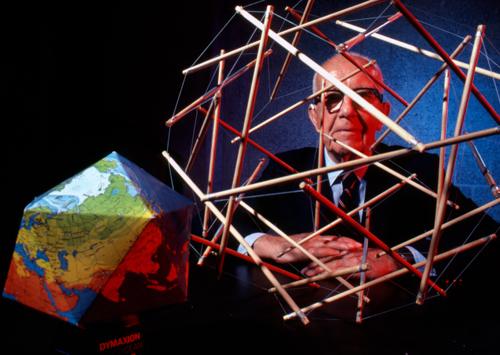
R. Buckminster (Richard ) Fuller talks with Studs Terkel
Jan. 20, 1965 A sprawling conversation with R. Buckminster Fuller including his great aunt Margaret Fuller, future communication, the nature of work, human nature, and physics.
-
Poet and editor John Frederick Nims talks about Poetry Magazine
Feb. 14, 1978 Many of the great 20th century poets were published for the first time in Poetry Magazine. Among the poets discussed here are Robert Frost, e e cummings, Wallace Stevens, Ogden Nash, Richard Wilber, Gwendolyn Brooks, and W.H. Auden.*Please note: some sections have been edited out from the original recording due to copyright considerations
-
Pierre Burton discusses his book “The Impossible Railway”
Oct. 1972 Pierre Burton, Canadian writer and journalist, discusses his book “The Impossible Railway,” touching on topics including the significance of the Canadian Pacific Railway, poor labor conditions on the railway, and differences between America and Canada. Content Warning: This conversation includes racially and/or culturally derogatory language and/or negative depictions of Black and Indigenous people of color, women, and LGBTQI+ individuals.
-
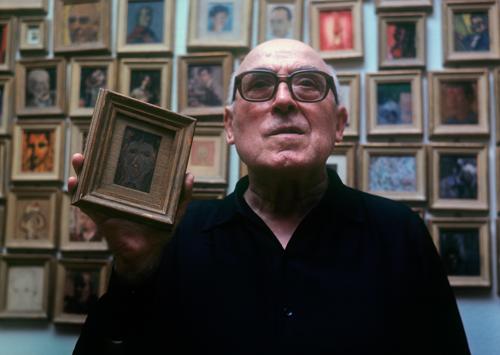
Pier Luigi Nervi and Joseph Nicoletti discuss architecture; part 2. Second interview: Caesar Zavattini discusses screenwriting and cinema
1962 End of interview with Pier Luigi Nervi and Joseph Nicoletti where they discuss innovation in architecture and learning from a master; second part is a separate interview with Cesare Zavattini about film inspirations and creating some of his most well known works.